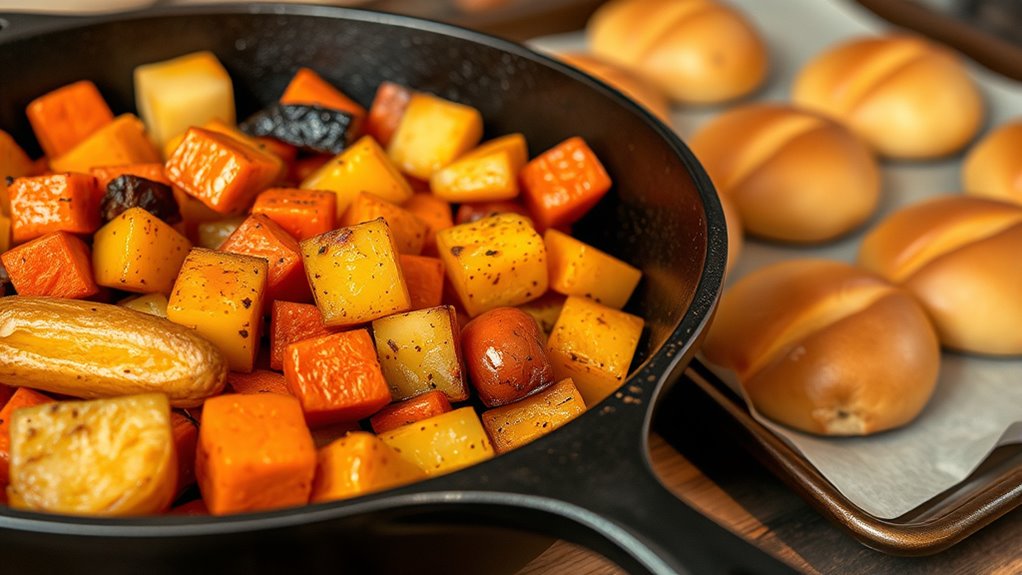

To start roasting and baking, focus on mastering key techniques like proper oven temperature, using an oven thermometer for accuracy, and resting meats to lock in juices. Learn to creaming for cakes, rubbing in for pastries, and folding to keep baked goods light. Use tools like meat thermometers and baking pans effectively. With practice, you’ll improve your skills and achieve consistent, tasty results—keep going to discover more tips and tricks along the way.

Get everyday essentials delivered free — and shop member deals
- Fast, free delivery on millions of items
- Access to Prime Big Deal Days deals on October 6–7
- Prime Video, Amazon Music and more included
Key Takeaways
- Master basic techniques like creaming, rubbing in, and folding to ensure optimal texture and flavor in baked goods.
- Control oven temperature accurately with an oven thermometer for consistent roasting and baking results.
- Use essential tools such as meat thermometers and roasting pans to monitor doneness and promote even cooking.
- Incorporate flavor enhancers like herbs, spices, and marinades to elevate roasted and baked dishes.
- Avoid common mistakes by not overmixing, resting meats properly, and practicing regularly to improve skills.

Getting started with roasting and baking can seem intimidating at first, but with some basic techniques and the right tools, you’ll soon be creating delicious dishes with confidence. One of the most fundamental baking methods is the creaming technique. It involves mixing fats and sugars until the mixture becomes pale and creamy. This step introduces air into your batter, helping baked goods rise and become light. It also guarantees the sugar is evenly distributed, which improves texture and flavor. Another useful method is rubbing in, where you combine flour and butter by rubbing them together until the mixture resembles breadcrumbs. This technique is essential for making flaky pastries, scones, and crumble toppings. When it comes to cakes, the muffin method is popular. You melt fats and sugars first, then add eggs and dry ingredients gently. This approach results in dense, moist cakes with a tender crumb, perfect for beginners.
Master basic baking techniques like creaming, rubbing in, and muffin method for confident, delicious results.
Kneading is vital for developing gluten in dough, which gives bread and pastry structure. You want to knead just until the dough is smooth and elastic, avoiding overworking it, which can make baked goods tough. Folding is another delicate technique used to keep the airiness in light cakes and meringues. Gently folding light and heavy mixtures together preserves the air bubbles that help baked goods rise, producing a tender and airy texture. Additionally, understanding how glycolic acid can improve skin texture and appearance might inspire you to incorporate gentle exfoliation into your skincare routine, much like careful technique enhances baking results.
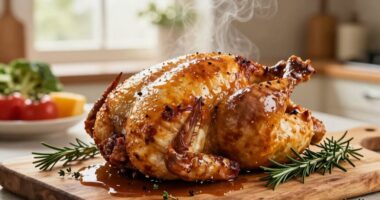
When it comes to roasting, mastering temperature control is key. High heat roasting creates a crispy exterior and tender interior, ideal for meats and vegetables. Conversely, low and slow roasting cooks food evenly over a longer period, ensuring tenderness and flavors develop fully. Resting roasted meats after cooking allows juices to redistribute, resulting in juicier cuts. Basting—brushing the meat with liquids during roasting—adds flavor and promotes browning. Achieving the perfect roast also depends on understanding oven temperature stability, which ensures consistent cooking outcomes. Knowing how to monitor and adjust your oven’s temperature can prevent uneven cooking and ensure your dishes turn out perfectly every time.
To succeed, you need the right tools: an oven thermometer keeps your oven at a consistent temperature, while a good roasting pan provides space for even cooking. A meat thermometer ensures your meat reaches a safe internal temperature, and a silicone basting brush makes applying sauces easy. Aluminum foil is handy for wrapping meats to retain moisture. Investing in quality tools can make a significant difference in the outcome of your roasted and baked goods.
Ingredients and seasonings elevate your roasted dishes. Herbs, spices, marinades, and oils add flavor, while citrus brightens vegetables. Using stocks as a base for sauces or to add moisture enhances dish complexity. Always prioritize safety: handle hot items with oven mitts, keep raw and cooked foods separate, and check internal temperatures to prevent undercooking or overcooking. Maintaining cleanliness minimizes accidents and cross-contamination.
Avoid common mistakes like overmixing, which toughens baked goods, or cooking at incorrect temperatures, resulting in poor texture. Remember to let meats rest and measure ingredients carefully for consistent results. Practice regularly, follow recipes closely, and don’t hesitate to experiment to develop your style. Patience and resourcefulness will turn you into a confident baker and roaster in no time. Developing a good understanding of oven heat distribution can help you troubleshoot uneven cooking issues and improve your overall baking and roasting skills.
As an affiliate, we earn on qualifying purchases.
Frequently Asked Questions
How Do I Prevent Food From Burning in the Oven?
To prevent food from burning in the oven, start by ensuring your oven’s temperature is accurate and matches your recipe. Use the right pan, like non-stick or airbake sheets, to help distribute heat evenly. Rotate pans during cooking, and move racks to avoid hot spots. Keep an eye on your food, set timers, and wrap foil around edges if needed. Regularly clean your equipment for consistent results.
What Are the Best Tools for Beginner Roasting and Baking?
Imagine your kitchen as a creative stage, where the right tools set the scene for success. You’ll want a digital scale for precise measurements, sturdy baking pans, a reliable oven thermometer, and silicone spatulas for easy mixing. Tongs, oven gloves, and a timer help handle hot items safely. These essentials make your roasting and baking journey smoother, turning raw ingredients into delicious masterpieces with confidence.
How Can I Tell When Baked Goods Are Fully Cooked?
To tell when baked goods are fully cooked, look for visual cues like a uniform golden-brown crust, edges pulling away from the pan, and the surface texture matching the type of baked good. Use a thermometer to check internal temperatures—around 210°F for cakes or 180-190°F for bread. Also, perform physical tests like springback or tapping for a hollow sound. Trust your nose and follow recipe times for best results.
What Are Common Mistakes to Avoid When Starting Out?
Imagine your baked goods as a delicate dance; rushing or missteps can ruin the performance. You might forget to preheat the oven, causing uneven cooking. Overcrowding the space blocks heat flow, and neglecting to measure ingredients precisely can lead to tough or flat results. Keep an eye on baking times, avoid opening the oven too often, and use an oven thermometer—these small habits make certain your baking journey starts smoothly and turns out perfect.
How Do I Store Baked Items to Maintain Freshness?
To keep baked items fresh, make sure they’re cooled completely before storing. Use airtight containers to prevent dryness and moisture loss. Store different baked goods separately to avoid flavor transfer. For short-term freshness, keep bread at room temperature, but freeze anything you won’t eat soon. Wrap slices individually or layer with parchment to prevent sogginess. Avoid refrigeration unless necessary, as it can dry out baked goods, reducing their freshness.
Conclusion
Now that you’re gently stepping into the world of roasting and baking, remember that every mistake is simply a quiet teacher guiding you closer to perfection. With patience and practice, your oven’s warm embrace will become a comforting partner in your culinary journey. Embrace each dish as a soft whisper of progress, and soon, you’ll find yourself creating delicious moments that speak softly of your growing skill. Happy baking and roasting!
Halloween Picks
halloween
As an affiliate, we earn on qualifying purchases.