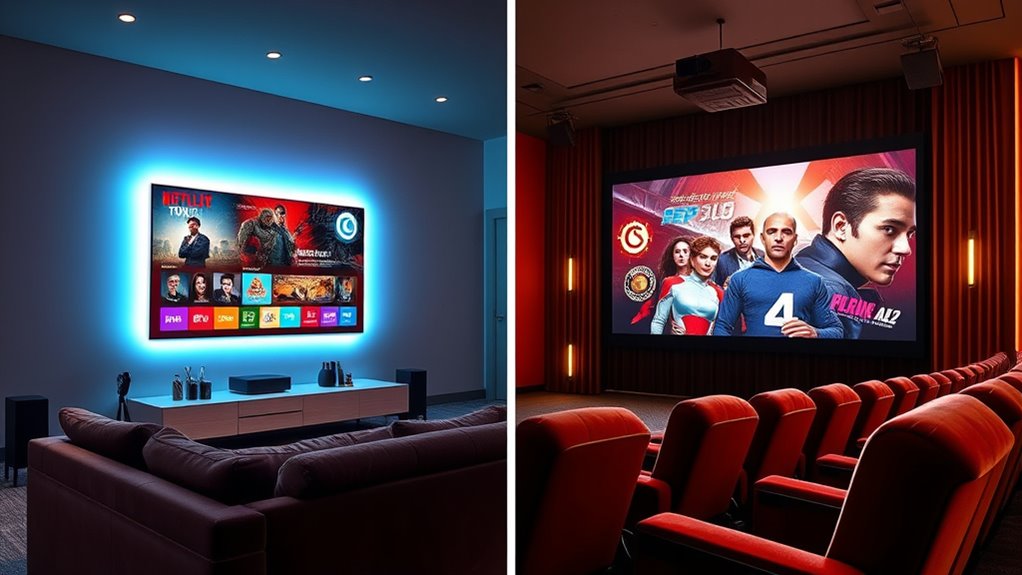

In 2025, streaming continues to dominate entertainment, with 85% of U.S. households subscribing in 2024, shifting how you consume content. While theaters see some decline, nearly 74% of viewers still visit cinemas, blending both experiences. The industry is evolving with hybrid releases and enhanced theater amenities. If you want to discover how these trends shape your entertainment choices and future options, there’s plenty more to explore ahead.

Get everyday essentials delivered free — and shop member deals
- Fast, free delivery on millions of items
- Access to Prime Big Deal Days deals on October 6–7
- Prime Video, Amazon Music and more included
Key Takeaways
- Streaming platforms dominate consumer viewing, with 85% of U.S. households subscribing in 2024, indicating a significant shift toward digital entertainment.
- The decline in box office revenue and the rise of hybrid release models suggest cinemas are adapting but still face competition from streaming.
- Younger audiences’ preference for short-form content and binge-watching favors streaming, impacting traditional theater attendance.
- Industry innovations like premium theater formats and exclusive experiences aim to maintain the appeal of cinemas amidst digital growth.
- The balance of entertainment consumption is shifting toward an integrated model, with 2025 likely tipping the scale further in favor of streaming.

In today’s entertainment landscape, streaming services have dramatically transformed how audiences access movies, often competing directly with traditional cinemas. With 85% of U.S. households subscribing to streaming platforms in 2024, it’s clear that digital access has become the dominant mode of consumption. The global streaming market is projected to reach $224 billion by 2028, highlighting its rapid growth and influence. Despite this, cinema attendance in 2024 rebounded to only 24% below pre-pandemic levels, suggesting that theaters still hold a significant place in viewers’ habits. *Fascinatingly*, many streaming viewers are also attending theaters—about 61% have watched at least two films in theaters over the past six months, and 74% have recently stepped into cinemas. This indicates a hybrid approach among audiences, blending both experiences rather than choosing one over the other.
Your preferences seem to mirror this trend. About 34% of consumers favor waiting for movies to become available for streaming rather than rushing to theaters on release day. Younger generations, especially Gen Z and Millennials, influence this shift by favoring short-form content on platforms like TikTok and Instagram Reels, which impacts their overall viewing habits. Binge-watching has become commonplace, with 62% of viewers streaming multiple episodes in one sitting, further emphasizing the comfort and convenience of digital entertainment. Yet, when given a choice, 61% of those who go to the movies also enjoy streaming or cinema equally, showing that these two worlds are increasingly intertwined rather than mutually exclusive.
This shift has impacted box office revenues, which declined by $3 billion in 2024 compared to the previous year. Heavy investments by streaming platforms in exclusive content have diverted attention and spending away from theaters. As a result, theaters have seen drops in ticket sales and revenue, prompting them to explore hybrid release models—simultaneous streaming and theatrical launches—that challenge traditional box office models. While streaming acts as a marketing tool that boosts awareness—44% of moviegoing streamers say trailers on streaming platforms increase their interest—it’s not enough to sustain the old model alone. Additionally, research shows that the growth of ad-supported FAST services has contributed to the decline, with 50% of streamers using these affordable options, further fragmenting the audience.
Furthermore, the rise of hydrocolloid patches in skincare demonstrates the importance of innovative, targeted solutions in product development, similar to how theaters are innovating with premium experiences to attract viewers. In response, cinemas are enhancing the experience through premium formats like IMAX and Dolby Cinema, along with amenities such as in-theater dining, bars, and exclusive screenings. These efforts aim to provide a social, immersive environment that streaming can’t replicate. Pricing strategies like subscription plans and discounted off-peak tickets are also being introduced to attract audiences back. The focus remains on delivering unique, memorable experiences that justify the theater visit. Meanwhile, studios and theaters analyze audience data to craft tailored offerings for both streamers and cinema-goers, trying to strike a balance that preserves the theatrical experience amidst the rise of digital entertainment.
As an affiliate, we earn on qualifying purchases.
Frequently Asked Questions
How Has the Global Pandemic Influenced Streaming and Cinema Attendance?
The pandemic has substantially changed your entertainment habits. You likely turned to streaming more, enjoying the convenience and vast content options at home. Cinema attendance dropped as theaters struggled financially and shifted strategies. You now see streaming as a permanent part of your routine, while cinemas try to adapt with premium experiences and shorter releases. Overall, your viewing preferences have shifted toward home entertainment, shaping the industry’s future.
What Are the Environmental Impacts of Streaming Versus Traditional Cinemas?
You might find it surprising that streaming a single hour emits up to 56 grams of CO2, similar to driving 222 meters. When comparing impacts, streaming relies on energy-intensive data centers and device power, adding to global emissions, especially with rising viewing hours and 4K content. Cinemas consume significant energy too, but travel emissions from audiences often outweigh their operational footprint. Overall, both have notable environmental impacts, but streaming’s rapid growth makes it a key concern.
How Do Production Costs Compare Between Streaming Platforms and Movies for Theaters?
When comparing production costs between streaming platforms and theatrical movies, you’ll find that theatrical films often have bigger budgets, ranging from $50 million to over $120 million, due to extensive sets, high-end effects, and star power. Streaming films usually spend less, thanks to flexible shooting schedules and smaller crews. These lower costs help streaming platforms manage risks better, while theatrical releases aim for blockbuster revenue to offset their higher investments.
What Demographic Shifts Are Influencing Entertainment Consumption Preferences?
Ever wonder why your favorite entertainment options are changing? You’re seeing demographic shifts, like Gen Z spending more time on social media and streaming, while Millennials lead on platforms like TikTok. Younger audiences are shifting from traditional TV to digital content, gaming, and podcasts. These changes mean entertainment now caters to diverse devices and interests, making the landscape more dynamic and personalized for you. Are you ready for this new media age?
Will Future Technology Innovations Further Blur the Line Between Streaming and Cinemas?
Future technology innovations will definitely blur the line between streaming and cinemas. You’ll notice more immersive experiences like VR, AR, and interactive storytelling available at home and in theaters. Advanced AI and cloud computing will personalize content and improve quality, making both platforms more engaging. As a viewer, you’ll enjoy seamless progression between immersive home experiences and premium cinema visuals, creating a unified entertainment landscape that combines the best of both worlds.
Conclusion
As 2025 unfolds, it’s clear streaming and cinemas are dancing a delicate tango, each pulling at your entertainment desires. Streaming offers convenience like a trusted friend, while cinemas provide the magic of the big screen. The scale may be tipping, but the real winner is you—free to choose your adventure. Whether you prefer the cozy lure of home or the thrill of the theater, your entertainment world is vibrant and bursting with options, waiting to be explored.
Fall Picks
fall essentials
As an affiliate, we earn on qualifying purchases.