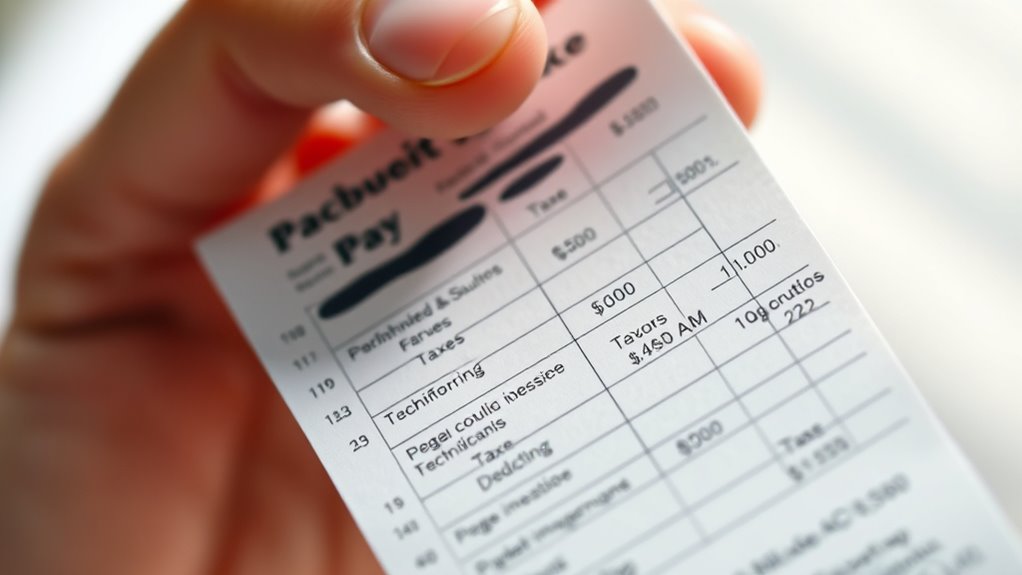

To understand your pay stub, start by checking your gross pay, which is your total earnings before deductions. Look at each deduction, such as taxes, Social Security, Medicare, and any benefits or voluntary contributions, and see how they reduce your net pay. Pay attention to notes on pre-tax or post-tax deductions to understand their impact. If you keep exploring, you’ll gain a clear picture of how your paycheck is calculated and what’s included.

Get everyday essentials delivered free — and shop member deals
- Fast, free delivery on millions of items
- Access to Prime Big Deal Days deals on October 6–7
- Prime Video, Amazon Music and more included
Key Takeaways
- Review gross pay, deductions, and net pay sections to understand how earnings are allocated and taxed.
- Check specific deductions like taxes, benefits, union dues, and voluntary contributions for accuracy.
- Understand tax components such as federal, state, Social Security, and Medicare to see their impact on take-home pay.
- Examine benefit deductions to confirm coverage and whether they are pre-tax or post-tax for tax implications.
- Use year-to-date totals to monitor overall earnings and deductions, aiding financial planning and accuracy.

Understanding your pay stub is vital because it shows exactly how your earnings are calculated and where your money goes. When reviewing it, you’ll notice several sections that break down your gross pay, deductions, and net pay. One key aspect to understand is how tax calculations are applied. Your employer deducts taxes based on your income, filing status, and the amount of allowances you claim on your W-4 form. These tax deductions include federal income tax, state income tax (if applicable), Social Security, and Medicare. Knowing how these calculations work helps you grasp why your take-home pay might differ from your gross earnings and guarantees you’re aware of the taxes being withheld.
Reviewing your pay stub reveals how taxes and deductions impact your take-home pay.
Alongside tax calculations, your pay stub also lists benefit details, which can sometimes be overlooked. These benefits might include health insurance, dental and vision coverage, retirement plan contributions, life insurance, and other employee perks. Each benefit typically has a deduction associated with it, which reduces your gross pay. It’s important to review these details to understand what you’re paying for and confirm that the deductions align with your selections. Sometimes, benefits are pre-tax, meaning they lower your taxable income, which can be advantageous. Other times, they’re post-tax, affecting your net pay differently. Being familiar with your benefit details helps you make informed decisions about your coverage and budget accordingly.
As you examine your pay stub, you’ll also see the breakdown of other deductions, such as union dues, wage garnishments, or additional voluntary contributions. These can vary based on your employment situation and elections. It’s a good habit to verify each deduction to catch any discrepancies early. Additionally, your pay stub often includes year-to-date totals, giving you a snapshot of your earnings and deductions over time. This information is valuable for tax purposes, loan applications, or just understanding how much you’re saving or spending through employer-sponsored benefits. Furthermore, understanding Glycolic Acid benefits can be useful if you are reviewing health or skincare deductions related to wellness programs.
In short, carefully reviewing your pay stub allows you to understand the intricate details behind your paycheck. By paying attention to tax calculations and benefit details, you gain insight into how your salary is allocated, what deductions are being made, and how your benefits impact your overall compensation. This knowledge empowers you to manage your finances better, ask informed questions, and guarantee everything aligns with your employment agreement. Ultimately, becoming familiar with each component of your pay stub helps you take control of your financial health.
As an affiliate, we earn on qualifying purchases.
Frequently Asked Questions
How Do I Verify if My Deductions Are Accurate?
You can confirm your deductions by comparing your pay stub with your employment records and your employer’s benefits documents. Check for payroll inaccuracies or deduction discrepancies, such as incorrect tax rates or unauthorized deductions. If something seems off, contact your HR or payroll department promptly. Keeping detailed records helps spot errors early, so you can address any issues and ensure your deductions are accurate and fair.
What Should I Do if I Find an Error?
If you find pay stub errors or deduction misunderstandings, act quickly. Contact your employer’s payroll department to report the issue, providing details and supporting documentation. Keep records of your conversations and any corrections made. If the issue isn’t resolved promptly, consider reaching out to your HR department or a labor board. Addressing errors early helps make certain your pay is accurate and prevents future discrepancies.
Are There Deductions I Can Opt Out Of?
Think of deductions on your paycheck as a menu—you can often choose what suits you. Voluntary benefits like additional insurance or retirement plans are usually optional, and you can opt out if you prefer. Check with your HR department about deduction exemptions; they can guide you on which deductions are voluntary and how to modify them. Remember, understanding your options helps you keep more of your hard-earned money.
How Does My Tax Filing Status Affect Deductions?
Your filing status directly impacts your deductions and tax benefits. If you file as single, you’ll typically have higher tax rates and fewer deductions. Filing jointly with a spouse can increase your deductions and reduce your overall tax liability. Your status influences your standard deduction and eligibility for credits, so choosing the correct one guarantees you maximize your tax benefits and minimize your owed taxes.
What Are Common Reasons for Unexpected Deductions?
Unexpected deductions often stem from payroll errors or deduction disputes. You might see extra amounts due to incorrect tax withholdings, benefit premiums, or garnishments. It is crucial to review your pay stub carefully and compare it with your records. If something seems off, contact your HR or payroll department promptly to clarify or dispute the deductions, ensuring you’re not paying more than you should.
Conclusion
Now that you know how to read your pay stub and understand deductions, you’re more empowered than ever. But what if there’s more hidden within those lines—something that could impact your paycheck even further? Stay curious, because diving deeper might reveal surprises that could change how you view your earnings forever. Keep an eye out, and you’ll uncover the secrets behind every deduction, making sure you’re truly in control of your finances.
Fall Picks
fall essentials
As an affiliate, we earn on qualifying purchases.