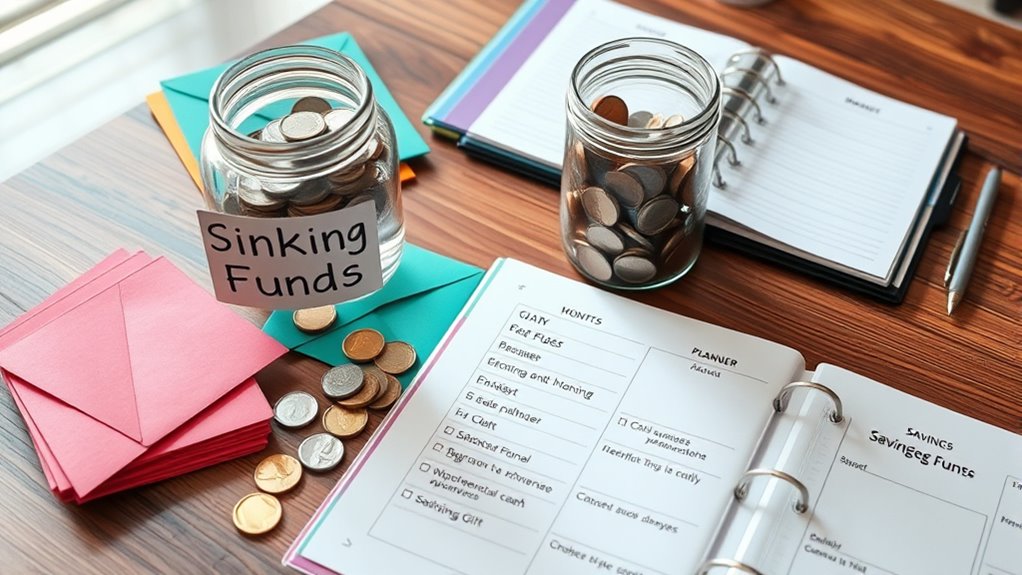

A sinking fund is a dedicated savings account you set up to cover irregular or future expenses like roof repairs or large projects. To plan effectively, determine the total cost, then break it down into manageable monthly or quarterly contributions. Use low-risk investments or high-yield savings accounts to grow your funds safely. Regularly review your progress and adjust as needed. If you want to make certain you’re prepared for big expenses, there’s more to take into account here.

Get everyday essentials delivered free with Prime
- Fast, free delivery on millions of items
- Prime Video, Amazon Music and more included
- Member-only deals all year
Key Takeaways
- Establish a dedicated savings account for specific irregular expenses like roof repairs or large projects.
- Break down the total estimated cost into manageable periodic contributions to stay on track.
- Use low-risk investments such as high-yield savings accounts or CDs to grow funds safely over time.
- Regularly review and adjust contributions and investments based on progress and changing circumstances.
- Consistently plan and discipline your savings to ensure funds are available when the irregular expenses arise.
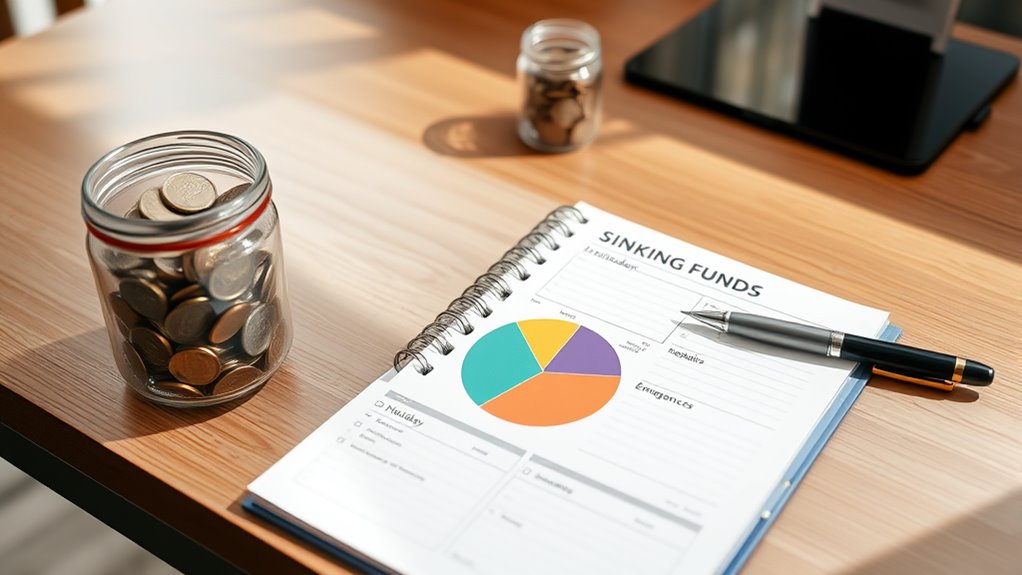
A sinking fund is a dedicated savings account set aside to pay for a specific future expense, such as replacing a roof or funding a large project. Setting up a sinking fund helps you avoid financial stress when these expenses arise unexpectedly or are scheduled far in advance. To make the most out of your sinking fund, it’s essential to develop effective investment strategies and budgeting techniques. These tools will ensure you save enough over time and grow your funds appropriately, so you’re prepared when the expense hits.
A sinking fund helps you save for future expenses, reducing financial stress and ensuring you’re prepared.
Your first step should be calculating how much money you’ll need for the upcoming cost. Break down the total expense into manageable monthly or quarterly contributions. For example, if you expect to replace your roof in five years and estimate the cost at $10,000, you need to save $200 each month. Using this approach keeps your savings goal clear and attainable. Incorporate this into your overall budget, adjusting your spending habits to prioritize these contributions. Budgeting techniques like automated transfers can help you stay disciplined, ensuring you don’t skip a month of savings or dip into the fund for other purposes.
When it comes to investment strategies, consider how you want your sinking fund to grow. Since the timeline is fixed, you can choose low-risk, interest-bearing accounts or conservative investments that provide steady returns. High-yield savings accounts or certificates of deposit (CDs) are popular options because they offer safety and predictable growth. If you’re comfortable with slightly higher risk, you might explore bond funds or conservative mutual funds. The key is balancing growth potential with security, so your savings are protected from market volatility while still earning interest.
Review your sinking fund periodically to ensure it’s on track. As your timeline approaches, you may want to adjust your contributions or shift to even safer investments to preserve the accumulated amount. If your financial situation changes, revisit your calculations and update your savings plan accordingly. This ongoing process guarantees that your sinking fund remains aligned with your goal, reducing the chances of underfunding or unnecessary stress.
Ultimately, managing a sinking fund requires consistent effort and thoughtful planning. By integrating smart investment strategies with disciplined budgeting techniques, you create a reliable financial buffer for large, irregular expenses. This proactive approach not only secures your financial stability but also gives you peace of mind, knowing you’re prepared for expenses that could otherwise disrupt your financial plans. With focus and discipline, your sinking fund becomes a powerful tool to handle future costs smoothly and confidently.
Additionally, understanding catering and delivery trends can be useful if you’re planning to outsource meal services for large projects or events associated with your savings goals.
As an affiliate, we earn on qualifying purchases.
Frequently Asked Questions
How Do I Determine the Right Amount to Save for Each Sinking Fund?
To determine the right amount to save for each sinking fund, start with budgeting strategies that prioritize your expenses. List all irregular costs like holidays or car repairs, then estimate their annual costs. Divide these by 12 to find monthly savings targets. Adjust based on your income and financial goals, ensuring you consistently contribute. Regularly review and update your sinking fund contributions to stay aligned with your changing expenses.
Can Sinking Funds Be Used for Recurring Expenses?
Yes, sinking funds can be used for recurring expenses like holiday planning or emergency preparedness. By setting aside a small amount regularly, you make certain you’re prepared for annual costs without financial strain. For example, saving monthly for holiday gifts or emergency supplies helps you avoid surprises and manage your budget effectively. This proactive approach keeps your finances stable and ensures you’re ready for both routine and unexpected expenses.
What Is the Ideal Frequency for Contributing to Sinking Funds?
You should contribute to sinking funds regularly, ideally monthly or quarterly, to stay consistent and make sure you’re prepared for emergencies. This approach enhances your overall investment strategies and emergency preparedness by spreading out costs over time. Setting a fixed schedule helps you avoid last-minute financial stress and builds a strong financial cushion. Adjust the contribution frequency based on your income and expense patterns for maximum savings and peace of mind.
How Do I Track Multiple Sinking Funds Effectively?
To track multiple sinking funds effectively, you should use a dedicated spreadsheet or budgeting app that allows you to categorize each fund clearly. Regularly update your contributions and monitor progress, just like with investment strategies. This keeps your emergency preparedness on point, ensuring you’re prepared for any irregular expenses. Set reminders to review your funds monthly, so you stay on top of your financial goals and avoid surprises.
Are Sinking Funds Suitable for Small or Infrequent Expenses?
Yes, sinking funds work well for small or infrequent expenses like holiday gifts or medical emergencies. By setting aside a little each month, you guarantee you’re prepared without financial strain. You can create dedicated accounts for these expenses, making it easy to track progress. This approach helps you avoid surprises and manage your budget more effectively, giving you peace of mind when unexpected costs or seasonal spending arise.
Conclusion
By setting aside a little each month, you gently carve out a cozy corner for life’s unexpected moments. Think of your sinking fund as a quiet stream, steadily flowing beneath the surface, ready to support you when the currents shift. With this simple plan, you create a safety net that feels like a warm embrace, easing life’s surprises and helping you sail smoothly through your financial journey. Embrace it, and let peace of mind blossom.
Halloween Picks
halloween
As an affiliate, we earn on qualifying purchases.