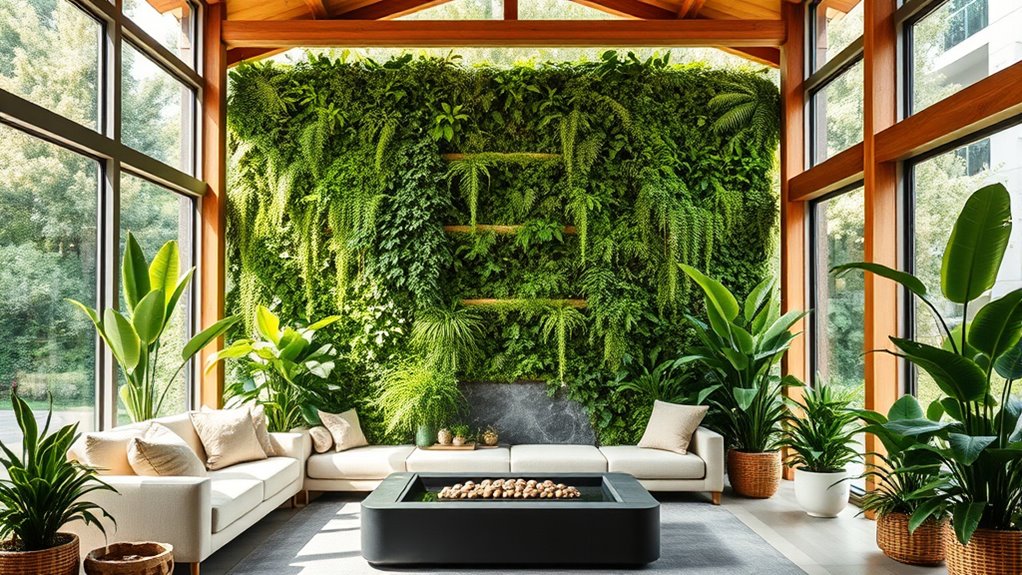

Biophilic design encourages you to bring nature indoors by adding plants and maximizing natural light in your space. Plants help improve air quality, boost your mood, and make your environment more inviting. Large windows and skylights connect you with the outdoors, helping regulate your circadian rhythm and increase focus. By incorporating these elements, you create a calming, energizing atmosphere that enhances well-being. To find out more about creating your own natural sanctuary, keep exploring these ideas.

Get everyday essentials delivered free with Prime
- Fast, free delivery on millions of items
- Prime Video, Amazon Music and more included
- Member-only deals all year
Key Takeaways
- Incorporate indoor plants like ferns, succulents, and palms to improve air quality and add natural greenery.
- Maximize natural light through large windows, skylights, or glass doors to connect indoor spaces with nature.
- Use natural materials and sustainable practices to create environmentally friendly, biophilic environments.
- Place plants on desks, shelves, or hanging planters to create calming, tactile connections with nature.
- Enhance well-being and productivity by integrating natural elements that evoke a sense of calm and mindfulness indoors.

Biophilic design brings nature into built environments, creating spaces that connect people with the natural world. When you incorporate elements like indoor plants and maximize natural light, you craft an environment that feels vibrant and alive. Indoor plants aren’t just decorative; they improve air quality, boost your mood, and add a touch of greenery that softens even the most modern spaces. You might choose lush ferns, sleek succulents, or towering palms to create a visual connection with nature. These plants can be placed on desks, shelves, or hanging planters, allowing you to see and touch nature throughout your day. Their presence invites a sense of calm and well-being, helping you feel more grounded and energized. Regularly caring for your indoor plants can also contribute to a sense of routine and mindfulness, enhancing your overall well-being.
Natural light plays a critical role in biophilic design. When you allow sunlight to flood your spaces, you’re not just illuminating the room—you’re enhancing your physical and mental health. Natural light helps regulate your circadian rhythms, improving sleep and overall mood. To make the most of it, consider installing large windows, skylights, or glass doors that bring in as much sunlight as possible. Position your workspace near windows so you can soak up daylight during work hours, which can improve focus and productivity. The interplay of sunlight with indoor plants also creates dynamic shadows and highlights, further connecting you to the natural environment. When natural light is plentiful, it reduces reliance on artificial lighting, making your space more energy-efficient and eco-friendly. Incorporating natural elements into your design emphasizes the importance of sustainable and biophilic practices, enriching your living or working environment.
As an affiliate, we earn on qualifying purchases.
Frequently Asked Questions
How Does Biophilic Design Impact Mental Health?
You’ll find that biophilic design boosts your mental health by promoting nature therapy and stress reduction. When your space incorporates natural elements like plants, sunlight, or water features, you feel calmer and more focused. These features help lower anxiety and improve mood, making everyday stress easier to manage. By connecting with nature indoors, you create a more soothing environment that supports your emotional well-being and overall mental resilience.
What Are Cost-Effective Ways to Incorporate Nature Indoors?
To incorporate nature indoors cost-effectively, you can add indoor water features like small fountains to create a calming ambiance. Maximize natural lighting by using sheer curtains and strategic placement of mirrors to reflect sunlight. These simple, affordable solutions enhance your space’s connection to nature, boost your mood, and improve well-being without breaking the bank. You’ll enjoy a more vibrant, inviting environment that fosters mental clarity and relaxation.
Can Biophilic Design Improve Workplace Productivity?
Yes, biophilic design can boost your workplace productivity. Studies show that exposure to natural lighting and ergonomic layouts reduces stress and enhances focus. When you incorporate natural elements like plants or maximize daylight, you create a healthier, more inviting environment. This connection to nature not only improves mood but also encourages creativity and collaboration, making your workspace more efficient and enjoyable to work in.
Which Plants Are Best Suited for Indoor Biophilic Spaces?
You should choose indoor plant selection like pothos, snake plants, or ZZ plants for indoor biophilic spaces. These low-maintenance greenery options thrive in low light and require minimal watering, making them perfect for busy environments. They improve air quality and add natural beauty without demanding much care. Opt for these plants to create a calming, nature-inspired atmosphere that boosts well-being and enhances your workspace.
How Does Biophilic Design Influence Indoor Air Quality?
Breathing becomes better with biophilic design because it boosts air quality through brightening air circulation and pollutant filtration. You’ll notice cleaner, fresher air as plants and natural elements enhance airflow and reduce indoor pollutants. This design encourages healthier habitats by harmonizing humidity and filtering toxins, making your space safer and more soothing. Embrace natural nuances, and enjoy an environment filled with fresher, cleaner, and more invigorating indoor air.
Conclusion
Imagine walking into a room where sunlight streams through lush greenery, instantly calming your mind like a gentle breeze. That’s the power of biophilic design—you bring nature indoors, transforming spaces into restorative sanctuaries. Just as a single drop of water revitalizes a wilted plant, incorporating natural elements can refresh your mood and boost well-being. Embrace this design approach, and you’ll find your environment becomes a haven where nature’s healing touch is always within reach.
Halloween Picks
halloween
As an affiliate, we earn on qualifying purchases.