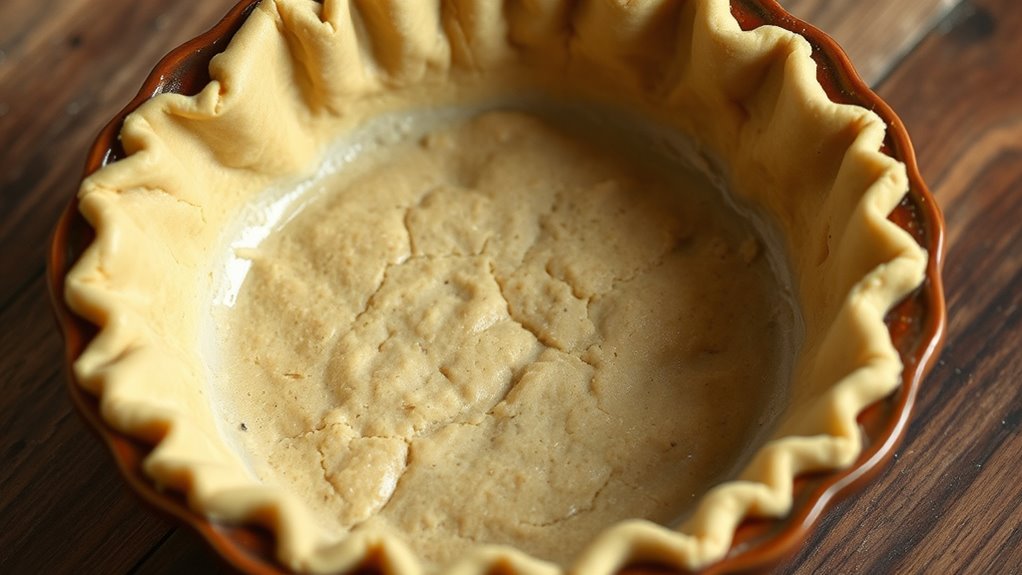

To fix issues with pie crust shrinkage, soggy bottoms, or cracks, start by chilling your dough thoroughly and avoid overworking it, which develops gluten and causes tough or shrinking crusts. Use blind baking with parchment and pie weights to prevent sogginess and cracks. Handle the dough gently, roll it evenly, and add proper hydration for durability. Tackling these common problems step-by-step will help you make a perfect crust every time—more tips await to perfect your technique.

Get everyday essentials delivered free with Prime
- Fast, free delivery on millions of items
- Prime Video, Amazon Music and more included
- Member-only deals all year
Key Takeaways
- Blind bake the crust with parchment and pie weights to prevent sogginess and shrinkage.
- Chill dough thoroughly before rolling and baking to relax gluten and reduce cracking or shrinking.
- Handle dough gently, avoid overworking, and roll evenly to prevent cracks and shrinkage.
- Proper hydration and minimal mixing ensure a stable, less prone-to-shrinkage crust.
- Patch cracks promptly and avoid rolling too thin for a durable, flaky pie crust.
Making a perfect pie crust can sometimes be challenging, but most issues have straightforward solutions. One common problem is a soggy bottom, which often results from moisture seeping into the crust during baking. To prevent this, you might consider blind baking your crust. Blind baking involves pre-baking the crust without filling, creating a barrier that keeps moisture out. Before you blind bake, line your crust with parchment paper or aluminum foil and fill it with pie weights or dried beans. This keeps the crust from puffing up or shrinking, ensuring a crisp, sturdy base. When you remove the weights and liner after baking, your crust should be firm and ready to hold any filling without becoming soggy.
Another key factor in achieving a flawless crust is proper gluten development. When you mix your dough, you want just enough gluten to give the crust structure without making it tough. Overworking the dough causes excessive gluten development, leading to a dense, chewy texture, while underworking it results in a crumbly crust. To strike the right balance, mix your ingredients until just combined, and handle the dough as little as possible. Chill the dough before rolling it out; this relaxes the gluten, making it easier to work with and less prone to shrinking during baking. Properly chilled dough also helps prevent cracks and shrinkage, which are common issues when the dough is warm or overworked.
Shrinkage is another concern, especially if your dough pulls away from the sides of the pan or shrinks during baking. To minimize this, make sure your dough is well chilled before rolling, and avoid stretching it too much when fitting it into the pie dish. When you roll out the dough, do so gently and evenly, turning it frequently to prevent thinning in any one spot. After fitting it into the pan, chill the entire crust again before baking. This helps the fats solidify, reducing shrinkage as the crust bakes. If your crust still shrinks, it might be because you didn’t give it enough chilling time or because you overworked the dough. Additionally, selecting the appropriate natural materials like fat and flour can influence the crust’s elasticity and shrinkage behavior.
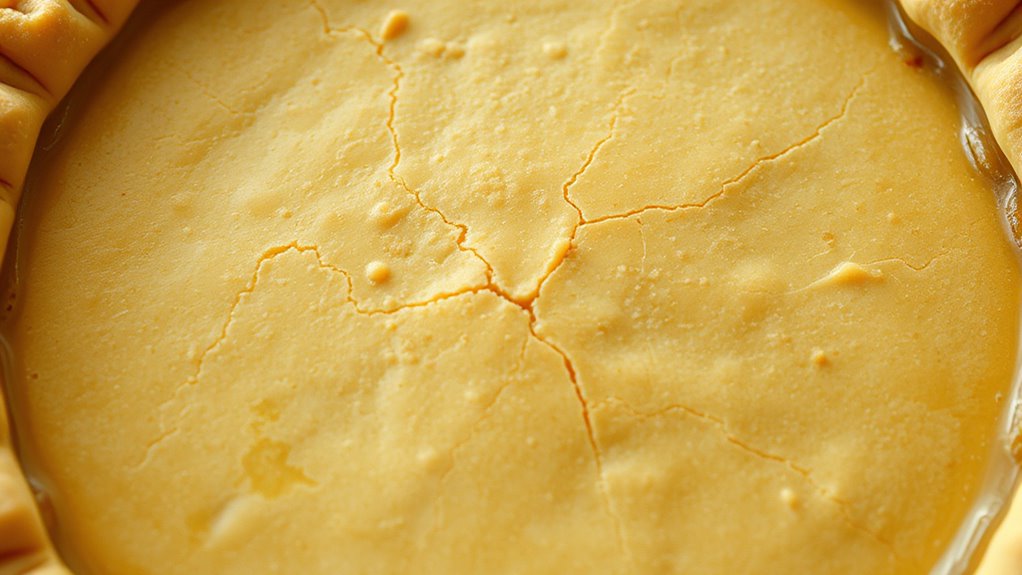
Cracks are another common issue, especially in rustic or homemade crusts. To prevent cracks, avoid rolling the dough too thin and handle it gently. If cracks do appear, you can patch them with a small piece of dough or press the cracks together and smooth them out. Proper hydration, chilling, and gentle handling are your best tools against cracks, shrinkage, and sogginess. By mastering blind baking and controlling gluten development, you’ll be well on your way to a perfectly flaky, stable pie crust every time.
As an affiliate, we earn on qualifying purchases.
Frequently Asked Questions
Can I Use Gluten-Free Flour for My Pie Crust?
Yes, you can use gluten-free blends for your pie crust. These flour substitutes work well, but keep in mind they often require adjustments. You might need to add a bit more fat or liquid to achieve the right texture. Gluten-free flours tend to be more fragile, so handle the dough gently and chill it thoroughly before rolling. With some practice, you’ll get a delicious crust using these flour substitutes.
How Do I Prevent Overworking My Dough?
Imagine your pie dough as a delicate dance partner—you want to guide, not force. To prevent overworking, handle the dough gently, keeping it cool to maintain dough elasticity. Use a light touch with your rolling technique, turning the dough often and applying even pressure. Stop as soon as it’s about 1/8 inch thick. This guarantees your crust stays tender, flaky, and perfectly crafted, instead of tough or shriveled.
What’s the Best Way to Store Leftover Pie Crust?
To store leftover pie crust, wrap it tightly in plastic wrap or place it in an airtight storage container to guarantee proper pie crust preservation. You can store it in the refrigerator for up to 3 days or freeze it for longer storage. If freezing, wrap it well and label the container with the date. This keeps your pie crust fresh and ready for your next baking project.
Can I Double the Recipe Without Affecting Texture?
Like a master chef scaling up a classic dish, you can double your pie crust recipe without sacrificing texture if you adjust carefully. Use precise measurements and chill the dough thoroughly to make certain of even mixing and handling. Be mindful of the increased quantity, and don’t overwork it. Properly scaled recipe and attention to texture preservation will give you a flaky, tender crust, just like the original.
Are There Alternative Fats to Butter for Flaky Crusts?
Yes, you can use alternative fats for flaky crusts. Options like shortening, lard, or even coconut oil work well, each offering different textures and flavors. Shortening creates a tender, flaky crust, while lard adds richness and extra flakiness. Coconut oil provides a slightly sweet taste and can be a good dairy-free alternative. Just adjust your measurements slightly and keep the cold temperature to maintain the flaky layers.
Conclusion
Now that you know how to tackle shrinkage, soggy bottoms, and cracks, your pie crusts will turn out perfect every time. With patience and the right techniques, you’ll master flaky, golden crusts that hold their shape and flavor. Remember, each mistake is a step closer to baking perfection. So, embrace the process—because in the end, a beautiful, delicious pie is worth every effort you put in. Happy baking!
Halloween Picks
halloween
As an affiliate, we earn on qualifying purchases.