To control browning in your roasting pans, focus on the rack design and placement. A good rack lifts food to ensure hot air circulates evenly, promoting consistent browning and crispy textures. Material also matters—lighter pans like aluminum heat quickly, so placing the rack closer to the heat source works well, while heavier cast iron retains heat longer, allowing for more even roasting. Keep experimenting with rack positions to achieve the perfect finish; if you keep exploring, you’ll discover how to master this art.
Open a free Amazon Business account
Business pricing, bulk buying and tax-exempt orders.
As an affiliate, we earn on qualifying purchases.
Key Takeaways
- Proper rack placement (middle or slightly elevated) ensures even browning by promoting hot air circulation around the food.
- Rack design (wire vs. non-stick) affects airflow, impacting how well heat reaches all sides for browning.
- Material impacts heat retention and distribution, influencing optimal rack position for consistent browning.
- Elevating the food allows excess fat to drain, resulting in crisper, more evenly browned surfaces.
- Adjusting rack height based on pan material and roast type helps control browning and moisture retention effectively.
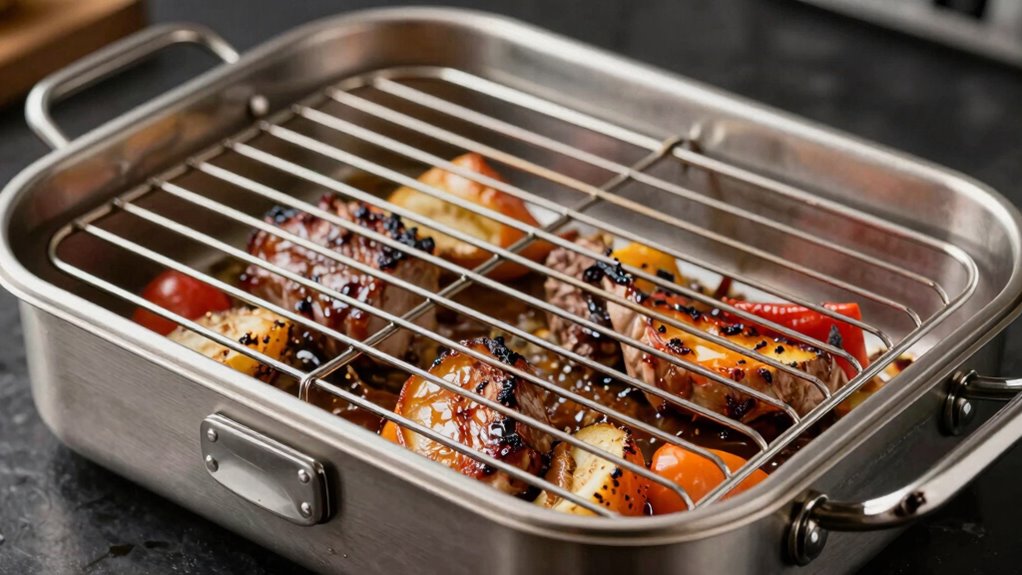
A roasting pan is an indispensable tool for any home cook who wants to prepare flavorful, evenly cooked roasts, vegetables, or poultry. One of the key features that influences the quality of your roast is the rack design, which directly affects browning and moisture retention. When selecting a roasting pan, you’ll notice various material options, each impacting heat conduction and durability. Common choices include stainless steel, aluminum, cast iron, and enameled cast iron. Stainless steel offers durability and resistance to staining, while aluminum heats quickly and evenly, ensuring consistent cooking. Cast iron retains heat superbly, giving you a beautifully browned exterior, but it’s heavier and requires careful handling. Enameled cast iron combines the heat retention of cast iron with easier cleaning and rust resistance. Your choice of material influences how the heat distributes across the pan and, consequently, how the food browns and cooks.
Equally important is the rack placement within the pan. The rack lifts the meat or vegetables above the pan’s surface, allowing hot air to circulate around the food. Proper rack placement ensures even browning on all sides and helps excess fat drain away, which is vital for achieving crispy skin or a caramelized crust. When positioning the rack, you generally want it set in the middle or slightly higher, depending on your pan’s height and the size of the roast. If the rack is too low, the food sits in its juices, resulting in less browning and a soggy exterior. Conversely, if it’s too high, the heat may not reach the bottom evenly, leading to uneven cooking. Adjustable racks or multiple rack slots give you flexibility to optimize positioning based on what you’re roasting, whether it’s a large bird or a smaller cut.
The material of your roasting pan also influences rack placement. For instance, a lightweight aluminum pan heats rapidly, so you might want to position the rack closer to the heat source for a quicker sear. In contrast, a heavy cast iron or enameled pan retains heat longer, allowing you to place the rack in a more central position and cook more slowly for ideal browning. The design of the rack itself—whether it’s a simple wire rack or a more elaborate, non-stick version—further affects how well hot air circulates and how easily you can lift out the cooked food. Ultimately, understanding your material options and rack placement options helps you control browning precisely, ensuring your roasts come out perfectly crispy, juicy, and evenly cooked every time.
roasting pan with adjustable rack
As an affiliate, we earn on qualifying purchases.
As an affiliate, we earn on qualifying purchases.
Frequently Asked Questions
Can Roasting Pan Racks Be Adjusted for Different Food Sizes?
Yes, roasting pan racks are often adjustable for different food sizes. You can typically move or reposition the adjustable rack to better fit various foods, ensuring proper air circulation and even browning. This size compatibility allows you to accommodate everything from small poultry to larger roasts. By customizing the rack’s position, you get better control over browning and cooking, making your roasting experience more efficient and versatile.
Are There Non-Stick Roasting Pan Racks Available?
Yes, you can find non-stick roasting pan racks. These racks feature non-stick coatings that make cleanup easier and food release smoother. Many of these racks also offer adjustability, allowing you to customize the height or position based on your food size and browning preferences. Look for racks with durable non-stick coatings and adjustable features to guarantee they meet your roasting needs effectively and conveniently.
How Do I Clean Roasting Pan Racks Without Damaging Them?
Think of your roasting rack as a delicate dance partner that needs gentle care. To clean it without damage, use warm, soapy water and a soft brush or sponge to gently scrub away residue. Avoid harsh abrasives or steel wool that could scratch its surface. Follow these cleaning tips for rack maintenance, and your rack will continue to perform its ballet of browning beautifully, season after season.
Do All Roasting Pans Come With a Rack Included?
Not all roasting pans come with a rack included. When shopping, check the product details for oven compatibility and rack weight capacity, ensuring it fits your needs. Some pans are sold separately with racks, so you can choose a compatible rack that supports your cooking style. Always verify these features to avoid issues, especially if you plan to roast large, heavy items or require specific oven compatibility.
What Materials Are Best for Roasting Pan Racks?
You should choose a roasting pan rack made from durable materials like stainless steel or chrome-plated steel, which resist rust and are easy to clean. Material options also include non-stick coatings for easier food release. Look for a rack with adjustability, so you can accommodate different-sized meats and vegetables. This flexibility helps you achieve even browning and cooking, making your roasting experience more efficient and satisfying.
Conclusion
Now that you know how a well-designed roasting pan with a rack can perfect your culinary creations, you’re ready to impress. Think of it like assembling a fine suit of armor for your roast—every detail matters. Just like a trusty knight’s shield in a medieval tale, your pan will protect and enhance your meal’s flavor, ensuring it’s beautifully browned and tender. So, go ahead, wield that pan and make every roast a legendary feast!
Back to school Picks
back to school
As an affiliate, we earn on qualifying purchases.