
Maintaining a consistent smoker temperature is key to avoiding the stall and getting tender, evenly cooked meat. Fluctuations cause moisture to evaporate from the surface, cooling the meat and creating a temperature plateau that can last hours. To prevent this, control airflow and fuel, keep the lid closed, and monitor temperatures closely. Stable heat helps the meat push through the stall more quickly. Keep going to find out how to master your smoker environment for perfect results.
Key Takeaways
- The stall occurs when surface moisture evaporates, cooling the meat and causing a temperature plateau.
- Maintaining consistent smoker temperatures helps the meat push through the stall more predictably.
- Fluctuating temperatures can prolong the stall, leading to uneven cooking or dryness.
- Proper airflow, fuel management, and minimal lid opening stabilize heat and reduce stalls.
- Preheating and steady temperature control ensure smoother progress through the stall phase.
Understanding the right smoker temperatures is essential for cooking flavorful, tender meat. When you’re smoking, maintaining consistent temperatures is vital because it directly impacts the quality of your end result. Smoker temperature consistency ensures your meat cooks evenly and develops that desirable smoky flavor without surprises. Fluctuations in heat can cause the meat to stall, dry out, or cook unevenly, which frustrates even seasoned pitmasters. Controlling heat fluctuations means you’re actively managing your smoker’s environment, preventing sudden drops or spikes in temperature that can sabotage your progress.
Consistent smoker temperatures ensure even cooking and prevent stalls or dryness in your meat.
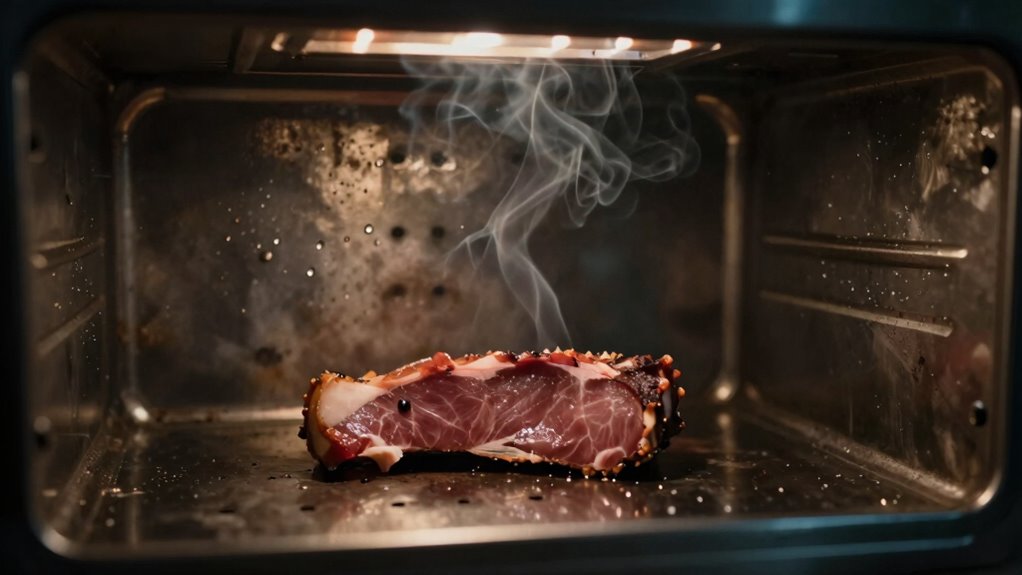
A common challenge many face is the infamous “stall,” where the meat’s internal temperature plateaus for hours. It’s a natural part of the smoking process, especially with larger cuts like briskets and pork shoulders. The stall happens because the meat’s surface moisture evaporates, cooling the surface and slowing internal temperature rise. During this phase, maintaining stable smoker temperatures becomes even more important. If your smoker’s temperature swings wildly, it can extend the stall or cause inconsistent results. That’s why controlling heat fluctuations is key—by keeping your smoker’s temperature steady, you help the meat push through the stall more predictably, resulting in tender, juicy meat.
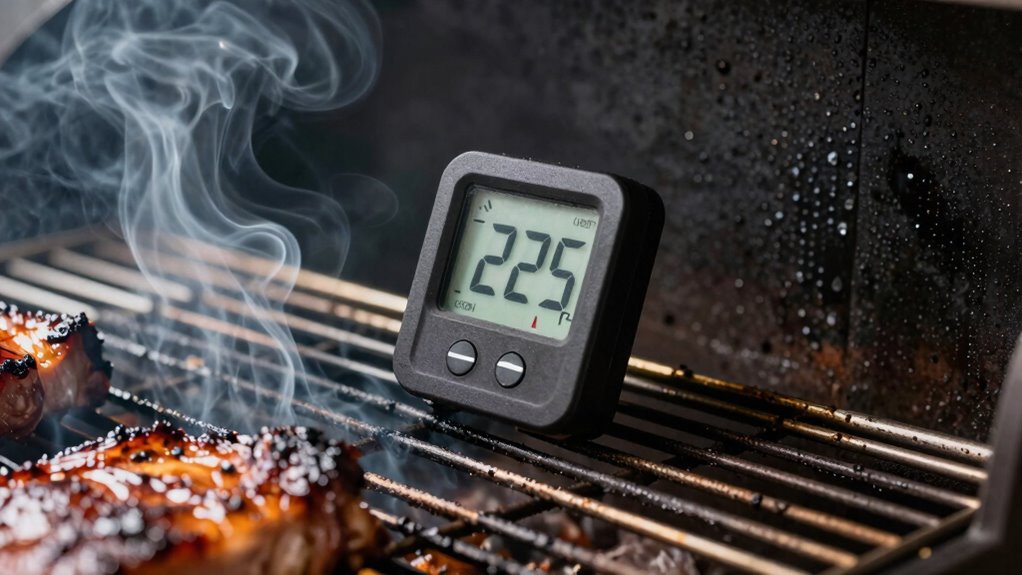
To manage this, you should focus on proper airflow and fuel management. If your smoker has a digital controller or a reliable thermometer, use it to monitor temperatures constantly. Adjust vents gradually to keep the temperature within your target range, typically around 225-250°F for most smoking projects. Sudden temperature drops or spikes indicate a need to tweak the airflow or add more fuel, depending on your smoker type. Avoid opening the lid too often, as this introduces cool air and causes temperature drops, making it harder to regulate heat fluctuations.
Another way to improve smoker temperature consistency is to preheat your smoker thoroughly before adding your meat. This helps establish a stable baseline, so your smoker doesn’t have to work as hard to stay at the right temperature during the entire cook. Using quality charcoal, pellets, or wood chunks and ensuring proper ventilation can also make a big difference. When you control heat fluctuations effectively, you’re less likely to experience long stalls and more likely to produce perfectly smoked meat every time.
As an affiliate, we earn on qualifying purchases.
Frequently Asked Questions
What Causes the Smoker Temperature to Fluctuate Unexpectedly?
You experience temperature fluctuations because of inconsistent fuel management and airflow. When you add fuel unevenly or let the fire die down, the smoker struggles to maintain a steady temperature. Sudden changes in vent openings or opening the lid too often can also cause fluctuations. To keep things stable, manage your fuel carefully, keep the vents steady, and avoid opening the smoker too frequently.
How Can I Prevent the Stall From Lasting Too Long?
Think of your smoker as a finely-tuned symphony; to prevent long stalls, you need perfect harmony. Regular smoker maintenance and diligent fuel management keep everything in sync, reducing temperature dips. Keep your fire steady, add fuel gradually, and avoid opening the lid too often. This way, you maintain consistent heat, preventing extended stalls and ensuring your meat cooks evenly and stays tender, like a well-conducted masterpiece.
Is the Stall Different With Various Types of Smokers?
Yes, the stall can differ with various types of smokers. In offset smokers, you might notice a more gradual stall, affecting meat tenderness and smoke flavor development. Electric or pellet smokers tend to have shorter stalls due to consistent temperature control. Understanding these differences helps you manage the stall better, ensuring your meat stays tender and develops rich smoke flavor without long delays. Adjust your technique based on your smoker type for ideal results.
What’s the Optimal Temperature to Avoid the Stall?
Imagine a steady flame in a fireplace, glowing consistently to keep the room warm. That’s what you want for your smoker—around 225°F—so temperature regulation remains smooth and smoke consistency stays steady. Staying near 225°F helps you avoid the stall, ensuring your meat cooks evenly without lengthy pauses. Keep your smoker at this sweet spot, and you’ll enjoy tender, flavorful results without the frustration of unexpected stalls.
Can Adjusting Vents Help Control the Stall Effectively?
Yes, adjusting vents can help control the stall effectively. By fine-tuning your vent adjustment, you regulate airflow control, which influences the internal temperature. Increasing airflow can boost heat and help push through the stall, while reducing airflow can slow down the temperature rise if it’s getting too high. Consistently managing your vents allows you to maintain stable temperatures and minimize the chances of hitting the stall during smoking.
Conclusion
Now that you understand the stall, you can confidently conquer your smoker’s quirks. Remember, patience and persistence pave the path to perfect pulled pork. Don’t dread the dip—diligence and dedication deliver delicious results. Embrace the experience, and let the science serve as your seasoned guide. With steady stewardship and a little smarts, you’ll surpass the stall and savor the sweet success of smoky sensory satisfaction. Keep calm, cook on, and enjoy every flavorful finish.