
Making only minimum payments on your credit card keeps you trapped because most of your payment goes toward interest rather than reducing the principal balance. As interest accrues quickly on unpaid balances, it snowballs, making your debt grow faster over time. This cycle prolongs repayment and markedly increases total interest paid. If you want to understand how this interest math keeps you stuck—and discover strategies to break free—you’ll find helpful tips ahead.
Key Takeaways
- Minimum payments cover mostly interest, barely reducing the principal, causing debt to grow slowly over time.
- Paying only the minimum allows interest to compound, significantly increasing total debt and prolonging repayment.
- Small payments on high balances result in a snowball effect, making it harder to pay off the debt quickly.
- Delaying payments or paying late accelerates interest growth, trapping borrowers in a cycle of increasing debt.
- Making extra payments or paying more than the minimum can break the cycle and reduce interest accumulation.
What Is the Minimum Payment on Your Credit Card?
What exactly is the minimum payment on your credit card? It’s the smallest amount you must pay each month to keep your account in good standing. Typically, this amount is a small percentage of your outstanding balance—usually around 2% to 3%—or a fixed dollar amount, whichever is higher. Your payment history plays a pivotal role here; consistently making at least the minimum helps you avoid late fees and negative marks on your credit report. However, paying only the minimum doesn’t reduce your balance substantially, often resulting in extended debt and accumulating interest. interest accumulation can significantly increase the total amount you owe if you only make minimum payments. Furthermore, the interest rate on your credit card can cause your debt to grow even faster if you carry a balance over time. Your credit limit also influences this amount—if you’re close to maxing out, the minimum payment might be higher. Additionally, understanding the credit score implications of only making minimum payments can help you make more informed financial decisions. Making only the minimum keeps your account active but can hurt your financial health over time. Understanding the minimum payment helps you recognize how it impacts your long-term debt and financial stability.
How Does Making Only Minimum Payments Keep You in Debt?

When you make only minimum payments, interest keeps adding up, making your debt grow faster than you realize. Because your payments are so small, a larger portion goes toward interest rather than reducing what you owe, stretching out the payoff process. Over time, this means you stay in debt much longer and pay more overall, trapping you in a cycle that’s hard to break. Additionally, understanding the interest math behind minimum payments can reveal how quickly debt can accumulate without significant principal reduction. Recognizing the impact of lease terms on monthly costs can also help consumers avoid unexpected financial burdens. Being aware of how net worth influences your ability to pay off debt can empower better financial decisions and strategies. Moreover, just as choosing the right body jewelry materials can affect healing and comfort, selecting suitable repayment strategies can significantly influence how quickly and comfortably you can become debt-free.
Accumulating Interest Costs
Making only minimum payments on your credit card balance causes interest to accumulate rapidly. When you carry a balance, your interest charges compound, making it harder to pay off over time. If you try to reduce interest costs through balance transfers, you might find promotional rates tempting, but they often come with fees or limited periods. During these promotional periods, interest may be temporarily low, but once they end, rates can skyrocket again, leading to more interest accumulation. This cycle keeps your debt growing despite making regular payments. The longer you take to pay off your balance, the more interest you pay overall. Without paying more than the minimum, interest costs can trap you in a cycle of debt that’s hard to break. Additionally, understanding the lifecycle and performance metrics of your debt can help you develop strategies to pay it off more effectively. Recognizing how interest compounding works can empower you to make smarter repayment decisions and avoid costly pitfalls.
Reduced Payment Impact
Have you ever wondered how making only the minimum payments keeps your debt alive? When you pay just the minimum, the impact on your principal is minimal, so your balance shrinks very slowly. This can negatively affect your credit score by hurting your payment history tracking, making it seem like you’re struggling to manage your debt. Additionally, small payments give the illusion of progress but actually prolong your debt, increasing overall interest paid.
- Your credit utilization remains high, lowering your credit score
- Payment history shows consistent but minimal activity, raising flags
- It takes years to pay off your debt, even with regular minimum payments
- Your debt stays active longer, reducing financial flexibility
This cycle keeps you stuck, with limited credit improvement and ongoing financial stress.
Longer Debt Duration
Choosing to pay only the minimum keeps your debt stretching out over many years. Each month, a large portion of your payment goes toward interest, not reducing the principal. This prolongs the debt duration and increases total interest paid. High credit utilization, caused by large balances relative to your credit limits, can hurt your credit score and make consolidation harder. By making only minimum payments, you keep your debt alive longer, limiting your ability to pursue debt consolidation options effectively.
| Effect of Minimum Payments | Why It Matters |
|---|---|
| Extends debt duration | Keeps you in debt for years |
| Increases total interest | Costs you more over time |
| Maintains high credit utilization | Limits credit score improvement |
| Hinders debt consolidation | Makes paying off debt harder |
How Interest Grows on Your Credit Card Balance?
When you carry a balance on your credit card, interest starts to accumulate quickly due to compounding, meaning you pay interest on previous interest charges. The timing of your payments also matters; late or partial payments allow interest to grow even faster. Understanding how these factors work can help you see why small balances can become unmanageable over time. Additionally, filter maintenance plays a role in maintaining optimal performance of air purifiers, preventing the buildup of dust and allergens that can degrade air quality.
Compounding Interest Effects
Interest on your credit card balance doesn’t just add up—it compounds, meaning your debt grows faster over time. With compound growth, interest accumulation accelerates, making it harder to pay off your balance. Each month, unpaid interest gets added to your principal, so future interest is calculated on a larger amount. This cycle creates a snowball effect that can quickly spiral out of control. Understanding compound growth helps you see why paying more than the minimum can significantly reduce your debt over time. Imagine:
- Your balance increases exponentially as interest compounds
- Small unpaid amounts grow into significant debt
- The longer you carry a balance, the more interest accrues
- Paying only minimums prolongs the cycle, exacerbating your debt, creating a vicious cycle that can be difficult to break. Recognizing how interest rate and balance size influence this growth can motivate you to pay down your debt faster. Additionally, being aware of your debt’s psychological impact can encourage more proactive repayment strategies. Being mindful of interest compounding can help you develop better strategies to manage and reduce your debt more effectively.
Impact of Payment Timing
The timing of your payments directly influences how quickly interest accumulates on your credit card balance. When you delay payments, interest continues to grow on the outstanding debt, making it harder to pay off. Making payments later in your billing cycle means more interest accrues before you settle your balance, increasing total debt accumulation. Additionally, regular inspections of your payment schedule can help you identify the optimal times to pay, reducing the overall interest paid. Conversely, paying early or more frequently reduces the amount of interest that can accrue, helping you control debt growth. Your payment timing affects how much interest is added each billing period, impacting your overall debt trajectory. By understanding this, you can strategize to make payments sooner, decreasing the compounding effect of interest and avoiding the trap of escalating debt from delayed payments. Understanding how interest works can help you make smarter decisions about payment timing and keep your debt manageable.
The Exact Formulas That Show How Your Debt Accumulates
Understanding exactly how your debt grows requires examining the formulas that track its accumulation. These repayment formulas reveal how interest accumulation impacts your balance over time. When you make a payment, only a portion goes toward reducing the principal, while the rest covers interest. The formulas detail this process step-by-step:
Understanding your debt growth requires examining formulas that show how interest affects your balance over time.
- Calculate interest based on the current balance and interest rate.
- Add the interest to the existing debt to find the new total.
- Deduct your payment, allocating it between interest and principal.
- Repeat this cycle monthly, showing how the debt evolves.
- Recognizing the role of cryptid myths and folklore can help you understand common misconceptions about financial myths, emphasizing the importance of accurate information.
Knowing these formulas helps you see how even small payments can keep interest piling up, making it harder to pay off your debt. Understanding the math is key to breaking free from the minimum payments trap.
How Long Does It Take to Pay Off Your Credit Card Paying Minimums?
If you only make the minimum payments on your credit card, it can take years—or even decades—to fully pay off your debt. This extended payoff period can substantially impact your credit score, as high balances for long periods may lower your score. Paying only the minimum often means you’re mostly covering interest, not reducing the principal, which prolongs the debt. Over time, this can make credit card debt harder to manage and hurt your financial health. To break free from this cycle, consider debt consolidation options that can lower your interest rate and shorten your repayment timeline. Additionally, understanding protecting your savings can help you see how proper financial planning and choosing the right strategies can improve your overall financial health. Recognizing the importance of financial literacy can empower you to make smarter choices and avoid falling into minimum payment traps. By paying more than the minimum, you reduce your debt faster, improve your credit score, and save money on interest costs in the long run. Moreover, understanding the interest math behind minimum payments can motivate you to pay more and avoid unnecessary financial stress.
How Minimum Payments Increase Your Total Interest Costs?
Making only minimum payments on your credit card keeps your balance high, which means you’re paying more in interest over time. As interest accumulates, your debt burden grows, making it harder to pay down the principal. This cycle causes you to spend more money overall.
Think of it this way:
- Smaller payments extend the repayment period
- More interest accumulates each month
- Your debt snowballs faster than you realize
- Paying minimums traps you in a cycle of high interest costs
Because of interest accumulation, a large portion of your payments goes toward interest rather than reducing the principal. Over time, this increases your total interest costs and keeps you stuck in debt longer than you’d like.
Practical Strategies to Pay Off Credit Card Debt Faster
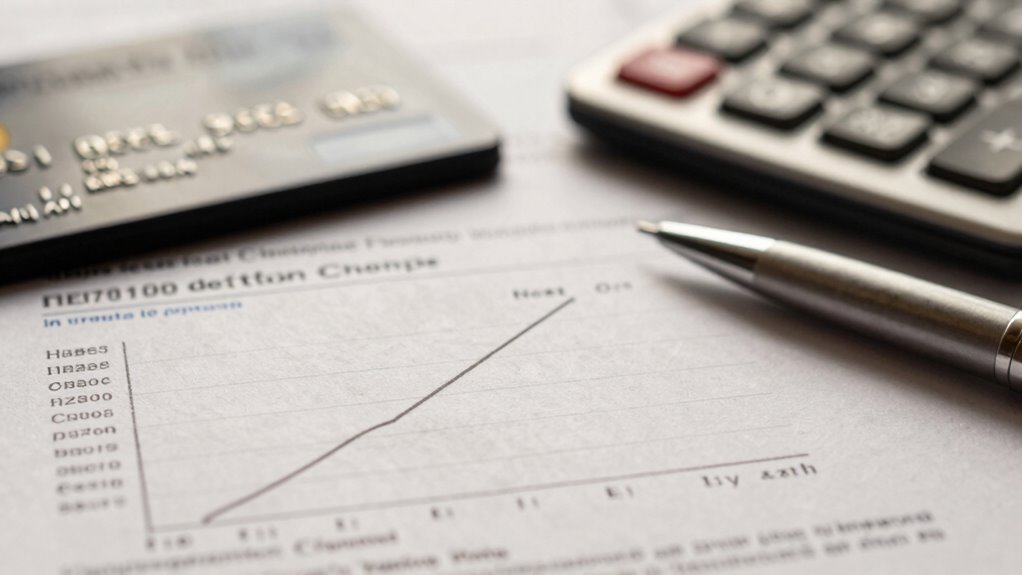
To pay off credit card debt faster, start by creating a detailed repayment plan that prioritizes paying more than the minimum each month. This approach reduces your principal faster and cuts down on interest. Consider consulting a credit counseling service; they can help you develop a manageable plan and negotiate better terms. Debt consolidation is another effective strategy, allowing you to combine multiple balances into one lower-interest loan, simplifying payments and saving on interest costs. Make extra payments whenever possible, such as using bonuses or tax refunds, to accelerate your progress. Avoid relying solely on minimum payments, which prolong debt and increase costs. Staying disciplined and proactive with your repayment plan puts you in control and moves you closer to debt freedom more quickly.
Tips to Accelerate Your Repayment and Save on Interest
One of the most effective ways to accelerate your debt repayment and reduce interest costs is to consistently make extra payments whenever possible. Doing so lowers your principal faster, which shortens your repayment plan and cuts down on total interest paid. To maximize your efforts:
- Make bi-weekly payments instead of monthly, increasing your payment frequency.
- Allocate windfalls like bonuses or tax refunds directly toward your debt.
- Choose a repayment plan that targets high-interest debts first, saving you money.
- Maintain or improve your credit score by reducing balances, enabling better loan terms.
These strategies can help you pay off debt sooner, improve your credit score, and give you more financial freedom. Staying proactive with extra payments is key to breaking free from the minimum payments trap.
Common Mistakes That Keep You Trapped in Debt Cycles
While consistently making extra payments can help you reduce debt faster, many people fall into common traps that keep them stuck in a cycle of debt. One mistake is sticking to minimum payments, which can harm your credit score and extend your debt duration. Relying solely on standard repayment plans without exploring options like debt consolidation or refinancing can also limit your progress. Another error is not monitoring your credit report regularly, missing opportunities to correct errors that could improve your credit standing. Additionally, ignoring the impact of interest rates and failing to prioritize high-interest debts can prolong your financial strain. Avoiding these pitfalls and actively managing repayment plans can help you break free from debt cycles and improve your credit health.
Frequently Asked Questions
Can Paying More Than the Minimum Reduce My Debt Faster?
Yes, paying more than the minimum can help you pay off your debt faster. By increasing your payments, you can reduce the overall interest, allowing you to follow a payment hierarchy or debt snowball strategy more effectively. This approach accelerates your progress, minimizes interest costs, and helps you become debt-free sooner. The more you pay above the minimum, the quicker you’ll see your debt decrease, improving your financial situation.
How Does Credit Card Interest Calculation Differ Across Providers?
Did you know that credit card interest calculation can differ by up to 50% between providers? This means your debt could grow faster depending on your card’s provider. Some use daily periodic rates, others monthly, affecting how interest accrues. Provider differences in interest calculation methods can markedly impact how quickly your balance rises, so always review your card’s terms to understand how your interest is being calculated and avoid surprises.
Are There Any Penalties for Paying Less Than the Minimum?
Yes, paying less than the minimum can lead to penalties like late fees and can harm your credit report. You might face late fees that increase your balance and damage your credit score, making it harder to get favorable loan terms later. Additionally, missed or partial payments are reported to credit bureaus, which can lower your creditworthiness. Always aim to pay at least the minimum to avoid these penalties and keep your credit healthy.
What Impact Does My Credit Score Have on Interest Rates?
Your credit score considerably shapes your interest rate variation, impacting how much you’ll pay over time. A higher score helps you snag lower rates, saving you money, while a lower score invites inflated interest rates, increasing costs. Credit score impact isn’t just about approval—it’s about affordability. Keep your score strong to secure better borrowing benefits, avoid costly charges, and achieve financial freedom faster. Small steps today can lead to substantial savings tomorrow.
Is It Better to Pay off Debt With a Balance Transfer Offer?
Yes, using a balance transfer offer can be beneficial. It allows you to take advantage of balance transfer benefits like lower interest rates and reduced monthly payments. You should compare interest rates carefully to guarantee you’re getting a better deal than your current debt. This strategy can help you pay off debt faster and save on interest, but make sure to watch out for transfer fees and the duration of the promotional rate.
Conclusion
By understanding how minimum payments trap you in a cycle of growing debt, you can take control of your finances. Even if it feels overwhelming, making small extra payments each month can drastically cut your interest and shorten your repayment time. Don’t let fear or confusion hold you back—taking action now can save you thousands and help you regain financial freedom. You’re capable of breaking free and building a healthier debt future.