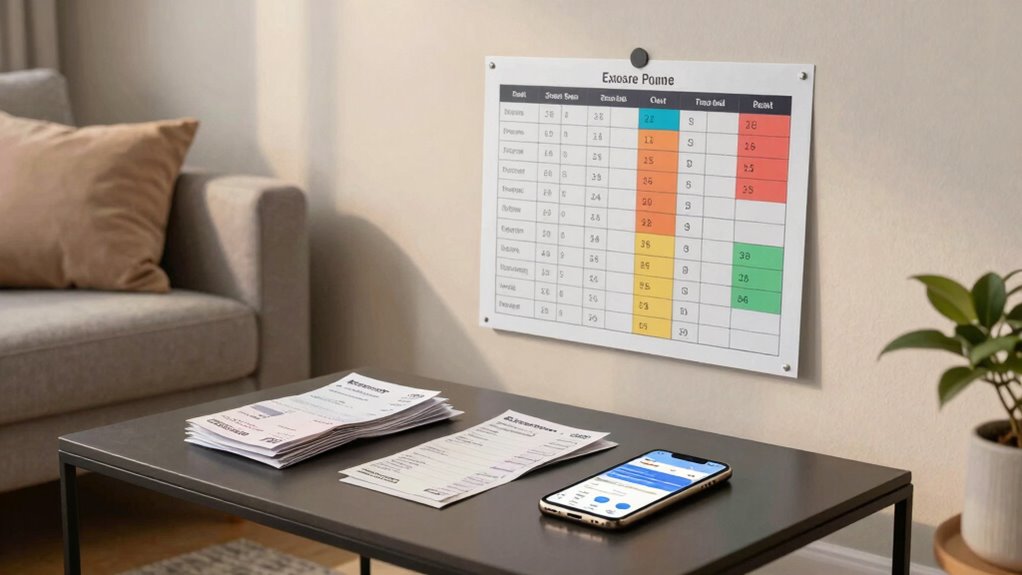

To simplify shared household spending, establish clear expense rules from the start. Decide how costs will be divided—equally or proportionally based on income—and stick to those methods regularly. Use shared records to track expenses and payments, keeping everyone accountable. Set a consistent schedule for settling bills and clarify which costs are included. By maintaining transparency and fairness, you’ll create a smoother system that reduces conflicts. Keep going to discover effective strategies for making this process even easier.
Listen free for 30 days with Audible
Thousands of audiobooks and originals — cancel anytime.
As an affiliate, we earn on qualifying purchases.
Key Takeaways
- Establish clear, written expense-sharing rules from the start to prevent misunderstandings.
- Use a consistent division method, such as equal or proportional sharing, based on income.
- Track all expenses and payments transparently with shared records or apps.
- Set regular schedules and deadlines for settling shared costs to ensure predictability.
- Foster open communication and review expense arrangements periodically for fairness.

Sharing household expenses can be tricky, but establishing a clear spending rule makes it much easier to avoid conflicts. When you live with others—whether roommates, partners, or family—deciding how to handle cost sharing and expense division can quickly become a source of tension. The key to smooth financial cooperation lies in setting a straightforward rule that everyone understands and agrees upon from the start. This way, you remove ambiguity and prevent disagreements over who owes what and when.
Clear household expense rules prevent conflicts and ensure fair, stress-free sharing from the start.
A simple and effective approach is to determine a fixed method for splitting expenses based on an agreed-upon basis. For example, you might choose to divide costs equally if everyone contributes the same amount of income or has similar financial capacity. Alternatively, if income levels vary, you might decide to split expenses proportionally, so each person pays a percentage aligned with their earnings. This expense division method ensures fairness and transparency, reducing resentment and making cost sharing more manageable.
Once you’ve chosen your preferred expense division strategy, it’s important to stick to it consistently. Consistency helps everyone plan their finances and minimizes confusion. Keep a shared record, like a spreadsheet or app, to track expenses and payments. This transparency allows each person to see exactly what they owe and what has already been paid, preventing misunderstandings. By making the process visible, you foster trust and accountability among housemates or partners. Additionally, understanding household budgeting can help you tailor your expense-sharing approach to better suit your specific living situation. Establishing a financial agreement early on can further prevent conflicts and clarify expectations. Regular reviews of your expense-sharing method can help address any issues that arise as circumstances change.
Another vital aspect is establishing how often you’ll settle up. Will you do it weekly, biweekly, or monthly? Setting a regular schedule keeps payments predictable and reduces last-minute disputes. When everyone knows when and how to pay, you avoid awkward conversations about unpaid bills or unexpected costs. This schedule also helps you catch errors or discrepancies early, ensuring smooth expense division over time. Moreover, setting clear deadlines for payments encourages accountability and prevents delays.
It’s also wise to discuss what expenses are included in the shared costs. Common shared expenses include rent, utilities, internet, and household supplies. Clarifying what counts as shared expense prevents surprises and ensures all necessary costs are covered without misunderstandings. For any additional or unexpected costs, agree on how to handle them—whether split evenly or paid for individually. Additionally, adopting a shared expense system can help streamline payments and avoid confusion. Clear communication about shared expenses ensures everyone remains on the same page and reduces the potential for disagreements. A transparent process for handling unexpected costs can help maintain harmony even when surprises occur.
In the end, the rule that makes shared household spending simpler revolves around clarity, fairness, and consistency. When you and your housemates or partner agree on how to handle cost sharing and expense division from the outset, you create a cooperative environment. This approach minimizes conflicts, fosters trust, and ensures everyone knows their financial responsibilities. With a straightforward rule in place, managing household expenses becomes less of a burden and more of a shared effort that keeps your living situation harmonious.
shared household expense tracking app
As an affiliate, we earn on qualifying purchases.
As an affiliate, we earn on qualifying purchases.
Frequently Asked Questions
How Is Shared Household Spending Calculated for Irregular Expenses?
You calculate shared household spending for irregular expenses by setting aside a flexible budget each month, considering your expense tracking. Instead of dividing every expense equally, you allocate a specific amount based on past spending patterns and adjust as needed. This approach offers budget flexibility, ensuring you’re prepared for unexpected costs while maintaining fairness. Regularly reviewing and updating your expenses helps keep shared costs transparent and manageable.
What if One Person Doesn’T Agree With the Spending Rule?
If one person doesn’t agree with the spending rule, it can feel like a mountain you’ll never climb. To handle this, you should focus on dispute resolution and clear communication. Revisit your financial boundaries together, listen to each other’s concerns, and consider adjusting the rule so it’s fair. Open dialogue helps maintain trust and prevents disagreements from escalating, ensuring your shared expenses stay manageable and harmonious.
How Do We Handle Unexpected or Emergency Expenses?
When unexpected expenses like fridge maintenance or utility billing arise, you should set aside a shared emergency fund. Agree on a specific contribution from each person, and use that fund to cover these costs. Communicate openly about the expense, decide together whether to split it equally or proportionally, and make certain everyone is on the same page. This proactive approach keeps surprises from causing friction.
Can the Rule Be Adjusted Over Time?
Yes, you can adjust the rule over time to improve financial flexibility and meet evolving needs. Regularly review your shared household budget and discuss any changes with your housemates. As circumstances change—like income fluctuations or unexpected expenses—you can modify the rule accordingly. This ongoing rule adaptation guarantees everyone stays on the same page, reduces conflicts, and keeps your shared financial system fair and effective for everyone involved.
What Tools or Apps Can Help Manage Shared Household Expenses?
Looking for tools to manage shared expenses? Why not try apps like Splitwise or Zently? These platforms simplify budget planning and expense tracking, making it easier to split bills fairly and keep everyone accountable. With features like automatic calculations and real-time updates, you can avoid misunderstandings and stay organized. Do you want a stress-free way to handle shared household costs? These apps could be your perfect solution.
Conclusion
Remember, sharing is caring, and clear rules make it easier. With this simple household spending rule, you’ll avoid misunderstandings and keep harmony. Think of it as building a sturdy bridge—each step takes effort, but the result is a smooth connection. Stick to the plan, communicate openly, and watch your shared home thrive. When everyone follows the rule, you turn everyday expenses into a team effort, making life simpler and more enjoyable for all.
Back to school Picks
back to school
As an affiliate, we earn on qualifying purchases.