
To prepare for large seasonal expenses early, start by evaluating upcoming costs for gifts, travel, and decorations, breaking down your budget into categories. Set realistic spending limits and track your progress regularly. Build an emergency fund with automatic contributions for unexpected costs. Look for discounts, shop sales early, and consider DIY options to save money. Planning ahead helps you avoid stress and overspending—I’ll show you more ways to stay financially prepared.
Key Takeaways
- Start planning and budgeting months in advance for seasonal demands like gifts, travel, and decorations.
- Track expenses regularly and adjust your budget to avoid overspending.
- Build an emergency fund to cover unexpected costs or price increases.
- Take advantage of sales, discounts, and DIY options early to maximize savings.
- Anticipate seasonal economic trends and prepare early to reduce financial stress.
Are you prepared for the big expenses that come with each season? If not, now’s the perfect time to start planning. Large seasonal costs, like holiday shopping or summer trips, can sneak up on you if you’re not proactive. To avoid financial stress, you need a clear strategy that includes holiday budgeting and emergency fund planning. When you prepare early, you can enjoy the season without constantly worrying about money.
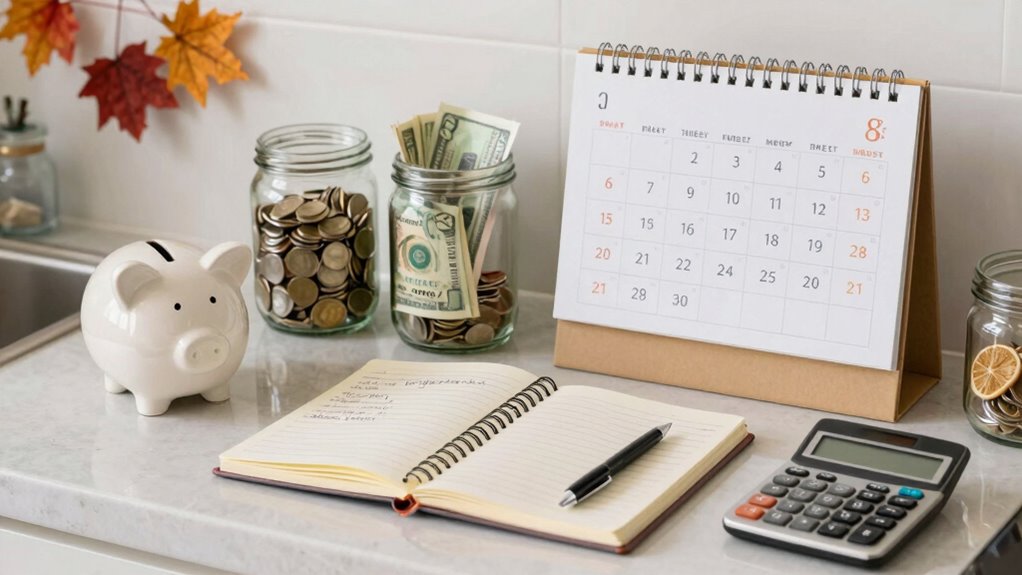
Start by assessing your upcoming expenses. Think about what each season typically demands—gifts, decorations, travel, or special events—and estimate how much you’ll need. Creating a holiday budget lets you set realistic spending limits, so you don’t overspend. Break down your budget into categories, such as gifts, food, and entertainment, and track your progress as you save. This way, you won’t be caught off guard when the bills arrive. It’s also wise to consider potential unexpected costs related to the holidays, like last-minute gifts or travel changes, and build a contingency into your budget.
Assess upcoming expenses, set realistic budgets, and plan for surprises to enjoy the season stress-free.
Equally important is emergency fund planning. Life can throw surprises your way—medical emergencies, car repairs, or sudden job loss—that can derail your finances. Having an emergency fund gives you a safety net so that seasonal expenses don’t wipe out your savings or create debt. Aim to set aside three to six months’ worth of living expenses, focusing on building this fund gradually. Even small, consistent contributions add up over time. Automate your savings if you can, so you don’t forget or get tempted to spend what you’ve earmarked. Recognizing the importance of financial resilience can help you better withstand unexpected costs. Additionally, understanding the economic impact of seasonal spending can motivate you to plan more effectively. Being aware of biodiversity and its connection to sustainable practices can also inspire you to incorporate eco-friendly choices into your holiday preparations, supporting a healthier planet.
Furthermore, understanding seasonal economic trends can help you anticipate when sales and discounts are most advantageous, allowing you to maximize your savings. As you work on holiday budgeting and emergency fund planning, also look for ways to cut costs. Use discounts, shop sales early, or consider DIY options for gifts and decorations. These small steps can free up more money for your seasonal expenses and help you stay within your means. Keep your financial goals in mind and prioritize saving over impulsive spending. Remember, the earlier you start, the less stressful the season will be. You’ll be able to enjoy holidays and seasonal activities without the anxiety of mounting bills or depleted savings.

Oranwell Acrylic Piggy Bank for Adults, Must Break to Access Saving Large Clear Acrylic Money Cash Box for Vacation Wedding Child's College Fund, Unopenable Big Clear Saving Money Cash Bank Jar
- Material: Clear acrylic and wood construction
- Open Method: Must break to access funds
- Size and Capacity: 6.7 inches, holds 3500 coins
As an affiliate, we earn on qualifying purchases.
As an affiliate, we earn on qualifying purchases.
Frequently Asked Questions
How Do I Estimate the Total Cost of Seasonal Expenses Accurately?
To estimate the total cost of seasonal expenses accurately, start with budget planning by listing all expected costs, like gifts or travel. Use expense forecasting to analyze past spending during similar seasons, adjusting for inflation or changes. Research current prices and add a buffer for unforeseen costs. Regularly review your estimates, and update them as needed, ensuring you’re prepared financially and avoid surprises when the expenses arrive.
What Are the Best Savings Accounts for Large Seasonal Expenses?
You should choose high-yield savings accounts for your large seasonal expenses, as they offer better interest rates to help your savings grow. Incorporate budget planning to set aside consistent amounts each month. Also, make certain your emergency funds are separate to cover unexpected costs. By doing this, you create a dedicated, interest-earning account that supports your seasonal spending needs while keeping your financial safety net intact.
How Can I Reduce Costs for Upcoming Seasonal Expenses?
Think of your expenses as a garden—you can trim and nurture it to save more. To reduce costs for upcoming seasonal expenses, focus on holiday budgeting and detailed expense planning. Compare prices early, look for discounts, and consider DIY options for gifts or decorations. Setting a clear budget helps you stay on track, while early planning prevents last-minute splurges, ensuring your seasonal expenses don’t overrun your financial garden.
When Should I Start Saving for Seasonal Expenses?
You should start saving for seasonal expenses at least three to six months in advance. This way, you’ll have enough for holiday shopping and travel planning without stress. Early saving allows you to spread out costs and avoid last-minute financial burdens. Set aside a small amount each month, and you’ll be better prepared for all upcoming expenses, making the season more enjoyable and less financially overwhelming.
Are There Any Specific Financial Tools to Track Seasonal Expense Savings?
Think of financial tools as your guiding compass through the stormy seas of seasonal expenses. Budget planning apps like Mint or YNAB help you track savings goals and forecast future expenses, ensuring you’re prepared when the season hits. These tools visualize your financial journey, making expense forecasting clear and manageable. Use them to stay organized, adjust your savings plan, and sail smoothly toward your seasonal financial goals.
Conclusion
By planning ahead, you can ease the financial strain of seasonal expenses and enjoy the festivities without stress. Start saving early, budget wisely, and keep an eye on upcoming costs. Remember, “A penny saved is a penny earned”—so take control now to avoid last-minute surprises. With a little preparation, you’ll be able to celebrate fully and confidently, knowing you’ve managed your finances wisely all year round.