
If you want consistent, customizable comfort, mini splits are the better choice. They use advanced inverter technology to adjust cooling levels precisely, providing quiet, zoned cooling that saves energy. In contrast, window units are simpler and less efficient, often running continuously and offering limited control. Although mini splits have a higher upfront cost, their long-term savings and comfort benefits are worth it. Keep going to discover more about how each option can fit your needs.
Listen free for 30 days with Audible
Thousands of audiobooks and originals — cancel anytime.
As an affiliate, we earn on qualifying purchases.
Key Takeaways
- Mini splits offer zone-specific cooling, providing more precise and consistent comfort in targeted areas.
- Window units may cause temperature fluctuations and less even cooling across a room.
- Mini splits allow for customizable airflow and control options for personalized comfort.
- Window units often have limited control, making it harder to fine-tune indoor climate.
- Mini splits maintain stable temperatures with quieter operation compared to often noisier window units.
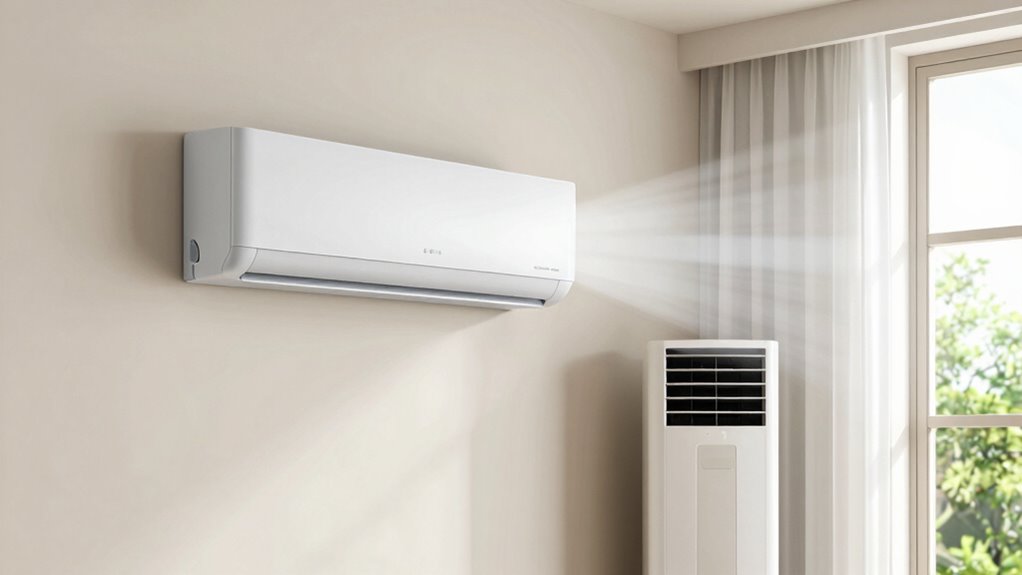
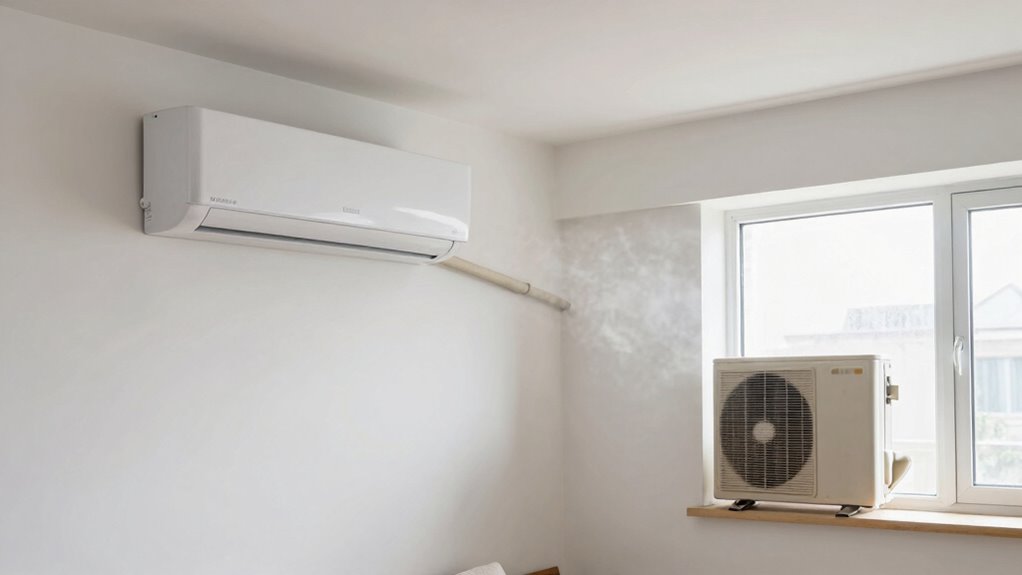
When choosing a cooling system for your home or space, understanding the differences between mini splits and window units is essential. Both options can keep your space cool, but they vary markedly in how they operate, how easy they are to install, and how much energy they use. Knowing these differences helps you make an informed decision that suits your needs and budget. Mini splits, also called ductless air conditioners, are generally more energy-efficient than window units. They use advanced inverter technology to adjust the compressor’s speed, which helps save electricity by only using as much power as needed to maintain a comfortable temperature. Because they can be zoned—cooling specific rooms or areas—you avoid wasting energy cooling spaces you don’t use. This efficiency can lead to lower utility bills over time, especially if you plan to run the system for long periods. Additionally, mini splits often feature zoning capabilities, allowing for more precise climate control. However, mini splits tend to be more complex to install. They require mounting a wall unit inside, drilling a small hole through the wall to connect the indoor and outdoor units, and ensuring proper electrical wiring. If you’re not comfortable with DIY projects, you’ll likely need professional installation, which can add to the initial cost. Additionally, mini splits often have a higher initial price but offer better long-term savings due to their efficiency. It’s also important to consider installation complexity when weighing your options, as it can influence the overall cost and convenience. Furthermore, mini splits are typically more customizable, providing additional options for airflow and control features. Another factor to consider is the initial investment required, which can be higher but may pay off over time through energy savings.
Window units are simpler in design and often less expensive upfront. They slide into a window opening or through a hole in the wall, making them a straightforward choice for temporary or single-room cooling. While they do a decent job of lowering room temperature, they generally aren’t as energy-efficient as mini splits. This is because they can let out warm air and aren’t as effective at isolating the cooled space. They tend to run continuously during hot days, which increases energy consumption and raises your utility bills. Additionally, installation is usually quick and easy, often requiring just a few tools and minimal effort. You can often install a window unit yourself, without professional help, making it an attractive option for renters or those on a tight budget. Understanding energy efficiency is crucial when choosing between these options to ensure you get the best value for your money.
mini split ductless air conditioner
As an affiliate, we earn on qualifying purchases.
As an affiliate, we earn on qualifying purchases.
Frequently Asked Questions
Which Unit Is More Energy-Efficient Long-Term?
Mini splits are more energy-efficient long-term because they offer better energy savings through inverter technology, which adjusts compressor speed to match cooling needs. While their initial cost comparison is higher, you’ll save more on energy bills over time. Window units tend to use more power and have less efficient cooling, leading to higher energy costs. So, investing in a mini split results in lower operating costs and greater energy efficiency over the years.
How Noisy Are Mini Splits Compared to Window Units?
Imagine you’re trying to sleep peacefully, but the noise level of your AC keeps waking you up. Mini splits are generally quieter than window units, with noise levels often below 40 decibels, comparable to a soft whisper. They also feature quieter fans and compressors. While mini splits require more complex installation, their reduced noise makes them a better choice for comfort, especially in bedrooms and quiet spaces.
Can Mini Splits Be Installed in Multiple Rooms?
Yes, mini splits can be installed in multiple rooms, often through a single outdoor unit connected to several indoor units. This setup allows for DIY installation if you’re comfortable with basic electrical work and plumbing, but professional help is recommended for maximum safety and efficiency. Plus, mini splits maintain a sleek, aesthetic appeal, blending seamlessly into your space without the bulky look of window units, enhancing your home’s overall look.
Are Window Units Suitable for Large Spaces?
Window units can be suitable for large spaces if you choose one with the right window size and adequate cooling capacity. Look for units designed for bigger rooms, which typically have higher BTU ratings. Keep in mind, a window unit’s effectiveness depends on matching its cooling capacity to your space’s size. Larger rooms may require multiple units or a different cooling system for consistent comfort.
What Maintenance Is Required for Each System?
Did you know that regular maintenance can extend the lifespan of your cooling system by up to 50%? For mini splits, you’ll need to clean filters and check refrigerant levels periodically, while window units require filter replacements and occasional cleaning of coils. Installation challenges and cost considerations impact upkeep; mini splits may cost more initially but are easier to maintain long-term. Regular service keeps both systems running efficiently and reduces energy bills.
Conclusion
Ultimately, choosing between mini splits and window units is like selecting a gentle breeze or a gusty gust—each offers comfort, but one whispers quietly while the other roars. Picture yourself relaxing in a cool, serene room, where the air flows seamlessly, whispering cool relief with elegance and ease. Whether you prefer the sleek quiet of a mini split or the straightforward punch of a window unit, your ideal comfort zone awaits, crisp and inviting, just like a gust of fresh air.
Summer Picks
summer essentials
As an affiliate, we earn on qualifying purchases.