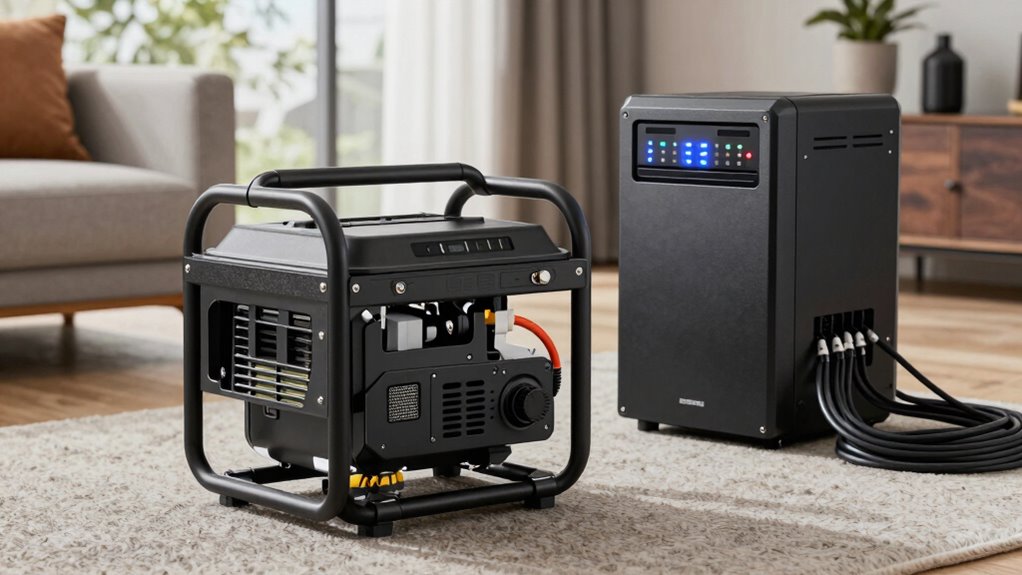

To compare backup power options effectively, first assess your essential energy needs, considering how long you need power during outages and what appliances require backup. Think about your budget, maintenance, and future scalability. Smaller systems may suit basic needs, while whole-house solutions work for longer outages or bigger homes. Renewable options like solar can boost sustainability and savings. Explore these factors carefully, and you’ll discover the best backup power solution tailored to your situation.
Open a free Amazon Business account
Business pricing, bulk buying and tax-exempt orders.
As an affiliate, we earn on qualifying purchases.
Key Takeaways
- Assess your critical appliances’ power requirements and expected outage duration to determine appropriate backup capacity.
- Consider energy storage needs to ensure sufficient backup time and support renewable integration.
- Match backup options (portable, inverter, whole-house) to your appliance load and noise or fuel preferences.
- Evaluate upfront costs, ongoing maintenance, and long-term savings for each system type.
- Plan for future scalability and flexibility to adapt to changing power needs over time.
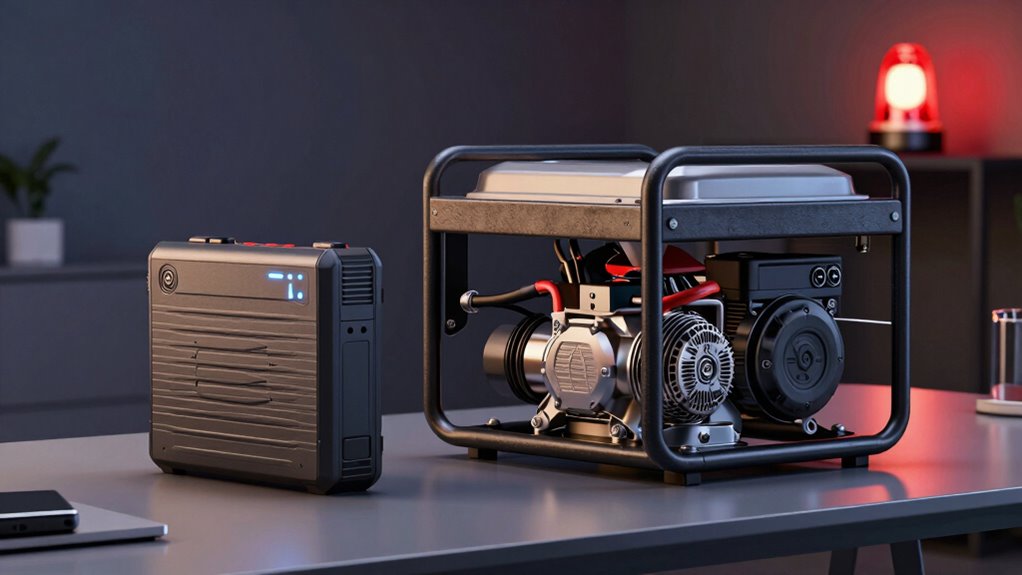
Ever wondered what you’d do if the power suddenly went out? It’s a situation that catches many off guard, but knowing your backup power options can make all the difference. The key is understanding your real needs and choosing a solution that aligns with them. When comparing backup power options, consider how much energy storage you require and whether renewable integration matters to you. Energy storage is vital because it determines how long your system can power your essentials during an outage. If your priority is keeping the lights on for a few hours, a smaller, more affordable battery system might suffice. But if you want sustained backup for days, you’ll need a larger capacity—possibly involving a combination of batteries and generators.
Renewable integration is another factor to weigh. If sustainability is important to you, look for backup solutions that can incorporate renewable energy sources, like solar panels. This setup allows you to generate your own power, reducing reliance on grid electricity and lowering operational costs over time. Solar-compatible systems often come with energy storage, so you can store excess solar energy for use when the sun isn’t shining. This not only enhances your energy independence but also guarantees your backup power is cleaner and more sustainable. Additionally, understanding the importance of energy storage can help you select a system with the right capacity for your needs. Recognizing the renewable energy options available can further optimize your backup system for both cost-efficiency and environmental impact. Considering system scalability is also wise, as your needs may change over time and flexibility can be valuable.
When comparing options, consider the power output you need. Do you only want to keep your fridge and essential lighting running, or do you need to power larger appliances like a sump pump or medical devices? The answer will influence whether you choose portable generators, inverter systems, or whole-house solutions. Portable generators are flexible and affordable but tend to be noisy and require fuel. Inverter systems, often paired with solar panels, provide cleaner, quieter power and are suitable for smaller needs. Whole-house backup systems are more expensive but offer seamless power restoration and can be designed to include renewable energy sources. Recognizing the cost considerations involved can help you make a more informed decision that balances affordability with performance.
Cost is also a vital aspect. While upfront investments vary widely, think about long-term expenses. Renewable integration options, like solar + batteries, may have higher initial costs but can save money over time through reduced fuel or energy bills. Additionally, consider the maintenance requirements and lifespan of each system. Overall, the best backup power solution hinges on your specific circumstances—how much power you need, your budget, and your sustainability goals. By clearly understanding these factors, you can compare options effectively and choose a backup power system that truly meets your needs when you need it most.
As an affiliate, we earn on qualifying purchases.
Frequently Asked Questions
How Do I Calculate My Essential Power Needs During an Outage?
To calculate your essential power needs during an outage, start with a load calculation of your critical devices. List each item and note its wattage. Prioritize your power needs by identifying essential appliances, like refrigeration and medical devices. Sum the wattages of these essentials to determine your total power requirement. This process helps you understand your power prioritization, ensuring your backup system supplies only what’s necessary during outages.
What Are the Environmental Impacts of Different Backup Power Solutions?
Think of backup power options as different streams flowing into a river; some nourish the environment, others cause erosion. Your choice impacts environmental impact and sustainability considerations. Solar and wind power have minimal environmental footprints, while diesel generators emit greenhouse gases and pollutants. Opting for cleaner, renewable solutions reduces ecological harm, helping you support a healthier planet. Prioritize options that balance your needs with environmental responsibility for a sustainable future.
How Often Should Backup Power Systems Be Maintained or Replaced?
You should check your backup power system’s battery lifespan and perform regular maintenance to guarantee reliability. Typically, maintenance frequency varies: batteries often need testing and cleaning every 6 to 12 months, while replacements might be necessary every 3 to 5 years depending on usage and conditions. Staying proactive helps prevent failures during outages, so adhere to manufacturer recommendations and monitor system performance regularly for the best backup readiness.
Can Backup Power Solutions Be Integrated With Renewable Energy Sources?
Yes, backup power solutions can be integrated with renewable energy sources through renewable integration and energy storage. You can combine solar panels or wind turbines with energy storage systems like batteries, allowing your backup power to draw from renewable sources during outages. This setup enhances sustainability, reduces reliance on traditional fuel-based generators, and guarantees a cleaner, more reliable energy supply for your needs. Proper integration depends on system compatibility and your energy goals.
What Safety Precautions Are Necessary for Installing Backup Power Systems?
Did you know that improper installation can cause fires or electric shocks? When installing backup power systems, always wear safety gear like gloves and goggles to protect yourself. Follow proper installation procedures, including turning off main power and grounding the system. Make certain a licensed electrician inspects your work to prevent hazards. Taking these precautions keeps you safe and guarantees your backup power functions correctly when needed.
Conclusion
Now that you’ve explored your backup power options, the decision isn’t just about what’s available — it’s about what’s truly needed. Will you choose a simple solution or something more robust? The right choice could mean the difference between staying connected or facing unexpected outages in silence. As you weigh your options, remember, the perfect backup isn’t just a backup at all — it’s your peace of mind, waiting quietly in the wings.
College move-in / dorm season Picks
dorm essentials
As an affiliate, we earn on qualifying purchases.