TL;DR

Get everyday essentials delivered free — and shop member deals
- Fast, free delivery on millions of items
- Access to Prime Big Deal Days deals on October 6–7
- Prime Video, Amazon Music and more included
Researchers identified Yersinia pestis DNA in the remains of 18 of 46 people buried at four sites in the Lake Baikal region about 5,500 years ago. Shared graves, family relationships and unusually high child mortality support the study authors’ conclusion that the infections were part of an outbreak, though DNA alone cannot prove plague caused each death.
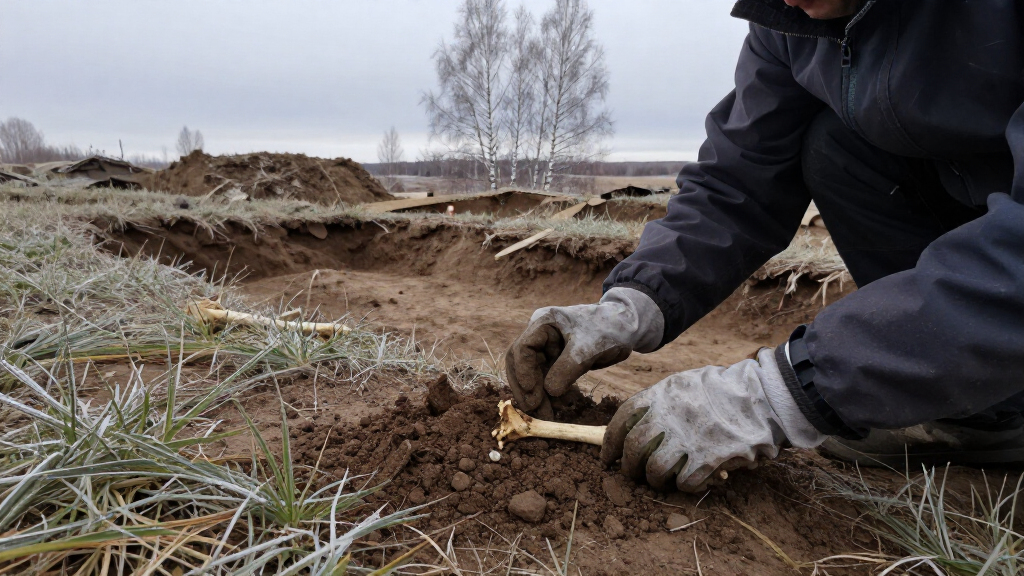
The team examined ancient DNA from the remains of 46 people at four burial sites: Ust-Ida-1, Shumilikha, Bratsky Kamen and Serovo. At Ust-Ida-1, the largest site in the study, researchers found plague DNA in 11 of 31 people. They also recovered a well-preserved bacterial genome at Shumilikha and less complete genomes at the other two sites.
The genetic evidence came from teeth, where traces of pathogens that entered the bloodstream shortly before death can sometimes survive. The paper’s authors combined those findings with burial dates and patterns: several deaths occurred close together, some graves held relatives, and child and adolescent mortality was unusually high at two sites. The remains showed no injuries that could explain the deaths.
The researchers say the bacterial genomes were very similar, which likely points to infections in a single outbreak phase. They estimate deaths may have occurred over a few decades or less, but the evidence does not establish a precise duration. Meduza reported that the study involved researchers from Russia and was led by Eske Willerslev.
How the Findings Change Plague History
The study pushes evidence of plague associated with mass mortality further back in the archaeological record. It also suggests that plague affected communities long before cities and large-scale farming, among people who lived in small hunter-gatherer groups in Siberia.
The result adds evidence to the history of epidemics, but it does not show that every person buried at these sites died of plague or establish how the disease spread between communities. The researchers’ conclusion rests on several clues considered together, rather than pathogen DNA alone.
As an affiliate, we earn on qualifying purchases.
Burials Along the Angara River
The people lived near the Angara River in the Lake Baikal region, where hunter-gatherers relied on resources such as deer, moose, fish and marmots. They used bows and arrows and made pottery, according to archaeological evidence described by Meduza. Their burial grounds were sometimes hundreds of kilometers apart, but genetic evidence indicates that people at the sites shared recent ancestors.
Archaeologists study human remains, grave arrangements and genetic material to reconstruct family ties and aspects of past lives. In this case, the burial evidence prompted researchers to investigate why multiple people, including children and relatives, had died within a relatively short period despite an absence of visible violence.
“We have found the earliest evidence of mass mortality caused by plague.”
— Eske Willerslev, study leader, at a press conference, as quoted by Meduza
What the Ancient DNA Cannot Show
Finding plague DNA in a person’s remains does not by itself prove that plague caused that person’s death; infection could have occurred alongside another fatal illness. The authors argue that the clustered burial dates, family relationships, high child mortality and lack of an evident alternative cause support an outbreak interpretation across the group.
Ancient DNA can also be incomplete or degraded, so a negative test does not rule out infection. The study does not establish the exact number of people who died in the outbreak, its precise duration, or how the bacterium moved between individuals and communities. One person also showed traces of brucellosis, which the researchers did not consider fatal.
Further Work on Ancient Plague
The reported findings establish a basis for further comparison of ancient plague genomes and archaeological evidence from other sites. The study details available in the source material do not specify a next research milestone or a planned date for additional results.
Researchers may be able to refine the outbreak’s timing and relationships among infected groups as more remains and pathogen genomes are analyzed. For now, the team’s conclusion is that multiple lines of evidence point to a plague outbreak about 5,500 years ago, while important details about its spread and death toll remain unknown.
Key Questions
Where was the outbreak identified?
At four burial sites near the Angara River in the Lake Baikal region, in what is now Russia.
How old is the evidence?
The remains date to about 5,500 years ago, according to the research reported by Meduza.
How many people tested positive for plague DNA?
Researchers detected Yersinia pestis DNA in 18 of 46 people examined. At Ust-Ida-1, 11 of 31 people tested positive.
Does a positive DNA result prove plague caused each death?
No. Plague DNA shows evidence of infection, but it does not by itself prove the infection caused death. The researchers infer an outbreak from the genetic results alongside burial timing, family ties and mortality patterns.
What remains unknown about the outbreak?
The exact death toll, duration and route of spread are unclear. The available evidence also cannot establish whether plague caused every death among the people whose remains were studied.
Source: rss
Halloween Picks
halloween
As an affiliate, we earn on qualifying purchases.