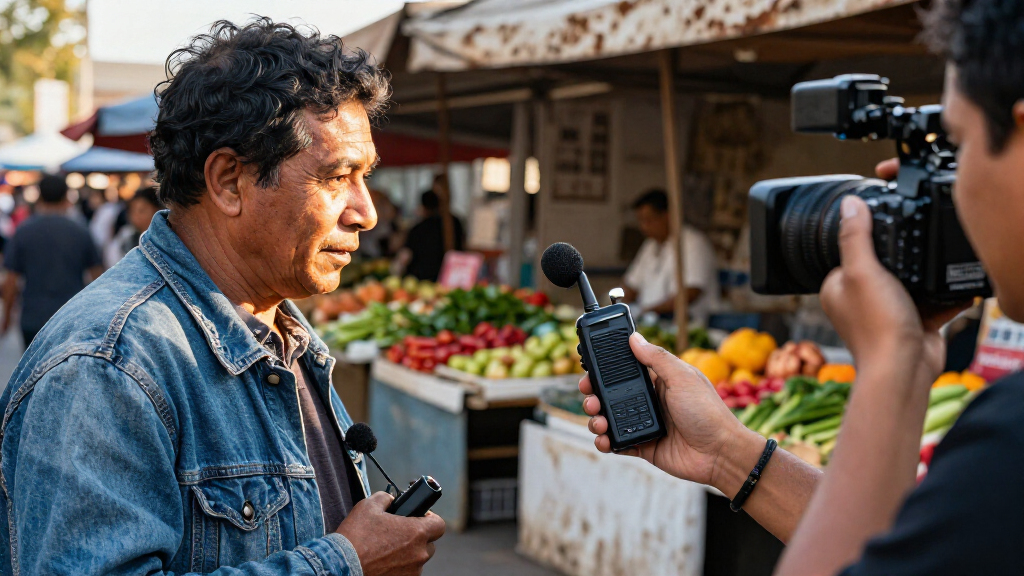
For reporters, the best wireless lavalier microphone balances dependable speech capture with a setup that suits the phone or camera used on assignment. I rank the DJI Mic Mini Wireless Microphone Kit as the best overall for its two-transmitter kit and charging case, while the Phenyx Pro PTU-52-2B stands out for two-person UHF interviews and the Mini Mic Pro for a simple phone-first setup. The main tradeoffs are wireless format, number of speakers, device compatibility, and how much gear you want to manage in the field. A compact mobile kit is easier to carry, while UHF systems with bodypacks suit more formal setups but add equipment and setup steps. Read on for the full comparison, buying advice, and picks for different reporting needs.

Get everyday essentials delivered free with Prime
- Fast, free delivery on millions of items
- Prime Video, Amazon Music and more included
- Member-only deals all year
Complete the kit


Key Takeaways
- The DJI Mic Mini kit is the strongest all-around fit in this group for reporters who need two transmitters, a receiver, and a charging case in a compact package.
- The Phenyx Pro PTU-52-2B and other UHF systems suit planned interviews where bodypacks and separate microphone options matter more than a pocket-size phone setup.
- Phone-first products simplify mobile recording, but buyers should check the exact connector and device compatibility before relying on them for an assignment.
- Multiple transmitters do not automatically mean a better reporting kit: the FULAIM X6 Pro offers four transmitters, while many common interviews need only one or two.
- Headset-and-lavalier bundles serve a different job from compact clip-on kits, making TONOR, MICNAUX, and HOTEC more suited to flexible presentation or interview setups.
| TONOR UHF Wireless Microphone System with Headset and Lavalier Mics |  | Best for Two-Person Field Interviews | Connectivity: UHF wireless | Channels: 30 total; 15 frequency options per bodypack | Operating range: Up to 200 ft (60 m), line of sight | VIEW LATEST PRICE | See Our Full Breakdown |
| Phenyx Pro PTU-52-2B UHF Wireless Microphone System with 2 Bodypacks |  | Best for Flexible UHF Setup | Frequency range: 500–590 MHz | Tunable frequency groups: 30 | Channels: 2 | VIEW LATEST PRICE | See Our Full Breakdown |
| Mini Mic Pro Wireless Lavalier Microphone for iPhone and Android | 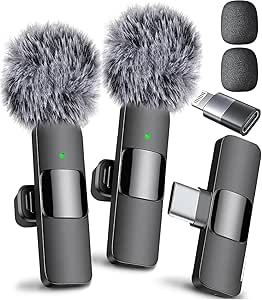 | Best for Phone-First Reporting | Connectors: Lightning and USB Type-C | Compatible devices: Android, laptop, smartphone, tablet, iPad, and iPhone | Polar pattern: Omnidirectional | VIEW LATEST PRICE | See Our Full Breakdown |
| MICNAUX 8-Channel UHF Wireless Microphone System with Headset and Lavalier Microphones |  | Best for Multi-Mic Field Crews | Channels: 8 | Frequency options: 200 adjustable channels across the 500 MHz band | Operating range: Up to 300 ft in clear, unobstructed areas | VIEW LATEST PRICE | See Our Full Breakdown |
| DJI Mic Mini Wireless Microphone Kit (2 Transmitters, 1 Receiver, Charging Case) | 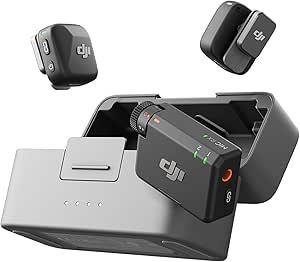 | Best for Lightweight, Long-Shift Reporting | Transmitters: 2 | Transmitter weight: 10 g | Maximum transmission range: 400 m | VIEW LATEST PRICE | See Our Full Breakdown |
| FULAIM X6 Pro Wireless Lavalier Microphone System with 4 Transmitters |  | Best for Four-Person Field Interviews | Wireless connectivity: 2.4G wireless | Audio format: 48 kHz/24-bit | Transmitters and channels: 4 transmitters; 4 channels | VIEW LATEST PRICE | See Our Full Breakdown |
| MAYBESTA Wireless Mini Lavalier Microphone for iPhone and Android |  | Best for Simple Phone Reporting | Connections: Lightning and USB-C | Microphone pattern: Omnidirectional | Channels: 1 | VIEW LATEST PRICE | See Our Full Breakdown |
| DJI Mic Mini Wireless Microphone (2 Transmitters + Mobile Receiver) |  | Best Compact Kit for Mobile Reporters | Transmitter weight: 10 g | Maximum transmission range: 300 m | Maximum operating time: 11.5 hours | VIEW LATEST PRICE | See Our Full Breakdown |
| EALSEM ES-384 4-Channel UHF Wireless Lavalier Microphone System |  | Best for PA-Based Group Reporting | Wireless connectivity: UHF | Channels: 4 | Microphones included: 4 lapel microphones | VIEW LATEST PRICE | See Our Full Breakdown |
| Labstandard Dual Wireless Lavalier Microphone Set for iPhone, iPad, and USB-C Devices |  | Best for Two-Person Phone Interviews | Connectivity: Bluetooth | Connections: Lightning and USB-C | Microphone type: Omnidirectional lavalier | VIEW LATEST PRICE | See Our Full Breakdown |
| Wireless Lavalier Microphone Set with Charging Case |  | Best for Multi-Device Reporting | Connectivity: Wi-Fi | Connectors: Lightning, USB Type-C, and USB Type-A | Microphone type and pattern: Lavalier; omnidirectional | VIEW LATEST PRICE | See Our Full Breakdown |
| HOTEC UHF Wireless Headset and Lavalier Microphone System | 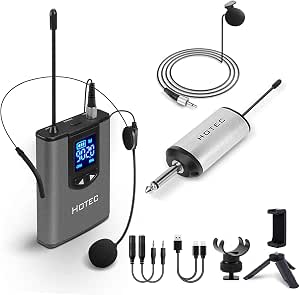 | Best for Long-Range PA Reporting | Connectivity: UHF | Connector: 6.35 mm (1/4-inch) jack | Frequency range: 902–928 MHz | VIEW LATEST PRICE | See Our Full Breakdown |
| wireless lavalier microphones for reporter | Channels | Connectivity |
|---|---|---|
| TONOR UHF Wireless Microphone | 30 total; 15 frequency options per bodypack | UHF wireless |
| Phenyx Pro PTU-52-2B UHF Wirel | 2 | — |
| Mini Mic Pro Wireless Lavalier | — | — |
| MICNAUX 8-Channel UHF Wireless | 8 | — |
| DJI Mic Mini Wireless Micropho | — | Bluetooth, DJI OsmoAudio, and USB Type-C |
| FULAIM X6 Pro Wireless Lavalie | — | — |
| MAYBESTA Wireless Mini Lavalie | 1 | — |
| DJI Mic Mini Wireless Micropho | — | Bluetooth, Wi-Fi, USB-C |
| EALSEM ES-384 4-Channel UHF Wi | 4 | — |
| Labstandard Dual Wireless Lava | 2 | Bluetooth |
| Wireless Lavalier Microphone S | 2 | Wi-Fi |
| HOTEC UHF Wireless Headset and | — | UHF |
More Details on Our Top Picks
TONOR UHF Wireless Microphone System with Headset and Lavalier Mics
For reporters who need two people mic’d at once and work with a mixer or PA, the TONOR TW632 offers a practical UHF setup: two bodypacks, two lapel mics, and two headset mics. The interchangeable mic styles let you switch between discreet interview clips and hands-free standups without buying another mic type. Its 15 frequency options per bodypack give you some room to select a channel, though the Phenyx Pro PTU-52-2B lists 30 tunable frequency groups and automatic pairing for more flexible setup. TONOR’s rechargeable receiver is rated for 6–8 hours, but each bodypack needs two AA batteries that are not included. The 200-foot range is a line-of-sight figure, so buildings and crowds may reduce working distance. Its 6.35 mm output also makes it better suited to compatible audio gear than direct phone recording.
Pros:- Two bodypacks support interviews with two mic’d speakers.
- Includes both lapel and headset microphones for each user.
- Rechargeable receiver is rated for 6–8 hours of use.
- 6.35 mm output connects to compatible mixers, speakers, and amplifiers.
Cons:- Each bodypack requires two AA batteries, which are not included.
- The stated 200-foot range applies to line-of-sight use.
- The 6.35 mm connection is less direct for phone-first reporting than the Mini Mic Pro’s USB-C and Lightning adapters.
Best for: Two-person field reporting teams using a mixer, PA system, or amplifier with a 6.35 mm microphone input.
Not ideal for: Reporters recording straight to a phone or working far from the receiver through walls, since it lacks a listed phone adapter and the range assumes line of sight.
- Connectivity:UHF wireless
- Channels:30 total; 15 frequency options per bodypack
- Operating range:Up to 200 ft (60 m), line of sight
- Included transmitters:2 bodypacks
- Included microphones:2 headset mics and 2 lapel mics
- Output:6.35 mm jack
- Receiver runtime:6–8 hours
- Bodypack power:2 AA batteries per bodypack; not included
Our verdict“Choose the TONOR when two reporters or interview participants need flexible mic styles and you can connect through compatible audio equipment.”
Phenyx Pro PTU-52-2B UHF Wireless Microphone System with 2 Bodypacks
The Phenyx Pro PTU-52-2B suits reporters who need two wireless mics and more connection choices at the receiver. Its two XLR outputs and mixed 1/4-inch output can fit different field or venue audio setups, while automatic pairing and 30 tunable frequency groups make channel selection more adaptable than the TONOR TW632’s 15 options per bodypack. Each transmitter includes a headset and lapel mic, so a crew can choose a discreet clip for interviews or a headset for hands-free work. The listed 90 dB signal-to-noise ratio is higher than TONOR’s stated 70 dB, though figures alone do not settle how either system will perform in a particular reporting environment. The tradeoff is a 500–590 MHz operating band, which may not suit every location, plus a 200-foot range stated for open line of sight.
Pros:- Two bodypacks each include a headset mic and a lapel mic.
- 30 tunable frequency groups and automatic pairing support flexible channel setup.
- Two XLR outputs plus a mixed 1/4-inch output suit varied audio connections.
- Four AA batteries are included.
Cons:- The 500–590 MHz frequency range may not fit local wireless rules or existing equipment.
- The stated 200-foot range is for open line-of-sight conditions.
- At 1.93 kg, the system is less appealing for crews prioritizing a light field kit.
Best for: Small reporting crews who use mixers or venue audio systems and want two mic styles per speaker with multiple receiver outputs.
Not ideal for: Reporters who need a phone-ready receiver or cannot verify that the 500–590 MHz band is appropriate for their location and equipment.
- Frequency range:500–590 MHz
- Tunable frequency groups:30
- Channels:2
- Maximum simultaneous units:Up to 3
- Operating range:Up to 200 ft, open line of sight
- Outputs:2 XLR and 1 mixed 1/4-inch
- Signal-to-noise ratio:90 dB
- Power:4 AA batteries, included
Our verdict“Pick the Phenyx Pro over the TONOR if your reporting setup benefits from XLR outputs and more tunable frequency groups, after checking local band compatibility.”
Mini Mic Pro Wireless Lavalier Microphone for iPhone and Android
For mobile reporters who record directly to a phone or tablet, the Mini Mic Pro is the most straightforward fit here: its receiver uses included USB-C and Lightning adapters, with no app or Bluetooth pairing required. That keeps setup simple when a quick interview matters more than connecting to a mixer. It also includes foam and deadcat wind covers, useful options for changing conditions that the TONOR TW632’s listed kit does not specify. The two included lavalier microphones support two-person recording, while the omnidirectional pattern captures sound from around each mic rather than only from one direction. Its up-to-six-hour battery life is a limit for long assignments, even though the mic can charge while in use. Compared with the DJI Mic Mini kit, it offers clear phone-adapter details but does not list the same 48-hour case-assisted battery figure.
Pros:- USB-C and Lightning adapters support a range of phones and tablets.
- Plug-and-play connection works without an app or Bluetooth.
- Foam and deadcat covers provide options for reducing wind interference.
- Two lavalier microphones are included.
Cons:- Battery life is rated for up to six hours per charge.
- No XLR or 1/4-inch receiver outputs are listed for mixer-based setups.
- The stated warranty coverage is shorter than the two-year warranties listed for the TONOR and MICNAUX systems.
Best for: Solo mobile reporters and small teams recording interviews or standups directly to USB-C or Lightning phones and tablets.
Not ideal for: Reporters who need long, uninterrupted shifts without charging or who need XLR and 1/4-inch outputs for a dedicated audio system.
- Connectors:Lightning and USB Type-C
- Compatible devices:Android, laptop, smartphone, tablet, iPad, and iPhone
- Polar pattern:Omnidirectional
- Battery life:Up to 6 hours per charge
- Weight:80 g
- Dimensions:3 x 0.5 x 0.25 inches
- Included microphones:2 lavalier microphones
- Included wind covers:2 foam tips and 2 deadcat tips
Our verdict“Choose the Mini Mic Pro for direct phone reporting and quick setup, but favor the DJI Mic Mini if case-assisted runtime is a higher priority.”
MICNAUX 8-Channel UHF Wireless Microphone System with Headset and Lavalier Microphones
When a report needs several people mic’d at once, the MICNAUX S18_8BD has a different job from the two-bodypack systems in this roundup: it supports eight channels and supplies eight bodypacks, each with a lavalier and headset mic. That capacity can suit group interviews, panel coverage, or coordinated crew work, while 200 adjustable frequencies across the 500 MHz band offer more selection than the TONOR TW632’s 30 total channels. Automatic transmitter syncing and XLR plus mixed 1/4-inch outputs make it a more production-oriented choice than the phone-connected Mini Mic Pro. Its stated range reaches 300 feet only in clear, unobstructed areas, and the product data gives no battery type or runtime for the bodypacks. For a reporter working alone, this much equipment is likely more kit to manage than the assignment calls for.
Pros:- Eight channels and eight bodypacks support large interview groups.
- Each bodypack includes both a lavalier and a headset microphone.
- 200 adjustable frequency options and automatic syncing support multi-transmitter setup.
- XLR and mixed 1/4-inch outputs connect to common audio equipment.
Cons:- The 300-foot range applies to clear, unobstructed areas.
- Bodypack battery type and runtime are not specified.
- The eight-transmitter receiver kit is more equipment than most solo reporters need.
Best for: Production teams covering panels, group interviews, or events where up to eight speakers need separate wireless microphones.
Not ideal for: Solo reporters or small crews seeking a compact phone-connected kit, since this is an eight-bodypack system with no listed phone adapter.
- Channels:8
- Frequency options:200 adjustable channels across the 500 MHz band
- Operating range:Up to 300 ft in clear, unobstructed areas
- Included transmitters:8 bodypacks
- Included microphones:8 lavalier microphones and 8 headset microphones
- Outputs:XLR and mixed 1/4-inch
- Receiver enclosure:Metal
- Warranty:2 years
Our verdict“Choose the MICNAUX when your assignment needs separate wireless mics for a group, not when portability or a simple two-person kit matters most.”
DJI Mic Mini Wireless Microphone Kit (2 Transmitters, 1 Receiver, Charging Case)
The DJI Mic Mini is the strongest fit here for reporters who want a discreet two-transmitter kit and fewer battery interruptions. Each transmitter weighs 10 g, and the charging case is rated to provide up to 48 hours of battery life, a substantial advantage over the Mini Mic Pro’s stated six hours per charge. Two noise-cancellation levels let a reporter choose between basic reduction and a stronger setting, while automatic limiting is listed as a way to help prevent clipping. The claimed 400 m transmission range gives this kit more reach on paper than the 200-foot UHF systems, though those figures describe different product setups and are not a guarantee in obstructed locations. The tradeoffs are that it is not waterproof and its listed connections include Bluetooth, DJI OsmoAudio, and USB-C rather than the Mini Mic Pro’s direct Lightning adapter.
Pros:- Two 10 g transmitters are discreet and light to wear.
- Charging case is rated for up to 48 hours of battery life.
- Two noise-cancellation levels give some control over ambient sound reduction.
- Automatic limiting is listed to help prevent audio clipping.
Cons:- The kit is not waterproof.
- Connecting to Osmo Mobile series products requires the first-generation DJI OM Multifunctional Module.
- Unlike the Mini Mic Pro, the listed connections do not include a Lightning adapter.
Best for: Mobile reporters covering long days who want two lightweight transmitters, a charging case, and a compact camera- or smartphone-oriented kit.
Not ideal for: Reporters working in wet conditions or those who need a listed Lightning connection or XLR output for their regular setup.
- Transmitters:2
- Transmitter weight:10 g
- Maximum transmission range:400 m
- Sampling rate:48 kHz
- Maximum sound pressure level:120 dB SPL
- Battery life with charging case:Up to 48 hours
- Noise cancellation:Basic and Strong levels
- Connectivity:Bluetooth, DJI OsmoAudio, and USB Type-C
Our verdict“Pick the DJI Mic Mini for lightweight two-person reporting with extended case-assisted runtime, unless waterproofing or direct Lightning support is a must.”
FULAIM X6 Pro Wireless Lavalier Microphone System with 4 Transmitters
When a reporter needs to capture several voices at once, the four-transmitter setup gives the FULAIM X6 Pro an advantage over the two-mic Labstandard set. Its receiver’s TFT screen and monitoring port help with checking levels during a group interview, while the charging case keeps the transmitters together between assignments. Support for USB-C, Lightning, and 3.5 mm connections also makes it more adaptable across phones and cameras than a phone-only kit.
The tradeoff is more equipment to manage: four battery-powered transmitters mean more charging and coordination, and the listed 328-foot range won’t remove obstacles or interference in real reporting environments. This is a better fit for planned roundtables than a quick solo stand-up; the lighter DJI Mic Mini is simpler when only one or two people need microphones.
Pros:- Four transmitters can cover a group interview without passing one microphone between speakers.
- Monitoring port and TFT receiver screen support on-location audio checks.
- USB-C, Lightning, and 3.5 mm connections accommodate compatible phones, cameras, laptops, and tablets.
- Charging case stores and charges the system between assignments.
Cons:- Four battery-powered transmitters add charging and coordination demands for long reporting days.
- The 328-foot stated range may be difficult to use in crowded or obstructed locations.
- A four-person kit is more gear than most solo stand-ups require.
Best for: Reporters recording panels, street interviews, or roundtables with up to four speakers and switching among phones and cameras.
Not ideal for: Solo mobile journalists who want the lightest setup, or reporters who need an uncomplicated kit with fewer batteries to manage.
- Wireless connectivity:2.4G wireless
- Audio format:48 kHz/24-bit
- Transmitters and channels:4 transmitters; 4 channels
- Wireless range:328 feet
- Microphone pattern:Omnidirectional
- Connections:3.5 mm jack, USB-C, Lightning
- Signal-to-noise ratio:70 dB
- Included accessories:Charging case, 3.5 mm camera cable, USB-C adapter, Lightning adapter
Our verdict“Choose the FULAIM X6 Pro when one reporter needs to mic four speakers and monitor their audio, rather than carry a lighter two-person kit.”
MAYBESTA Wireless Mini Lavalier Microphone for iPhone and Android
The MAYBESTA is aimed at reporters who want a quick phone connection more than a camera-ready production kit. Its USB-C and Lightning receiver, automatic pairing, and mute function keep setup straightforward for short interviews or quick updates. Two lavalier microphones are included, giving it a practical advantage over a one-mic phone setup when a reporter and source both need to be heard.
Noise reduction and the supplied windscreens may help with everyday background sound, but the product data leaves its wireless range and runtime unspecified, which makes it harder to plan for extended field work. Compared with the FULAIM X6 Pro, it lacks a stated camera connection and four-mic capacity; compared with the DJI Mic Mini, its operating endurance is less clearly documented. I’d choose it for uncomplicated phone assignments, not demanding shoots where reliable distance and battery planning matter.
Pros:- USB-C and Lightning receiver supports compatible phones without a separate adapter purchase.
- Automatic pairing supports quick setup between assignments.
- Two lavalier microphones and three clips provide flexibility for two-person recording.
- Mute function, noise reduction, and included sponge tips suit basic mobile recording.
Cons:- Wireless range and battery runtime are not specified, complicating field planning.
- Battery details are inconsistent: the listing mentions an included C battery while describing rechargeable operation.
- Phone-focused connections offer less flexibility than the FULAIM X6 Pro’s listed 3.5 mm camera connection.
Best for: Mobile reporters using compatible iPhone or Android phones for short interviews, quick clips, or two-person updates.
Not ideal for: Journalists who need a documented operating time or range, a camera connection, or a system for more than two speakers.
- Connections:Lightning and USB-C
- Microphone pattern:Omnidirectional
- Channels:1
- Signal-to-noise ratio:80 dB
- Audio sensitivity:15 dB
- Frequency response:2.4 GHz
- Included microphones:2 lavalier microphones
- Included accessories:Receiver, USB charging cable, 2 sponge tips, 3 clips
Our verdict“Pick the MAYBESTA for quick two-person phone interviews, but skip it if your reporting schedule depends on known battery life or wireless range.”
DJI Mic Mini Wireless Microphone (2 Transmitters + Mobile Receiver)
The DJI Mic Mini earns its place for reporters who value a lightweight two-person setup: each transmitter weighs 10 g, reducing the pull of a clipped mic during a long interview. The two noise-cancellation levels let a journalist choose between lighter processing and stronger suppression, while automatic audio limiting can help contain sudden level spikes. Its stated 11.5-hour operating time is more useful for planning a full day than the MAYBESTA’s unspecified runtime.
The system is less versatile at the connection level than the FULAIM X6 Pro, which lists Lightning and 3.5 mm options alongside USB-C; this DJI mobile receiver is designed around USB-C and supported DJI devices. It is also not waterproof, so rain or wet field conditions call for protection. Choose it for compact phone reporting, not as a universal camera kit.
Pros:- Very light 10 g transmitters are less obtrusive on clothing during interviews.
- Two noise-cancellation levels offer a choice of processing strength for different environments.
- Automatic audio limiting can help manage abrupt changes in voice level.
- Stated operating time of up to 11.5 hours supports longer assignment planning.
Cons:- Not waterproof, limiting use in rain or wet reporting conditions.
- Mobile receiver’s USB-C focus is less connection-flexible than the FULAIM X6 Pro.
- Osmo Mobile series connection requires the first-generation DJI OM Multifunctional Module.
Best for: Reporters who record two-person interviews on compatible USB-C phones, computers, or tablets and want a lightweight kit with stated operating time.
Not ideal for: Journalists needing Lightning or 3.5 mm camera connections, waterproof equipment, or a four-speaker setup.
- Transmitter weight:10 g
- Maximum transmission range:300 m
- Maximum operating time:11.5 hours
- Noise cancellation:Basic and Strong levels
- Microphone pattern:Omnidirectional
- Audio format:48 kHz, 24-bit for direct connection to supported OsmoAudio devices
- Connectivity:Bluetooth, Wi-Fi, USB-C
- Water resistance:Not waterproof
Our verdict“Choose the DJI Mic Mini for compact two-person reporting on USB-C devices, but look elsewhere for waterproofing or broader camera connections.”
EALSEM ES-384 4-Channel UHF Wireless Lavalier Microphone System
The EALSEM ES-384 is the lineup’s clearest match for a reporter feeding a PA system, mixer, amplifier, or compatible speaker rather than recording directly to a phone. Four lapel microphones and independent volume controls make it practical for moderated discussions, public meetings, or live event coverage where each voice needs its own adjustment. Its UHF link and stated range of up to 164 feet suit a fixed-room setup better than the phone-oriented MAYBESTA.
That specialization is also its main limitation: the receiver uses a 6.35 mm plug, so it cannot be treated as a plug-and-play smartphone kit like the Labstandard set. The receiver is a plug-in design rather than a rack unit, which may not fit every event rig. I’d shortlist it for venue-based reporting, but not for a reporter who needs to record directly to a phone or camera.
Pros:- Four lapel microphones support simultaneous group coverage.
- Independent volume controls let an operator balance speakers separately.
- UHF transmission with a stated range up to 164 feet suits compatible venue setups.
- Rechargeable plug-in receiver connects directly to compatible audio equipment.
Cons:- 6.35 mm receiver connection limits direct use with phones and many cameras.
- Plug-in receiver may not suit rigs that require a rack-mounted receiver.
- At 2.2 lb, the system is less convenient to carry than compact mobile kits such as the DJI Mic Mini.
Best for: Reporters covering public meetings, classroom events, or panel discussions through a PA system or audio mixer with a 6.35 mm input.
Not ideal for: Mobile journalists who record directly to phones or cameras, or crews whose equipment lacks a compatible 6.35 mm input.
- Wireless connectivity:UHF
- Channels:4
- Microphones included:4 lapel microphones
- Wireless range:Up to 164 feet
- Receiver connector:6.35 mm jack
- Volume control:Independent volume control
- Receiver type:Rechargeable plug-in receiver
- Weight:2.2 lb
Our verdict“Choose the EALSEM ES-384 for four-speaker coverage routed through venue audio gear, not for direct-to-phone field recording.”
Labstandard Dual Wireless Lavalier Microphone Set for iPhone, iPad, and USB-C Devices
For reporters who routinely record a source and interviewer together on a phone or tablet, the Labstandard’s two-channel design addresses the job more directly than a single-mic setup. It supports both Lightning and USB-C devices, and its listed 0.008-second latency is intended to keep captured speech closely synchronized. The roughly six-hour battery life gives it a clearer planning target than the MAYBESTA, whose runtime is not specified.
Its role is narrower than the FULAIM X6 Pro: two microphones cover a standard interview, but not a four-person panel, and the listed connections don’t include a 3.5 mm camera cable. Product details also pair a rechargeable design with “C batteries included,” so I’d verify the power instructions before relying on it for a long assignment. This is a phone-first interview kit, not the most clearly documented choice for a mixed-device reporting bag.
Pros:- Two microphones and channels suit interviewer-and-source recording.
- Lightning and USB-C connections support a range of compatible mobile devices.
- Listed 0.008-second latency is aimed at keeping audio closely synchronized.
- About six hours of stated battery life provides a planning reference.
Cons:- Battery details are inconsistent: the set is described as rechargeable but also lists two C batteries.
- Two channels cannot cover a four-person group like the FULAIM X6 Pro or EALSEM ES-384.
- The listed connector options do not include the 3.5 mm camera connection offered with the FULAIM X6 Pro.
Best for: Reporters conducting two-person interviews on compatible iPhone, iPad, or USB-C devices who want a stated battery-life estimate.
Not ideal for: Crews recording three or more speakers, camera operators needing a listed 3.5 mm connection, or buyers who require unambiguous battery information.
- Connectivity:Bluetooth
- Connections:Lightning and USB-C
- Microphone type:Omnidirectional lavalier
- Channels:2
- Latency:0.008 seconds
- Battery life:About 6 hours
- Weight:0.05 kg
- Dimensions:4.5 x 3.3 x 0.7 inches
Our verdict“Choose the Labstandard for routine two-person phone interviews, provided its battery arrangement suits your workflow.”
Wireless Lavalier Microphone Set with Charging Case
This set suits reporters who move between a phone, tablet, and laptop and want a plug-and-play two-microphone kit rather than a separate UHF receiver setup. Its included Lightning, USB-C, and USB-A connectors offer more device flexibility than the Mini Mic Pro, which is positioned around iPhone and Android use. Noise reduction with low-cut and environmental noise cancellation may help tame some background sound, while the charging case’s LCD makes remaining battery easier to check before an interview. The tradeoff is runtime: each microphone lasts up to five hours per charge, so long reporting days depend on returning transmitters to the case. The stated 65-foot range is also far shorter than the HOTEC system’s line-of-sight claim, making this better for close interviews than distant standups.
Pros:- Includes Lightning, USB-C, and USB-A connectors for a range of compatible devices
- Noise reduction includes low-cut and environmental noise cancellation
- Charging-case LCD displays battery status
- Two channels support recording with two microphones
Cons:- Each microphone runs for up to five hours before needing a recharge
- The 65-foot stated range is limited compared with the HOTEC system’s line-of-sight claim
- Device compatibility details should be checked before reporting, despite the listed connectors
Best for: Mobile reporters who record interviews on several compatible phone, tablet, or laptop types and want a charging case for between-session top-ups.
Not ideal for: Reporters covering long events without breaks or working far from the camera, since each transmitter is rated for up to five hours and the stated range is 65 feet.
- Connectivity:Wi-Fi
- Connectors:Lightning, USB Type-C, and USB Type-A
- Microphone type and pattern:Lavalier; omnidirectional
- Channels:2
- Frequency range:20 Hz–48 kHz
- Transmitter battery life:Up to 5 hours per microphone
- Total battery life with case:Up to 24 hours
- Wireless range:Up to 65 ft (20 m)
- Signal-to-noise ratio:80 dB
Our verdict“Choose this set for multi-device mobile reporting and case-based charging, but pick a longer-range system for distant interviews.”
HOTEC UHF Wireless Headset and Lavalier Microphone System
The HOTEC is the outlier here: it is a UHF bodypack system with a 1/4-inch receiver output, not a pocket-sized mobile kit built around a phone receiver. Its stated line-of-sight range of up to 240 feet and 32 selectable frequencies suit reporters working across a venue or routing audio through a PA system. The included headset and lavalier also let you choose between a stable head-worn mic and a clip-on option. Compared with the Wireless Lavalier Microphone Set with Charging Case, HOTEC claims much greater range, but it gives up that set’s direct Lightning, USB-C, and USB-A connections. The 1/4-inch output means cameras, phones, and computers may need a compatible input or adapter, and the range figure applies only with clear line of sight.
Pros:- Includes both headset and lavalier microphones
- 32 selectable UHF frequencies provide channel options
- Works with PA systems and recording devices that accept the 1/4-inch output
- Rechargeable transmitter and receiver
Cons:- The 1/4-inch output may require a compatible input or adapter for cameras, phones, and computers
- The stated 240-foot range applies to line-of-sight operation
- The bodypack and receiver are less direct for phone recording than the Wireless Lavalier Microphone Set with Charging Case
Best for: Field reporters and event journalists who need a bodypack mic for a PA system or compatible recording input, plus flexibility to use either a headset or lavalier.
Not ideal for: Mobile-first reporters who need a compact receiver that plugs directly into a phone, or crews working where walls and obstacles block the signal.
- Connectivity:UHF
- Connector:6.35 mm (1/4-inch) jack
- Frequency range:902–928 MHz
- Selectable channels:32
- Operating range:Up to 240 ft line of sight
- Included microphones:Headset and lavalier
- Polar pattern:Omnidirectional
- Signal-to-noise ratio:80 dB
- Enclosure material:Aluminum
Our verdict“Choose HOTEC for venue work and PA-compatible recording where its bodypack format and line-of-sight range fit the assignment.”
How We Picked
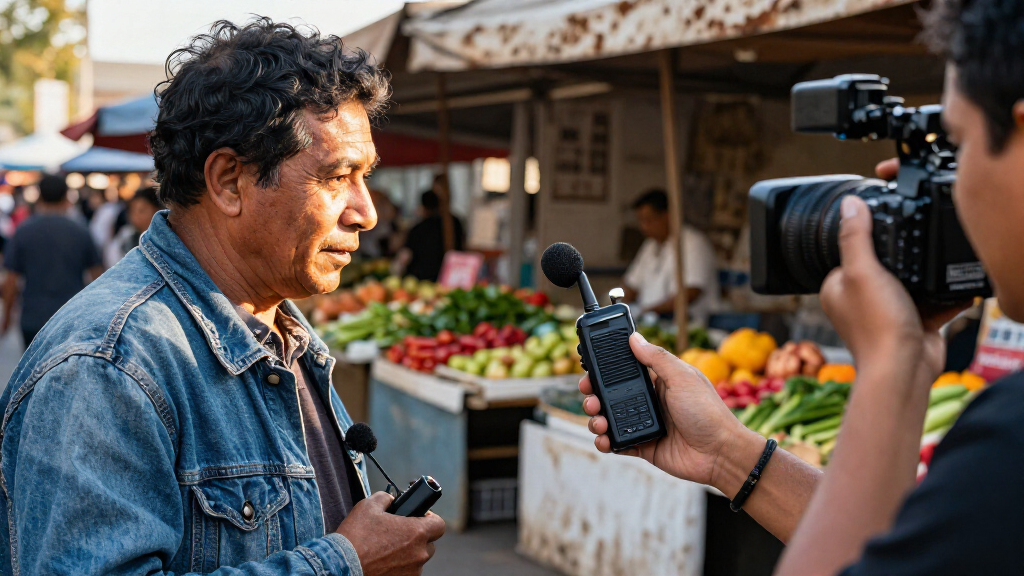
I ranked these options around the work reporters actually need to do: capture clear spoken interviews, connect to the intended recording device, set up without unnecessary friction, and carry the kit between locations. I compared the listed system formats, transmitter counts, included microphone styles, receiver or mobile connection approach, and charging or storage features where specified. A product’s feature count alone did not determine its place; I gave more weight to a practical fit for common reporting workflows.
The ranking favors adaptable kits that can handle more than one typical assignment without asking every reporter to carry a larger UHF receiver system. Compact mobile sets earn consideration for speed and portability, while UHF systems gain ground for users who need bodypacks, multiple channels, or headset options. I also account for tradeoffs: a phone-oriented connector can limit device flexibility, and a multi-transmitter kit can add complexity when a reporter usually records one speaker. These are comparisons based on the listed product features, not claims of hands-on audio testing.
| wireless lavalier microphones for reporter | Connectivity |
|---|---|
| TONOR UHF Wireless Microphone | UHF wireless |
| Phenyx Pro PTU-52-2B UHF Wirel | — |
| Mini Mic Pro Wireless Lavalier | — |
| MICNAUX 8-Channel UHF Wireless | — |
| DJI Mic Mini Wireless Micropho | Bluetooth, DJI OsmoAudio, and USB Type-C |
| FULAIM X6 Pro Wireless Lavalie | — |
| MAYBESTA Wireless Mini Lavalie | — |
| DJI Mic Mini Wireless Micropho | Bluetooth, Wi-Fi, USB-C |
| EALSEM ES-384 4-Channel UHF Wi | — |
| Labstandard Dual Wireless Lava | Bluetooth |
| Wireless Lavalier Microphone S | Wi-Fi |
| HOTEC UHF Wireless Headset and | UHF |
Factors to Consider When Choosing Wireless Lavalier Microphones For Reporters
Before choosing a wireless kit, match it to the reporting workflow rather than chasing the largest transmitter count or the longest feature list. These decisions can affect whether the microphone connects to your recorder, handles a two-person interview, and stays manageable on a busy assignment.
Match the Receiver to Your Recording Device
Start with the input on the device you will actually record with: a phone, camera, or audio recorder may each call for a different receiver or adapter. A mobile receiver can make a phone-first kit quick to use, but that convenience may not carry over to another device. Check connector type and supported operating system or device model against your exact equipment, not just the product name. A USB-C label, for example, does not by itself confirm that every phone, tablet, or recording app will work as expected. If your assignments move between devices, favor a kit with a clearly supported connection path or budget for compatible adapters. Avoid buying on the assumption that a plug fitting means the full recording chain is compatible.
Choose Transmitter Count for Your Interview Format
One transmitter is often enough for a reporter recording a stand-up or a single interview subject, while a two-transmitter setup can cover a reporter and guest or two guests. Four transmitters, as offered by the FULAIM X6 Pro, are more useful for group conversations than routine one-to-one work. Extra transmitters can increase the number of people covered, but they also add charging, labeling, and assignment-management tasks. Think through whether you need separate tracks or simply need several people audible in one recording; the system design may affect that choice. For a typical field interview, a reliable two-person plan can be more useful than unused capacity. Buy for the interviews you regularly conduct, not the largest group you might encounter once.
Pick UHF or a Compact Mobile System Around the Assignment
UHF systems with a receiver and bodypacks tend to suit planned interviews, presentations, and setups where separate microphone choices or multiple channels are useful. Compact mobile kits are easier to carry and can reduce setup steps when recording directly to a phone. Neither format is automatically better in every location: wireless performance depends on the system and surroundings, and product listings alone cannot promise clean reception in a particular venue. For crowded or changing field environments, check the manufacturer’s guidance on frequency selection, range, and interference handling before purchase. Also account for how quickly you can scan or change channels when the recording location changes. A larger rack-style approach may be excessive for a reporter who records short clips on a phone, while a tiny phone kit may not fit a formal camera workflow.
Treat Microphone Style as a Reporting Choice
A lavalier is discreet for interviews and stand-ups, while a headset microphone can keep the capsule positioned consistently during movement or presentation. Bundles such as the TONOR, MICNAUX, and HOTEC systems include headset and lavalier options, which can be useful when one kit serves different speakers or settings. More microphone styles mean more flexibility, but they also mean more pieces to carry and keep track of. Consider clothing, movement, and whether the subject is comfortable wearing a visible or attached microphone. A lavalier can pick up fabric rubbing if placement is careless, so plan for clips, wind protection, and a quick audio check. Do not assume a bundled microphone style will suit every guest or assignment.
Plan for Power, Storage, and Backup
A charging case can help keep a compact kit together and ready between assignments, but it does not replace checking runtime against the length of a workday. Count the power needs of transmitters and receiver separately, and confirm how each part recharges. A system with several transmitters needs a charging routine that prevents one unit from being left behind or depleted. Reporters should also plan a backup recording path, such as a second device or the recorder’s onboard audio, when a missed interview would be costly. Test the complete setup before leaving, including connection, battery status, and recorded playback. A small kit is only field-ready when its accessories and charging habits are manageable too.
Pay for the Workflow You Need, Not Extra Complexity
Paying more makes sense when a kit adds a capability you will use often, such as multiple transmitters, a broader range of microphone styles, or a receiver suited to your main camera workflow. For a beginner or phone-only reporter, a straightforward mobile set may be easier to learn and pack than a multi-channel UHF system. Extra channels and transmitters can be valuable for recurring panel or group coverage, but they do not automatically improve a one-person interview. Check what is included and what must be purchased separately, especially adapters, wind protection, clips, and charging accessories. Compare the time needed to configure the system as well as its feature list. The best fit is the one that records the assignment reliably without creating more setup work than the job requires.
Frequently Asked Questions
Can I use a phone-oriented wireless lavalier kit with a camera?
Not always. Phone-oriented kits such as the Mini Mic Pro, MAYBESTA, and mobile-receiver DJI Mic Mini are designed around specific mobile connections, which may not match a camera’s input. Check whether the receiver supports your camera directly or whether a compatible adapter is available and supported. An adapter can solve a connector mismatch, but it does not guarantee compatibility with every device or recording app. If you regularly switch between phone and camera, favor a kit whose connection options explicitly cover both.
Is a two-transmitter kit enough for a reporter and an interview guest?
For many one-to-one interviews, two transmitters provide a practical way to mic both the reporter and guest. The DJI Mic Mini kit and Phenyx Pro PTU-52-2B are among the listed options with two transmitters or bodypacks. Before choosing, check how the receiver handles the two signals and whether your recorder can capture them as separate channels if that matters to your editing process. A two-transmitter kit will not cover a larger panel without another microphone plan. If group interviews are frequent, a four-transmitter option may fit better, though it brings more equipment to manage.
Should I choose UHF or a compact digital-style mobile microphone for field reporting?
Choose based on the recording setup and the locations you work in, rather than assuming one wireless format always performs better. UHF systems such as the Phenyx Pro, MICNAUX, EALSEM, and HOTEC can suit bodypack-based interviews or setups that use multiple microphone styles. Compact mobile kits are easier to carry and may connect directly to a phone, which can make quick reporting less cumbersome. Reception depends on the specific system, frequency conditions, and surroundings, so review the manufacturer’s guidance and test in your usual locations. If your assignments vary, connection flexibility and a backup recording plan may matter as much as wireless format.
Do I need four transmitters for reporting?
Most solo stand-ups and two-person interviews do not require four transmitters. A four-transmitter system such as the FULAIM X6 Pro is more relevant when you regularly record several speakers at once. Extra units can save time compared with sharing one microphone, but they add charging, setup, and tracking responsibilities. They may also be unnecessary bulk for a reporter whose typical assignment involves one guest. Choose four only if multi-person coverage is a recurring need and the receiver and recording workflow support it.
What should I check before using a wireless lavalier on a live assignment?
Confirm device connection, battery status, microphone placement, and recorded playback before the interview begins. Check that the lavalier is secure and not rubbing against clothing, and use suitable wind protection outdoors if the kit supports it. Listen for interference or dropouts at the actual location rather than relying only on a stated range. Keep a backup recording option ready, especially for an interview that cannot be repeated. A brief pre-assignment check can catch a wrong adapter, muted transmitter, or low battery before it becomes a missed recording.
Conclusion
For a broad mix of mobile reporting and two-person interviews, I would start with the DJI Mic Mini Wireless Microphone Kit as my best overall pick, while the Phenyx Pro PTU-52-2B is my best value fit for reporters who prefer a two-bodypack UHF setup. For a premium-style compact workflow, the DJI Mic Mini kit with charging case is the strongest choice here when portability and two transmitters are priorities. Beginners recording directly to a compatible phone may find the Mini Mic Pro or MAYBESTA easier to approach, after confirming device support. For specific needs, choose the FULAIM X6 Pro for multi-speaker coverage, or a headset-and-lavalier UHF bundle such as MICNAUX or HOTEC when microphone-style flexibility matters more than pocket-size carry. The right choice depends on your recorder and interview format first, then on how much extra gear you want to manage.
Evergreen bestsellers Picks

Hisense 85 U7 Mini-LED ULED 4K UHD Smart Google TV (85U7SG, 2026)

Bose QuietComfort Wireless Earbuds with Active Noise Cancellation, Dewdrop Mint

LG 85-Inch QNED73B Mini LED 4K Smart TV (2026)
As an affiliate, we earn on qualifying purchases.