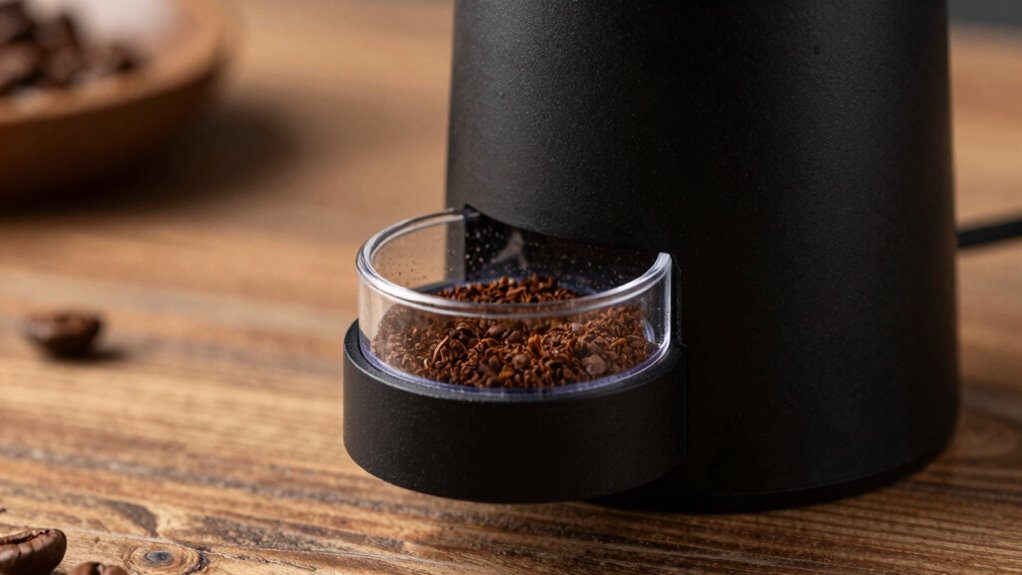

Residual coffee grounds tend to cling to your grinder’s burrs and internal parts, gradually building up over time without you noticing. This retention causes uneven grind sizes and flavor muddiness, ruining your brew’s consistency and freshness. Regular cleaning removes these invisible residues, ensuring your grinder performs at its best and helps preserve the true flavor of your coffee. Keep going to discover simple steps that can keep your grinder—and your coffee— consistently excellent.

Get everyday essentials delivered free with Prime
- Fast, free delivery on millions of items
- Prime Video, Amazon Music and more included
- Member-only deals all year
Key Takeaways
- Residual coffee grounds cling to burrs and internal parts, causing uneven grind size and flavor inconsistency.
- Regular cleaning removes buildup, maintaining grinder accuracy and ensuring consistent extraction quality.
- Small particles hidden in crevices can influence flavor, leading to muddiness or unintended taste shifts.
- Disassembling burrs and using brushes or compressed air effectively eliminates invisible retention.
- Addressing retention regularly preserves coffee freshness and ensures reliable, high-quality brewing results.

If you’ve noticed that your coffee grinder isn’t producing the same fresh flavor as before, retention might be the culprit. Coffee grinder retention refers to the small amount of coffee grounds that cling to the burrs, chamber, or other internal parts after grinding. Over time, this buildup can considerably impact your brew, leading to inconsistent grind size and flavor. The first step to addressing this issue is regular grinder cleaning. Even if you’re diligent about your routine, tiny coffee particles can remain tucked away, subtly altering the grind quality each time you brew. When these residues accumulate, they can cause the grinder to produce uneven grind sizes, which directly affects extraction and taste.
Cleaning your grinder isn’t just about aesthetics—it’s vital for maintaining peak performance. Regular grinder cleaning removes old coffee residues, preventing them from mixing with fresh beans and causing flavor muddiness. Think of it as resetting your grinder’s accuracy; a clean burr set ensures that each grind is consistent, allowing you to dial in the perfect grind size for your brewing method. If you notice your grind size fluctuating or the flavor profile changing unexpectedly, it’s likely due to retained grounds affecting the burrs’ ability to produce uniform particles.
Regular cleaning ensures consistent grinds and preserves optimal flavor.
Pay close attention to the grind size when cleaning. Residual coffee particles can cause the grind size to become inconsistent, making your espresso too bitter or your French press too weak. When you perform grinder cleaning, you should disassemble the burrs and brush away any leftover grounds, paying special attention to nooks and crevices. Using a grinder cleaning brush or compressed air can help remove stubborn residues that regular cleaning might miss. It’s also wise to use grinder cleaning tablets periodically, especially if you grind daily, to break down any built-up oils and residues that can affect grind size and flavor.
Ultimately, addressing grinder retention through consistent cleaning improves the uniformity of your grind size. This, in turn, yields a more balanced extraction, ensuring each cup tastes as fresh and flavorful as intended. Remember, retention isn’t just a minor nuisance; over time, it can undermine your entire brewing process. Making grinder cleaning a regular part of your routine keeps your grinder performing at its best, preserving the clarity of the beans’ flavors and ensuring your coffee is consistently excellent.
As an affiliate, we earn on qualifying purchases.
Frequently Asked Questions
How Does Grinder Retention Affect Espresso Shot Quality?
Grinder retention impacts your espresso shot quality by causing inconsistent grind size and disrupting grinder calibration. When leftover grounds build up, the next dose may be coarser or finer than intended, leading to uneven extraction. This inconsistency can result in weak or bitter shots. Regularly cleaning and maintaining your grinder guarantees proper retention, helping you achieve consistent grind size and ideal espresso quality every time.
Can Cleaning Routines Completely Eliminate Retention Issues?
Cleaning routines can’t completely eliminate retention issues because dust accumulation and grind residue often hide in hard-to-reach areas. While regular cleaning improves grind consistency, some residual particles remain, affecting shot quality over time. To minimize retention, you need consistent, thorough cleaning, including burrs and chute, but accept that small amounts of dust may still linger. This ongoing effort helps maintain better consistency, even if it doesn’t fully eliminate retention.
What Grinders Have the Least Retention for Home Use?
You want grinders with minimal retention for home use, so look for those with conical burrs made from titanium or ceramic, which typically have less retention. They also work best with a consistent grind size, reducing leftover grounds. Brands like Baratza Virtuoso and Capresso Infinity stand out because their materials and design promote smooth, efficient grinding with less leftover, helping you maintain flavor and cleanliness effortlessly.
Does Roast Level Influence Coffee Retention in Grinders?
Roast level does influence coffee retention in grinders. Light roasts, with their higher density and different grind characteristics, often result in less uniformity and more retention. Dark roasts tend to produce more fines, increasing retention due to their grind size and brittle nature. To minimize retention, focus on grind uniformity and choose a burr design that promotes consistent particle size, helping you achieve better extraction and flavor clarity regardless of roast level.
How Often Should Commercial Grinders Be Cleaned to Prevent Retention?
You should clean your commercial grinder daily to maintain peak performance. A regular maintenance schedule guarantees minimal retention buildup, which can otherwise cause inconsistent grind size. While deep cleaning might be necessary weekly or biweekly, frequent wipe-downs and removal of residual coffee prevent flavor cross-contamination and ensure consistent extraction. Prioritize cleaning frequency based on usage volume, but never skip daily maintenance to keep your grinder in ideal condition.
Conclusion
Understanding grinder retention is like cleaning a foggy window—you might not see the buildup, but it still clouds your brew’s consistency. By regularly addressing this invisible issue, you clear the way for a more uniform grind and richer flavor. Don’t let hidden retention quietly sabotage your perfect cup. Keep your grinder clean and your coffee tasting its best—because, in this game, clarity is the key to revealing every sip’s full potential.
Halloween Picks
halloween
As an affiliate, we earn on qualifying purchases.