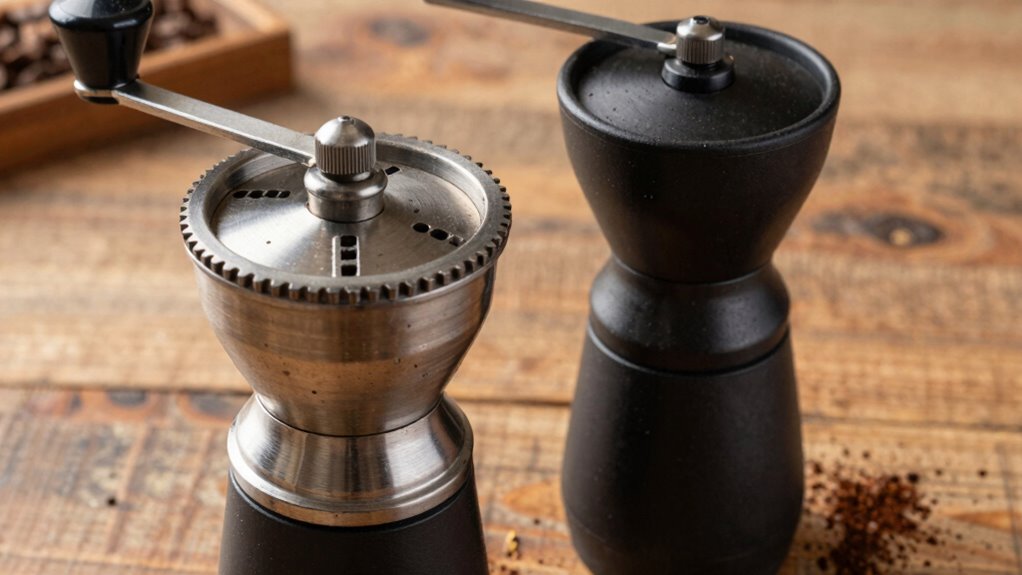

If you prefer a uniform grind that enhances extraction and flavor clarity, a flat burr grinder might be the way to go, though it can produce more heat which may alter subtle notes. Conical burr grinders, on the other hand, tend to generate less heat and provide slightly more varied particle sizes, helping preserve delicate aromas. Your choice affects taste—keep exploring to discover how both options can elevate your coffee experience.
Key Takeaways
- Flat burrs produce more uniform grounds, leading to more consistent extraction and a cleaner, clearer flavor profile.
- Conical burrs generate slightly varied particle sizes, which can create a richer, more nuanced flavor with subtle differences.
- Flat burr grinders may generate more heat, potentially impacting delicate coffee flavors negatively.
- Conical burrs operate more gently and with less heat, helping preserve the beans’ original aroma and subtle taste nuances.
- Overall, flat burrs offer precise grind consistency ideal for flavor control, while conical burrs provide reliable, lower-maintenance results that still taste excellent.
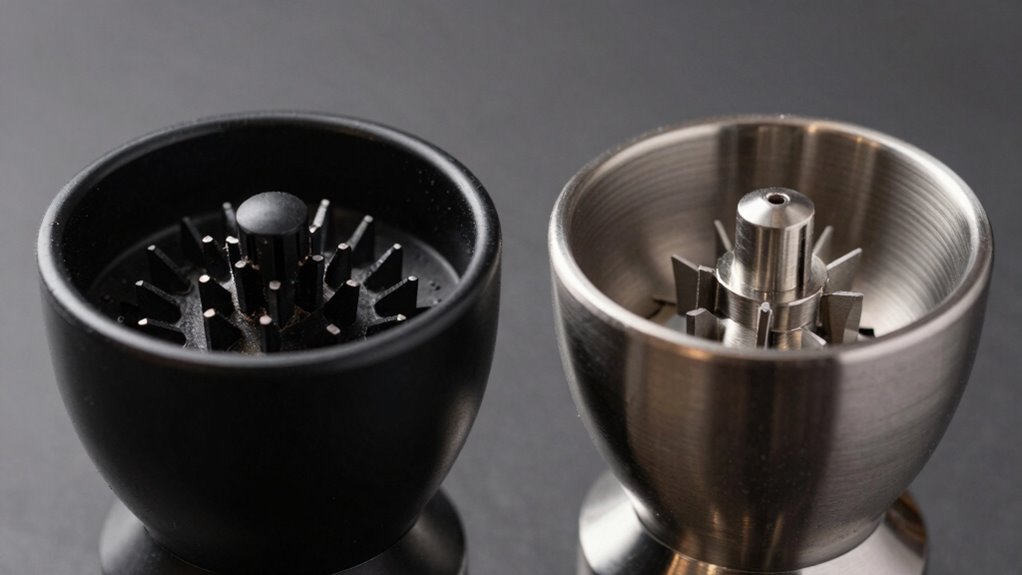
When choosing a coffee grinder, understanding the differences between flat burr and conical burr designs can considerably impact your brewing experience. The type of burr you select influences grind consistency, which directly affects the flavor and aroma of your coffee. Flat burr grinders tend to produce more uniform grounds because the two burrs grind the beans at the same level, resulting in consistent particle sizes. This consistency is especially beneficial if you’re aiming for precise extraction, as uneven grounds can lead to over- or under-extraction, impacting taste. Conical burr grinders, on the other hand, often produce slightly more varied particle sizes but still maintain a good level of consistency suitable for most brewing methods. They tend to be gentler on beans, which can preserve subtle flavor nuances, and often generate less heat during grinding, maintaining bean integrity. Additionally, grinding temperature plays a role in preserving the beans’ delicate flavors and aromas, making the conical design advantageous in this regard. Maintenance requirements differ between the two designs. Flat burr grinders typically demand more attention because their flat surfaces are more prone to buildup of coffee oils and fines, requiring regular cleaning to prevent clogging and ensure optimal performance. This often means disassembling parts and using specialized brushes or cleaning tablets. Conical burr grinders usually have a more straightforward maintenance routine because their design naturally facilitates easier cleaning. The cone shape reduces the accumulation of grounds, and their lower heat generation minimizes oil buildup, making them more forgiving for daily use. If you prefer a grinder with easier upkeep, a conical burr model might be more suitable. In terms of durability, both types can last for years if properly maintained, but flat burr grinders are often associated with commercial settings due to their robust construction and ability to handle higher volumes. Conical burr grinders are common in home setups because they balance performance with lower maintenance needs. The choice between the two ultimately depends on your specific needs and how much effort you’re willing to invest in upkeep. If you value ultimate grind precision and don’t mind regular cleaning, a flat burr grinder could be your best bet. Conversely, if you prefer a reliable, low-maintenance option that still delivers consistent results, a conical burr grinder might be the better choice. Understanding these differences allows you to select a grinder that matches your brewing style and lifestyle, ensuring a better-tasting cup every time.

CAROTE 12" Carbon Steel Wok Pan, 4.5QT Woks & Stir-fry Pans Nonstick, No Chemical Coated Pre-Seasoned Flat Bottom Wok with Lid for Stir Fry, Chinese Cast Iron Wok, Cooking Pan, All Stovetop Compatible
【Pre-Seasoned】Carote wok is crafted from high-quality carbon steel for exceptional performance. These wok pans undergo an advanced, upgraded...
As an affiliate, we earn on qualifying purchases.
Frequently Asked Questions
Which Burr Type Is Better for Espresso?
You should choose a conical burr grinder for espresso because it offers better grind size precision, essential for a rich, balanced shot. Conical burrs tend to produce less noise, making your brewing experience more pleasant. Their consistent grind ensures ideal extraction, enhancing flavor. Flat burrs can also work, but conical burrs are generally preferred for espresso due to their superior consistency and quieter operation.
Do Flat and Conical Burrs Require Different Maintenance?
Yes, flat and conical burrs require different maintenance. You should regularly check grind adjustment and burr alignment to guarantee consistent performance. Flat burrs may need more frequent cleaning because they tend to trap grounds, while conical burrs are easier to clean but still benefit from periodic inspection. Proper maintenance helps maintain grind consistency and flavor, so follow your grinder’s specific guidelines for best results.
How Does Grind Consistency Affect Flavor?
Grind consistency directly impacts flavor because uniformity in your grind guarantees better flavor extraction. When your grind is even, water flows smoothly through the coffee, pulling out more nuanced flavors. If your grind is uneven, some grounds over-extract, making your coffee bitter, while others under-extract, leaving it weak. So, maintaining a consistent grind helps you enjoy richer, more balanced flavors in every cup.
Are There Specific Beans Suited for Each Burr Type?
Yes, certain beans are better suited for each burr type. For flat burrs, medium to dark roasts work well because they enhance bean flavor and produce a consistent grind, ideal for espresso and drip. Conical burrs excel with lighter roasts, preserving delicate flavors and offering more versatility. Match the roast to your preferred brewing method, and consider roast compatibility to maximize flavor extraction and enjoy a richer coffee experience.
Which Burr Grinder Is More Durable Long-Term?
You’ll find that conical burr grinders are generally more durable long-term, thanks to their design which handles heat better and reduces wear. They also tend to produce less grind noise, making them more comfortable to use regularly. Keep in mind, cleaning frequency impacts longevity—regular cleaning helps prevent buildup and keeps your grinder running smoothly. Overall, conical burrs are a solid choice if you want a grinder that stands the test of time.

YOSUKATA 13.5" Carbon Steel Wok Pan – Pre-Seasoned Flat Bottom Pow Wok for Stir Fry, BBQ, Grill & Camping – Traditional Japanese Chinese Cookware – Compatible with Induction, Electric, Gas, Open Fire
GENUINE TASTE: Bring authentic wok flavor to your kitchen or outdoor cooking with the YOSUKATA 13.5” flat-bottom carbon...
As an affiliate, we earn on qualifying purchases.
Conclusion
Ultimately, choosing between flat and conical burrs depends on your taste preferences. Flat burrs often deliver consistent grind size, making them ideal for precision brewing, while conical burrs tend to produce less heat, preserving bean flavor. notably, studies show conical burrs generate up to 50% less heat, which can help retain more of your coffee’s nuanced flavors. So, consider what matters most to you—precision or flavor preservation—and choose the grinder that best fits your brewing style.

Sur La Table 12" Carbon-Steel Wok, Flat Bottom Pan for High-Heat Cooking – Ideal for Deep-Frying, Steaming, and Stir-Frying– Lightweight, Fast Heating
Our exclusive Sur La Table Carbon-Steel Wok is perfect for stir-frying meats and veggies, deep-frying tempura, steaming with...
As an affiliate, we earn on qualifying purchases.
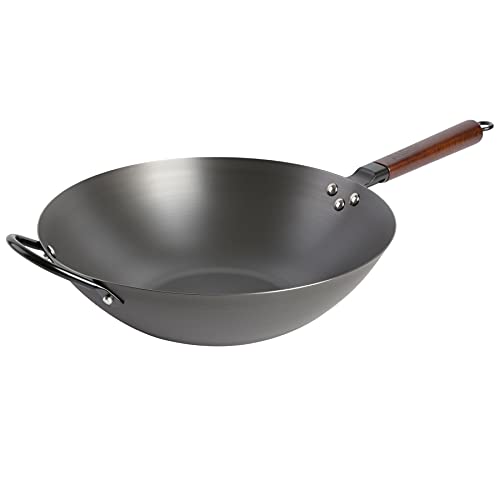
Babish Carbon Steel Flat Bottom Wok and Stir Fry Pan, 14-Inch
Babish 14 Inch Carbon Steel Wok (6" Flat Bottom)
As an affiliate, we earn on qualifying purchases.