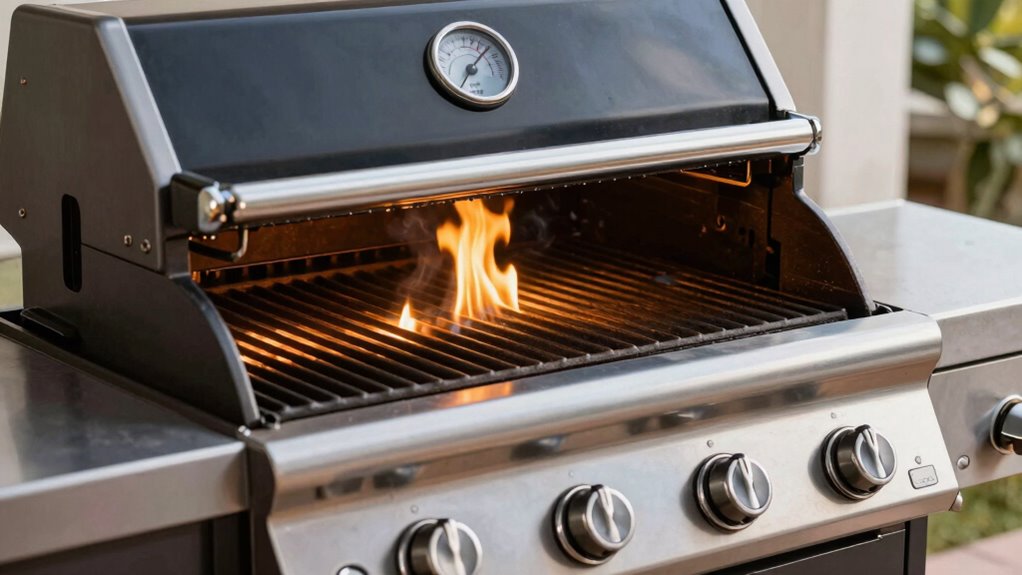

BTU ratings on gas grills don’t tell the whole story about how well they perform. Many assume higher BTUs mean better heat, but factors like heat distribution, fuel efficiency, and grill design matter more. A well-designed grill with even heat and good heat retention can outperform a high-BTU model. If you want truly effective cooking performance, it’s essential to look beyond BTUs—exploring these real influences will help you choose smarter.
Key Takeaways
- BTU ratings alone do not determine a grill’s heating performance or evenness of heat distribution.
- Proper burner design and placement are crucial for consistent, efficient heat across the cooking surface.
- Heat retention, insulation, and lid design significantly influence overall cooking performance.
- Fuel efficiency and flame control features help optimize heat without unnecessary fuel consumption.
- Evaluating the grill’s size, heat distribution, and construction quality offers a more accurate performance prediction than BTU alone.
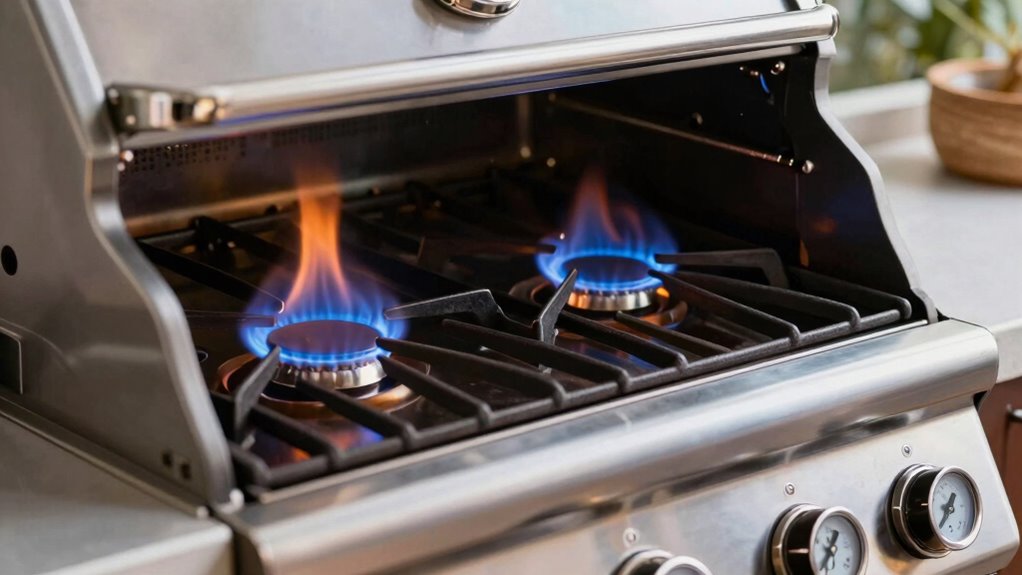
Many people believe that higher BTU ratings automatically mean a better gas grill, but this isn’t always true. While BTU, or British Thermal Units, measures the heat output, it doesn’t tell the whole story about how well a grill performs. Instead, you should focus on factors like fuel efficiency and cooking performance. A grill with the highest BTU rating might seem like it would cook faster or more evenly, but if it wastes fuel or fails to distribute heat properly, those extra BTUs are pointless.
Fuel efficiency plays an essential role in determining how well your grill performs in real-world use. A grill with a high BTU count can burn through propane or natural gas quickly, leading to higher fuel costs and more frequent refills. Conversely, a grill with moderate BTUs but optimized burners and good heat distribution can cook just as well—or better—while saving you money and reducing waste. So, instead of fixating solely on BTU numbers, check how efficiently it converts fuel into heat. Look for features like precise flame control and well-designed burners that maximize heat transfer without excessive fuel consumption.
Cooking performance is another key factor that many overlook when choosing a gas grill. A higher BTU rating doesn’t automatically guarantee even heat across the cooking surface. Many grills with high BTUs have hot spots or uneven heat distribution, which can lead to uneven cooking or burning food. To assess a grill’s true cooking performance, consider the design of the cooking surface, the placement of burners, and how well it maintains consistent temperatures. A well-built grill with good heat retention will cook food evenly, whether you’re searing steaks or grilling vegetables, regardless of its BTU rating.
Furthermore, the size of the cooking area matters. Sometimes, a grill with a lower BTU rating but a larger cooking surface can outperform a smaller, higher-BTU model because it provides more even heat over a broader area. Also, don’t forget to consider factors like insulation and lid design, which influence how heat is retained and distributed. These design elements can considerably improve cooking performance without increasing the BTU count.
Additionally, understanding heat distribution and how it impacts cooking results can help you select a more effective grill. Ultimately, the best way to gauge a gas grill’s effectiveness isn’t by its BTU rating alone. Focus on how efficiently it uses fuel, how evenly it cooks, and whether its design features support consistent performance. By moving beyond the myth that higher BTUs mean better grilling, you’ll make smarter choices that deliver better flavor, better heat control, and better value in the long run.
Frequently Asked Questions
Can a High BTU Grill Cook Food Faster?
Yes, a high BTU grill can cook food faster, but it’s not the only factor affecting cooking speed. You need good heat distribution across the cooking surface, so heat doesn’t concentrate in one spot. Even with high BTUs, poor heat distribution can lead to uneven cooking. Focus on grills with balanced heat and proper flame control for ideal cooking speed and consistent results.
Is More BTU Always Better for Grilling?
More BTUs aren’t always better for grilling, and BTU misconceptions can mislead your expectations. Higher BTU ratings suggest more heat, but they don’t guarantee better grilling performance. Instead, focus on how well your grill distributes heat, the size of the cooking surface, and the quality of the burners. These factors work together to deliver even, consistent heat essential for perfect grilling, regardless of the BTU number.
How Does Grill Size Affect Cooking Performance?
Your grill size directly impacts cooking performance by influencing heat distribution and cooking area. A larger grill provides more space, allowing you to cook multiple items simultaneously, but it might require more heat to maintain even temperatures. Smaller grills heat up faster and are easier to control, making them ideal for quick meals. Ultimately, choose a size that matches your cooking needs and guarantees even heat distribution for consistent results.
Do Brand Names Influence Grill Heat Efficiency?
Ever wonder if brand names really matter for grill heat efficiency? They do, because reputable brands often focus on superior grill design and quality materials, leading to more consistent and efficient heat. A well-designed grill maximizes heat distribution, regardless of BTU ratings. So, while brand reputation can hint at performance, always check the grill’s design features and construction quality to guarantee you’re getting the best heat output for your grilling needs.
What’s the Best Way to Measure Actual Grill Heat?
To measure your grill’s actual heat, use an infrared thermometer to check the temperature at different spots. This helps you assess temperature consistency and heat distribution across the cooking surface. By doing this, you can identify hot and cool zones, ensuring even cooking. Regularly monitoring with an infrared thermometer provides a clear picture of your grill’s performance, helping you make adjustments for peak heat control.
Conclusion
Remember, focusing solely on BTU ratings can lead you down a misleading path. Instead, consider how well a grill distributes heat and its overall design—these subtle qualities often make the true difference. Don’t let assumptions steer your choices; sometimes, the quiet, understated features can offer a more satisfying grilling experience. Trust your instincts and look beyond the numbers—your perfect barbecue moment might just be hiding in the details you overlook.