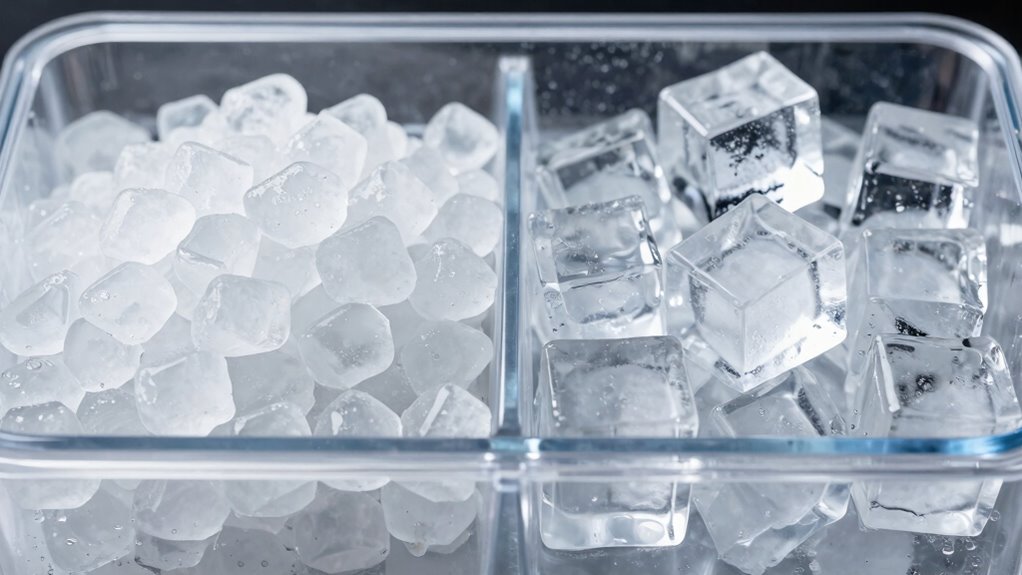
Nugget ice is soft, chewable, and great for cocktails or hospital use, while cube ice is solid, slow-melting, and ideal for presentation and long-lasting cooling. Choosing between them depends on your needs—whether you want easy-to-eat ice or a sleek, professional look. The type of ice impacts storage, efficiency, and beverage quality. Keep exploring to learn how each type can best serve your operation or lifestyle.
Key Takeaways
- Nugget ice is softer and chewable, ideal for cocktails and beverages, while cube ice is harder and better for chilling drinks without dilution.
- Nugget ice melts slower due to its irregular shape, providing longer-lasting cooling compared to uniform cube ice.
- Cube ice offers a cleaner, more professional presentation, making it preferred for high-end establishments.
- Nugget ice is easier to chew and preferred in healthcare and hospitality for patient comfort and customer experience.
- The choice between nugget and cube ice impacts ice storage, machine type, and overall beverage quality and presentation.
If you’re looking to keep drinks cold and invigorating, understanding how ice makers work is essential. One of the key aspects to consider is how they store ice and ensure its quality. Ice storage is crucial because it determines how much ice you can keep on hand at any given time. A well-designed ice maker has a dedicated bin that holds the ice until you need it, preventing waste and keeping your drinks consistently chilled. The size and insulation of this storage area directly affect how long the ice stays frozen, especially during busy hours or if you’re hosting a large gathering. Good ice storage also minimizes the need for frequent refilling, saving you time and effort. Additionally, choosing the right backup power solution can help maintain ice production during outages, ensuring your supply isn’t interrupted. Water filtration plays a vital role in producing high-quality ice. Since ice is made from water, any impurities or contaminants in the water supply can affect the taste, clarity, and safety of the ice. Many modern ice makers come equipped with built-in water filters that remove sediments, chlorine, and other impurities before the water is frozen. This filtration process ensures that the ice is not only clean but also free of odors or flavors that could alter the taste of your beverages. Clean water results in clearer, more visually appealing ice, especially important if you’re serving drinks for guests or in a professional setting. If your water source has high mineral content or a strong chlorine smell, investing in an ice maker with effective filtration becomes even more critical. Understanding how these components work together can help you choose the right ice maker for your needs. For instance, if you frequently entertain, a model with larger ice storage will keep your drinks topped up without constant refilling. If your water quality isn’t great, prioritizing water filtration ensures your ice remains pure and tastes fresh. Maintenance also plays a role—regularly checking and replacing filters keeps your ice maker functioning at its best. Proper ice storage and effective water filtration are interconnected; they work together to produce high-quality ice that keeps your beverages enjoyable and safe. By paying attention to these details, you’ll ensure your ice maker consistently delivers the perfect ice for any occasion, making your drinks cooler, cleaner, and more satisfying.

KitchenAid KSMPSA Pasta Roller Attachment, Silver, 1'
Powered by your KitchenAid Stand Mixer to make quick and easy work of fresh homemade pasta in your...
As an affiliate, we earn on qualifying purchases.
Frequently Asked Questions
Which Ice Type Melts Slower in Warm Environments?
Nugget ice melts slower in warm environments because it has better thermal properties due to its porous, irregular shape. This structure increases surface area, which helps it retain cold longer and slows melting rates. Cube ice, with its solid, compact form, has a higher thermal conductivity and melts faster. So, if you want ice that lasts longer, nugget ice is your best choice for slow melting in warm settings.
Can Nugget and Cube Ice Be Used Interchangeably?
Imagine you’re in the era of the Titanic—can nugget and cube ice be used interchangeably? Yes, but with caveats. They differ in ice flavor, melting rate, and storage considerations. Nugget ice melts slower and absorbs flavors better, ideal for drinks. Cube ice is more versatile but melts faster, risking dilution. Use them accordingly to guarantee ideal taste and presentation, but don’t expect perfect interchangeability across all settings.
Are There Health Risks Associated With Certain Ice Types?
You should be aware of potential health risks with different ice types, mainly contamination concerns. Poor water quality can lead to bacteria or mold growth in your ice, especially if the maker isn’t cleaned regularly. Nugget and cube ice can pose similar risks if the water source isn’t clean or the machine isn’t maintained. Always verify your ice maker uses safe, filtered water and is cleaned regularly to minimize health hazards.
How Energy-Efficient Are Different Ice Maker Models?
Imagine a sleek, low-energy device quietly humming in the corner—that’s how energy-efficient some ice makers are. You’ll find models with varying energy consumption, affecting both your utility bills and environmental impact. Generally, nugget ice makers tend to use less power than traditional cube ice models, making them more eco-friendly. Choosing an energy-efficient model helps you save money while reducing your carbon footprint, turning your ice-making into a responsible choice.
What Maintenance Is Needed to Keep Ice Quality High?
To keep your ice quality high, you need to regularly clean your machine and check water filtration. Clean the ice maker according to the manufacturer’s instructions to prevent mineral buildup and mold. Replace or clean filters as recommended to guarantee pure water, which improves ice clarity and taste. Regular maintenance also includes inspecting for clogs or leaks, helping your ice maker operate efficiently and produce the best ice consistently.
3-in-1 Pasta Attachment for KitchenAid Stand Mixer, Stainless Steel Pasta Maker for KitchenAid Mixer Attachments, Pasta Maker Includes Pasta Roller, Spaghetti & Fettuccine Cutter by Cofun
3-in-1 pasta maker for kitchenaid mixer attachments: It includes a pasta roller and a spaghetti & fettuccine cutter,...
As an affiliate, we earn on qualifying purchases.
Conclusion
Choosing between nugget and cube ice is like picking the perfect outfit for an occasion—you want it to match your needs. Nugget ice offers a chewable, versatile option, while cube ice keeps drinks colder longer and looks sleek. By understanding these differences, you can select the right ice for your setting. Just like a well-chosen accessory, the right ice enhances your experience—making every sip feel just right.

Pasta Attachment Shear Shaft Coupler - by Ohoho - Compatible with KitchenAid Stand Mixer Pasta Attachment, for KSMP Series, Repair for Pasta Sheet Roller, Spaghetti Cutter, Fettuccine Cutter
Compatible with Model: Drive Shear Shaft replacement for KitchenAid Pasta Attachments KSMP Series (KSMPCA, KSMPRA, KSMPSA, 5KSMPRA, 5KSMPSA...
As an affiliate, we earn on qualifying purchases.

KitchenAid Stand Mixer Attachment, KSMPRA 3-Piece Pasta Roller & Cutter Set
Genuine KitchenAid Stand Mixer Attachment - Designed and engineered by the manufacturers of the KitchenAid Stand Mixer, sold...
As an affiliate, we earn on qualifying purchases.