Thin sheet pans warp during baking because their metal isn’t thick enough to handle the heat and thermal expansion. When heated, lightweight pans can’t resist the stress, causing them to bend or wobble. Thicker pans, like those made from heavy-gauge steel, distribute heat more evenly and resist warping. Understanding the metal thickness rule helps you choose better pans that stay flat and safe to use. Stick around to learn more about how to keep your baking surfaces stable.
Key Takeaways
- Thinner sheet pans heat unevenly and warp more easily under thermal stress.
- Thicker, heavy-gauge metals resist warping by distributing heat evenly and maintaining structural stability.
- Rapid temperature changes cause thin pans to expand unevenly, increasing warping risk.
- Heavy-duty or professional-grade pans are less prone to warping than ultra-thin options.
- Proper care and avoiding sudden temperature shifts help prevent warping and extend pan lifespan.
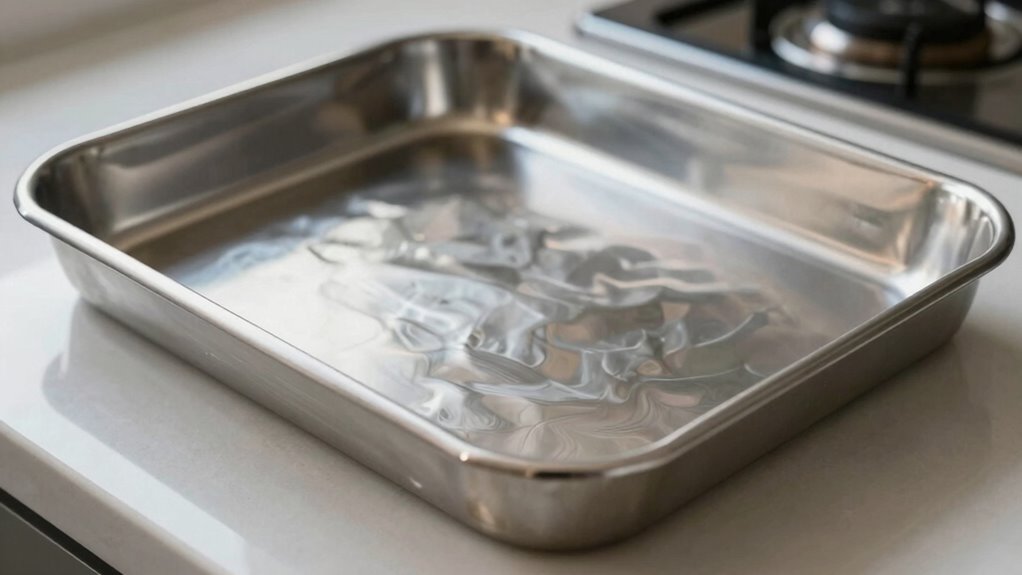
Warped sheet pans can be frustrating, especially when they affect your cooking and baking results. You rely on a flat, stable baking surface to guarantee even heat distribution and consistent outcomes. When your sheet pan warps, it compromises oven safety and makes it difficult to achieve perfect baked goods. Warping can cause the pan to wobble or sit unevenly in the oven, increasing the risk of spills or uneven cooking. This instability also can lead to accidents or burns if the pan shifts unexpectedly. Understanding why sheet pans warp and how metal thickness plays a role can help you choose the right pans and extend their lifespan.
Warped sheet pans disrupt baking, cause safety hazards, and lead to uneven results—thicker metal helps prevent warping and ensures stability.
The primary factor that influences whether a sheet pan warps is its metal thickness. Thinner pans heat up quickly but are more prone to warping because they can’t withstand the thermal stress as well as thicker pans. When exposed to high oven temperatures, the metal expands unevenly if it’s too thin, causing it to bend or warp over time. Conversely, thicker pans, such as those made from heavy-gauge steel or aluminized steel, have greater resistance to warping because their greater mass distributes heat more evenly and resists the stresses caused by rapid temperature changes. This means investing in a higher-quality, thicker baking surface can considerably reduce warping issues.
Oven safety is another critical consideration. Warped pans can create hazards if they wobble or tilt during use, especially when handling hot items. An uneven baking surface not only affects your results but can also cause the pan to slip or slide, increasing the risk of burns or accidents. Ensuring your sheet pan maintains its shape during baking is essential for safe oven operation. Proper metal thickness helps maintain structural integrity, providing a stable baking surface that stays flat even under high heat. This stability is especially important if you’re baking delicate items like cookies or pastries that require precise placement on a flat surface.
To prevent warping, choose sheet pans with a thicker gauge of metal, often labeled as “heavy-duty” or “professional-grade.” Avoid ultra-thin options unless you’re only using them for low-temperature tasks. Proper care also extends the lifespan of your pans: avoid sudden temperature changes, such as placing a hot pan into cold water, which can cause warping. Regularly inspecting your pans for signs of warping or warping tendencies can help you replace or reinforce them before they become unsafe or unusable. Additionally, considering proper ventilation in your oven setup can help manage heat distribution more evenly and reduce thermal stress. By understanding the importance of metal thickness and maintaining proper oven safety practices, you’ll enjoy better baking results and safer handling in your kitchen.
Frequently Asked Questions
Can I Repair a Warped Sheet Pan Myself?
Yes, you can attempt pan repair yourself by reinforcing the warped sheet pan with metal. First, straighten the pan as much as possible by applying gentle heat or pressure. Then, add a metal reinforcement, like a thin steel strip, along the warped edge and secure it with high-temperature adhesive or rivets. This DIY approach helps prevent further warping and extends your pan’s lifespan.
Which Materials Are Most Resistant to Warping?
You should choose sheet pans made from thicker metals like stainless steel or heavy-duty aluminum, as they resist warping better. These materials have superior metal composition, providing sturdiness, and their excellent heat conduction helps distribute heat evenly, reducing stress that causes warping. Avoid thin or lightweight pans, which are more prone to bending under high heat. Investing in quality materials guarantees your pans stay flat and durable over time.
How Does Oven Temperature Affect Warping?
You’ll notice that higher oven temperatures increase metal expansion, making sheet pans more prone to warping. When the oven gets hotter, the metal expands unevenly, especially if it’s thin or unevenly heated, causing warping over time. To prevent this, stick to recommended temperature ranges and opt for thicker, high-quality pans, which resist expansion and maintain their shape better during baking.
Is Thicker Metal Always Better for Baking?
Thicker metal isn’t always better for baking. While it offers increased heat resistance and durability, it can lead to heavier pans that are harder to handle and may heat unevenly. Thin sheets heat quickly but risk warping under high temperatures. Balance your baking needs by considering the metal thickness—moderate thickness provides a harmonious combination of heat resistance, stability, and ease of use, ensuring your baked goods come out perfectly.
Can I Prevent Warping With Specific Cleaning Methods?
You can help prevent warping by using proper cleaning techniques and maintenance tips. Avoid sudden temperature changes; instead, hand wash your pans with warm water and a gentle sponge. Never use abrasive scrubbers that could weaken the metal. Regularly dry them thoroughly to prevent rust. By maintaining your pans carefully and following these cleaning techniques, you reduce the risk of warping and extend their lifespan.
Conclusion
Understanding the metal thickness rule helps you pick the right sheet pan and prevent warping. By choosing pans that meet the recommended thickness, you’ll save yourself frustration and money in the long run. Remember, isn’t it worth investing in quality cookware that lasts? With this knowledge, you can enjoy perfectly flat pans that stand up to your busiest kitchen days. So, next time you shop, ask yourself: am I choosing durability or just convenience?