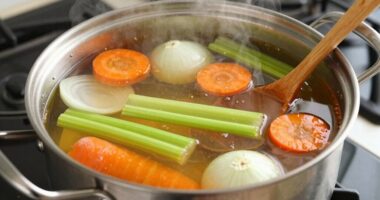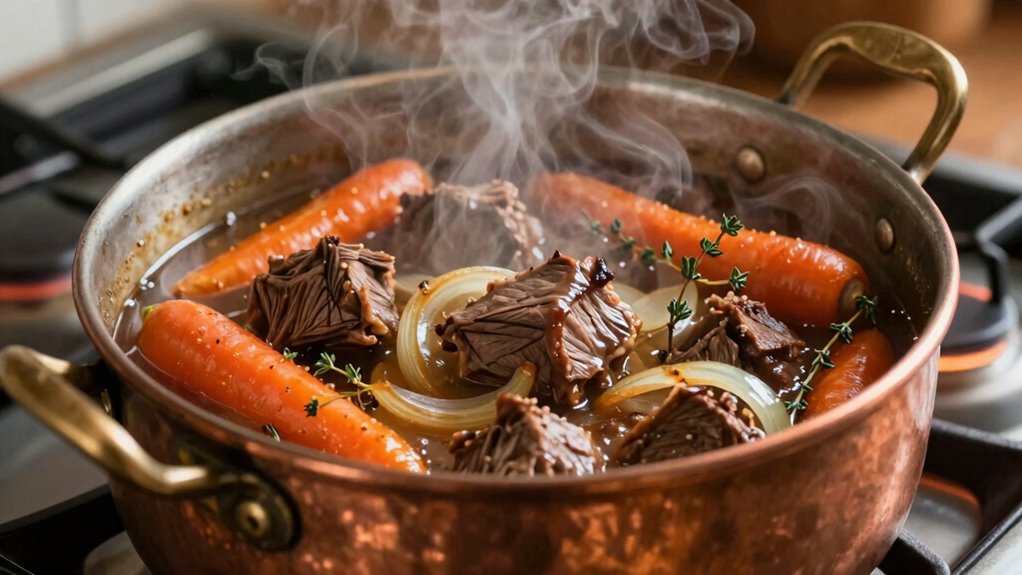

The secret to tender stew is cooking it low and slow. This gentle heat allows collagen and connective tissues to gradually break down, turning into rich gelatin that makes your meat melt-in-your-mouth tender. High temperatures can dry out and toughen your meat, so maintaining a slow simmer prevents this and seals in moisture and flavor. Mastering low heat ensures your stew stays juicy, flavorful, and perfectly tender—keep exploring to open all the tips for great results.
Key Takeaways
- Low heat allows gradual collagen breakdown, resulting in tender, melt-in-your-mouth meat.
- Slow cooking preserves moisture and essential oils, preventing dryness and toughening.
- Gentle heat transforms collagen into gelatin, creating a rich, flavorful broth.
- High temperatures can cause rapid evaporation, drying out meat and losing juiciness.
- Consistent low heat ensures even cooking, avoiding overcooking and maintaining optimal tenderness.
How to Cook Stew Low and Slow for Tender, Flavorful Meat

To achieve tender, flavorful stew meat, you need to cook it low and slow. This method allows the meat’s natural marbling to melt gradually, releasing rich flavors that enhance the dish. Meat marbling—those tiny streaks of fat within the muscle—plays a vital role in flavor enhancement, making each bite more juicy and savory. By simmering at low temperatures over an extended period, you give collagen and connective tissues time to break down, resulting in tender meat that practically falls apart. This slow cooking process also prevents the meat from drying out, maintaining moisture and ensuring maximum flavor absorption. Additionally, choosing the right cooking techniques can further improve tenderness and flavor. Incorporating smart kitchen appliances such as slow cookers or sous-vide devices can help maintain a consistent low temperature, leading to even better results. Using temperature control is essential to keep the heat low enough for optimal collagen breakdown without overcooking the meat. Properly managing heat during the cooking process is crucial for achieving the best texture and flavor. Maintaining a steady temperature can also prevent overcooking and ensure the meat stays moist and tender. The result is a hearty, flavorful stew with meat that’s both tender and infused with the depth of the ingredients.
How Low Heat Breaks Down Connective Tissues in Meat
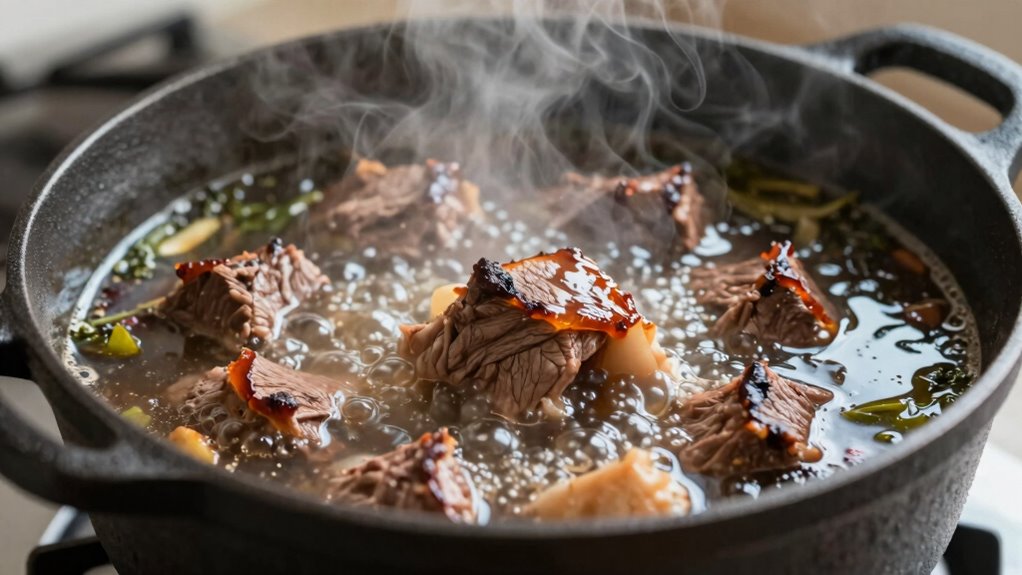
When you cook meat over low heat, the gradual temperature rise allows collagen and connective tissues to break down slowly and evenly. This process, known as collagen transformation, is vital for tender meat. As heat penetrates the meat gently, it encourages these tissues to dissolve without seizing up or becoming tough. Here’s what happens: 1. Heat gradually penetrates, ensuring even collagen breakdown 2. Connective tissues soften, releasing moisture and flavor 3. Collagen transforms into gelatin, creating a rich, silky broth 4. Low heat prevents muscle fibers from tightening, keeping meat tender slow cooking techniques. Additionally, maintaining low temperatures helps preserve the essential oils, ensuring the meat remains juicy and flavorful. This method also aids in moisture retention, which is crucial for achieving tender, juicy results every time. Moreover, the gentle cooking process minimizes toughening of the meat fibers, contributing further to tenderness. By avoiding high temperatures, you also reduce the risk of overcooking, which can lead to dry, rubbery meat.
Why Cooking at High Temperatures Can Toughen Your Stew
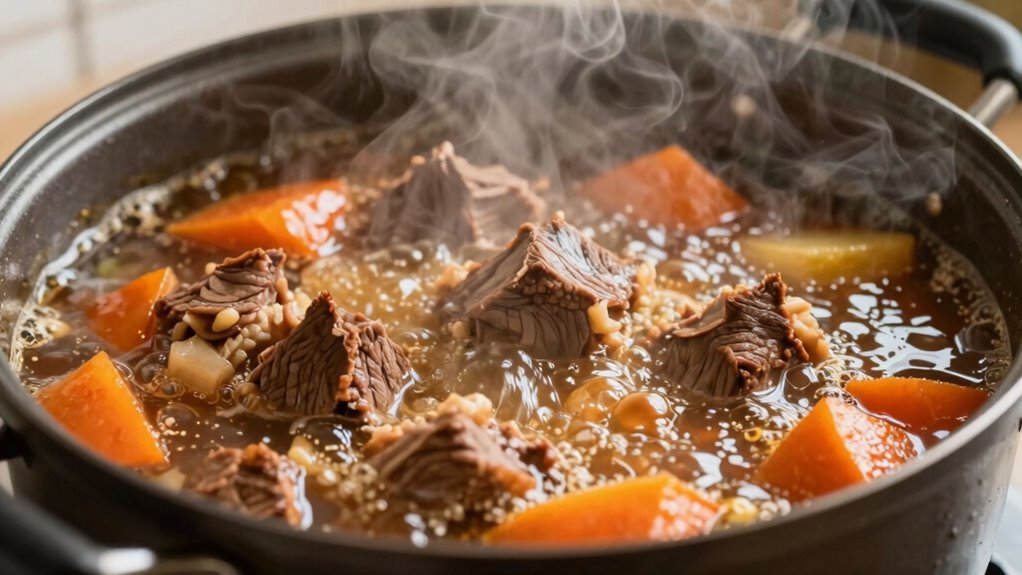
While low and slow cooking allows collagen to break down into tender, flavorful gelatin, cranking up the heat can have the opposite effect. High temperatures cause rapid liquid evaporation, which dries out the meat and toughens it. Beef marbling, which provides fat for moisture and flavor, melts quickly at high heat, but if cooked too fast, the meat loses its juiciness. Additionally, temperature control is essential for maintaining proper texture and preventing overcooking. Proper heat management helps preserve the meat’s moisture and tenderness during cooking. Using a cooking thermometer can help you monitor and maintain the ideal temperature for tender results.
Common Mistakes to Avoid When Stewing on Low Heat
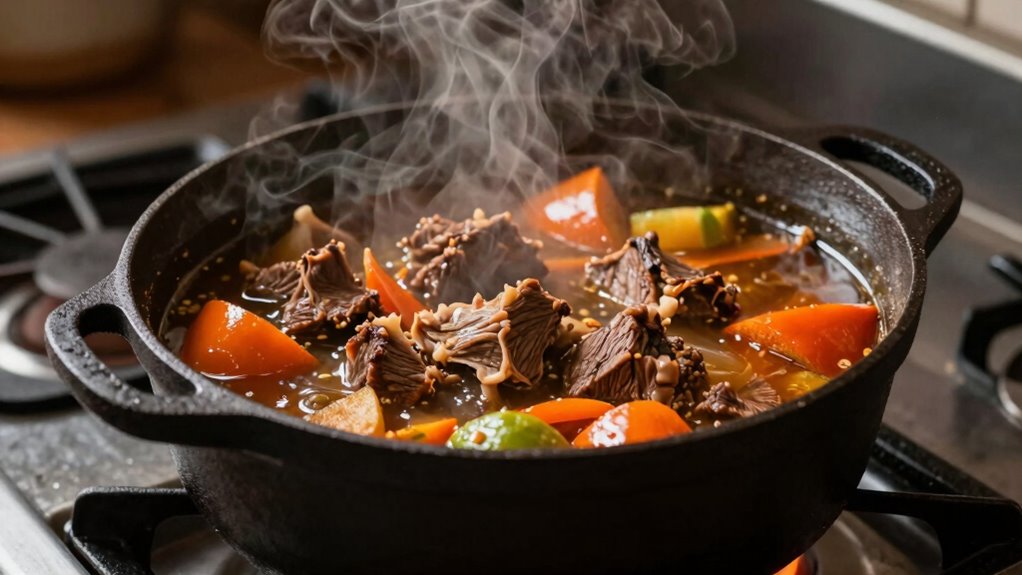
One common mistake when stewing on low heat is leaving the lid off, which allows moisture to escape and results in a dry, tough stew. To avoid this, keep the lid on to maintain moisture and temperature. Additionally, you should:
- Overcrowd the pot, making it harder for heat to distribute evenly and prolonging cooking time.
- Rush the process, thinking it’s faster — slow, steady simmering yields tender meat.
- Use high heat initially, then lower it too soon, which can shock the meat and toughen it.
- Forget to check liquid levels; too little liquid leads to burning or sticking, ruining the stew’s texture.
- Pay attention to consistent temperature control, as maintaining a gentle simmer is key to tender, flavorful results. Proper temperature regulation ensures even cooking and prevents overcooking or undercooking the ingredients. Additionally, selecting appropriate cookware materials can help distribute heat more evenly and improve your stewing results. Using temperature monitoring tools can also help you maintain ideal heat levels without guesswork.
Stewing on low heat requires patience and proper technique to ensure a tender, flavorful result.
Tips to Boost Flavor and Achieve Perfect Texture
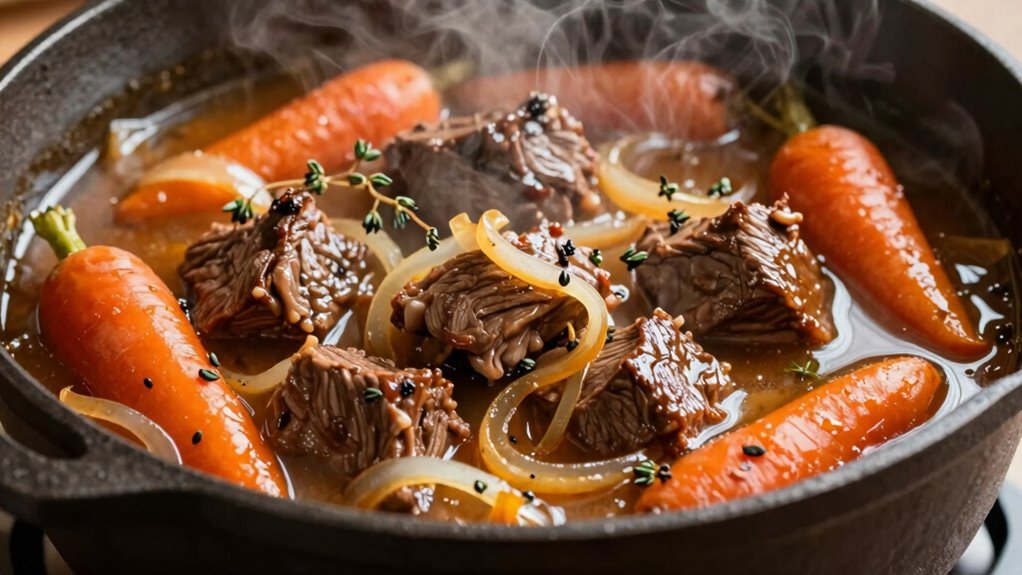
To boost flavor and achieve the perfect texture, focus on layering ingredients and seasoning thoughtfully throughout the cooking process. Use marinade techniques to infuse meats with depth—marinate overnight with herbs, spices, and acids like vinegar or citrus. This not only tenderizes but enhances flavor before cooking. When it comes to spice blending, create balanced mixes that complement each other; avoid over-salting early to preserve control over seasoning. Add robust spices early in the process, allowing flavors to meld, while delicate herbs go in toward the end for freshness. Consistently taste and adjust your seasonings. This approach guarantees your stew develops a rich, complex flavor profile and a tender, well-textured bite every time. Incorporating layering techniques can further improve the overall outcome by building flavor depth throughout the cooking process. Additionally, understanding the benefits of low heat helps ensure your ingredients break down slowly, resulting in more tender and flavorful results. Proper piercing care and hygiene during preparation can also prevent contamination, ensuring your stew remains safe and delicious.
Frequently Asked Questions
Can I Speed up Cooking Without Sacrificing Tenderness?
You can speed up cooking without losing tenderness by using a pressure cooker, which substantially reduces cook time while keeping the meat moist and tender. Microwave methods also work for quick results, but be careful to avoid overcooking. For best results, monitor the process closely, and avoid high heat settings that can toughen the meat. Combining these techniques helps you get tender stew faster without sacrificing quality.
What Types of Cookware Are Best for Low-Temperature Stewing?
Imagine your stew transforming into a melt-in-your-mouth masterpiece; that’s what the right cookware can do. You’ll want to use cast iron or ceramic cookware, which are perfect for low-temperature stewing. Cast iron retains heat like a warm hug, while ceramic distributes heat evenly, preventing hot spots. Together, they keep your ingredients tender and flavors rich, making your stew a culinary triumph every time.
How Does Altitude Affect Low and Slow Cooking Times?
When cooking at high altitudes, you’ll need to make pressure adjustments and extend your cooking times. The lower atmospheric pressure causes water to boil faster, so your stew may take longer to become tender. Think of it as altitude baking—you’re compensating for the thinner air. To guarantee your low and slow cooking yields tender results, increase cooking time and adjust your pressure cooker settings accordingly.
Is It Necessary to Cover the Stew During Low Heat Cooking?
If you’re aiming for perfectly tender stew, covering it during low heat cooking is essential. For example, when you cover your pot, it traps moisture and controls evaporation, ensuring the meat stays moist and tender. Without a lid, steam escapes, potentially drying out your ingredients and lengthening cooking time. Covering techniques help maintain consistent heat and moisture, giving you a flavorful, melt-in-your-mouth stew every time.
How Do I Tell When the Stew Is Perfectly Tender?
You’ll know your stew is perfectly tender when the meat easily pulls apart with a fork, indicating ideal meat texture. Check that the vegetables are soft and cooked through, but not mushy, showing proper vegetable doneness. Taste a small piece of meat and vegetables; if they’re flavorful and tender, your stew is ready. Remember, patience on low heat makes certain the meat becomes melt-in-your-mouth tender and vegetables are just right.
Conclusion
Now that you know the secret to tender stew is low and slow cooking, don’t rush the process. Patience truly pays off, turning tough cuts into melt-in-your-mouth goodness. Stick to gentle heat, avoid shortcuts, and let flavors meld beautifully. Remember, good things come to those who wait—your perfect, flavorful stew is just a slow simmer away. So, turn down the heat and enjoy the satisfying reward of a perfectly tender, delicious meal.