To budget cook effectively, stock your pantry with staples like dried beans, rice, pasta, canned tomatoes, and frozen vegetables. Batch cooking allows you to prepare large quantities of meals or ingredients, saving time and money during busy days. Use spices, herbs, and condiments to keep flavors exciting. Building a versatile pantry and adopting batch methods can make weeknight dinners easier and more affordable. Keep going to discover more tips to maximize your pantry and meal prep skills.
Key Takeaways
- Stock versatile staples like rice, pasta, canned tomatoes, dried beans, and frozen vegetables for quick, budget-friendly meals.
- Batch cook large quantities of grains and proteins to save time and money during busy weekdays.
- Store pre-cooked ingredients in airtight containers for easy access and efficient meal assembly.
- Use spices, herbs, and condiments to enhance flavors without extra costs.
- Plan weekly meals around pantry staples and leftovers to reduce waste and avoid last-minute grocery shopping.
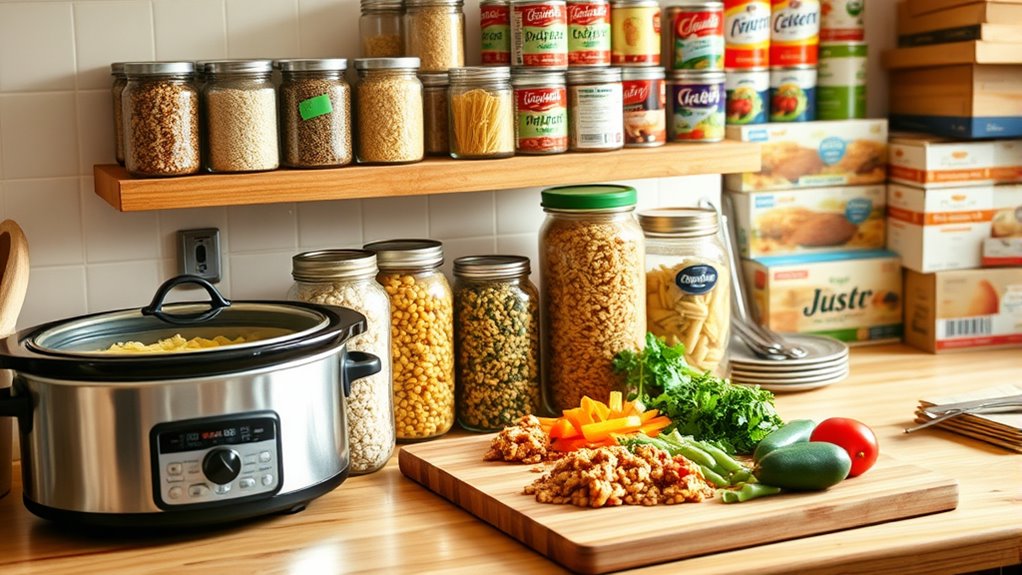
Having a well-stocked pantry and mastering batch cooking can transform the way you prepare meals, saving you time and reducing stress during busy weekdays. When you have key pantry staples on hand, you’re better equipped to whip up quick, nutritious meals without last-minute grocery runs. To maximize your efficiency, focus on affordable ingredients that lend themselves to versatile use. For example, dried beans, rice, pasta, canned tomatoes, and frozen vegetables are budget-friendly staples that form the backbone of many meals. Keep a variety of these items stocked so you can mix and match without overspending. This approach not only saves money but also allows you to develop a repertoire of quick recipes.
Incorporating meal prep tips into your routine will help you make the most of your pantry. Set aside a specific day each week to prepare ingredients or assemble complete meals. For instance, cook a large batch of rice or beans and store them in airtight containers. You can then use these in different dishes throughout the week—like burritos, stir-fries, or salads—saving you time on daily cooking. Pre-chopping vegetables and portioning out snacks can also streamline your week. When you plan ahead, you avoid the temptation of takeout or last-minute splurges, keeping your food budget in check.
Using affordable ingredients doesn’t mean sacrificing flavor or variety. Spices, herbs, and condiments go a long way in transforming simple staples into tasty meals. Keep a well-stocked spice rack with essentials like cumin, paprika, garlic powder, and chili flakes. These small additions can elevate humble dishes and keep your meals exciting. Additionally, buy ingredients in bulk when possible—large bags of rice or dried beans tend to be cheaper per serving and last longer. Frozen proteins like chicken breasts or fish fillets are also affordable options that can be stored for weeks and cooked in bulk.
Additionally, being aware of the environmental impacts of food choices can help you make more sustainable decisions and reduce your carbon footprint. Lastly, adapt your batch cooking strategies to suit your taste and schedule. Double recipes when you cook and freeze leftovers for busy days. Use versatile ingredients like canned chickpeas or lentils as quick protein sources, which work in salads, soups, or wraps. The key is consistency: by maintaining a well-stocked pantry with affordable ingredients and following simple meal prep tips, you’ll always have a healthy, budget-friendly meal ready to go. Over time, these habits will become second nature, making weeknight dinners less stressful and more enjoyable.
Frequently Asked Questions
How Can I Make Budget-Friendly Meals More Flavorful?
To make budget-friendly meals more flavorful, you should experiment with spice blends and flavor enhancers. Add a pinch of garlic powder, cumin, or smoked paprika to boost taste without extra cost. Use herbs like dried oregano or basil from your pantry. Incorporate a splash of soy sauce or a squeeze of lemon for brightness. These simple tricks elevate your dishes, making them more delicious without breaking your budget.
What Are Some Tips for Meal Planning on a Tight Schedule?
Picture yourself breeze through quick shopping tips, grabbing essentials in minutes, then step into your kitchen where meal prep strategies save the day. To fit meals into a tight schedule, plan simple menus ahead, prep ingredients in advance, and cook in batches. Use versatile pantry staples, keep ingredients organized, and prioritize quick recipes. These strategies turn busy days into stress-free, delicious meals without sacrificing time or flavor.
How Do I Store Pantry Staples to Maximize Shelf Life?
To maximize shelf life, store pantry staples in airtight containers away from direct sunlight and moisture. Use canning techniques for items like grains and beans to extend freshness, and keep spices in small, dark jars to preserve flavor. Regularly check for signs of spoilage, and rotate stock so older items are used first. Proper storage helps you save money and guarantees your ingredients stay fresh longer.
What Are Creative Ways to Repurpose Leftovers?
Remember when leftover transformations meant only reheating? Now, you can get creative reuse by turning roasted veggies into soup, turning rice into fried rice, or creating wraps from last night’s meats. Think outside the box—use leftovers for quesadillas or salads, or even freeze portions for future meals. These simple ideas help you avoid waste, save money, and make each meal feel like a new adventure.
How Can I Reduce Waste When Batch Cooking?
To reduce waste when batch cooking, you should focus on ingredient preservation by storing leftovers properly in airtight containers and labeling them clearly. Plan portions carefully to avoid excess, and use versatile ingredients in multiple recipes. Freeze surplus portions for later, and repurpose leftovers creatively to prevent food waste. This approach guarantees you maximize ingredients, save money, and minimize food waste effectively.
Conclusion
By embracing your pantry staples and mastering batch cooking, you pave the way for effortless, budget-friendly meals. These habits gently guide you toward a more sustainable and stress-free kitchen routine, where simplicity and resourcefulness become your trusted companions. With each meal prepared, you subtly steer away from the chaos of last-minute decisions, finding comfort in the quiet confidence of knowing that nourishment is always within reach. In these small acts, you discover a quiet mastery over your culinary world.