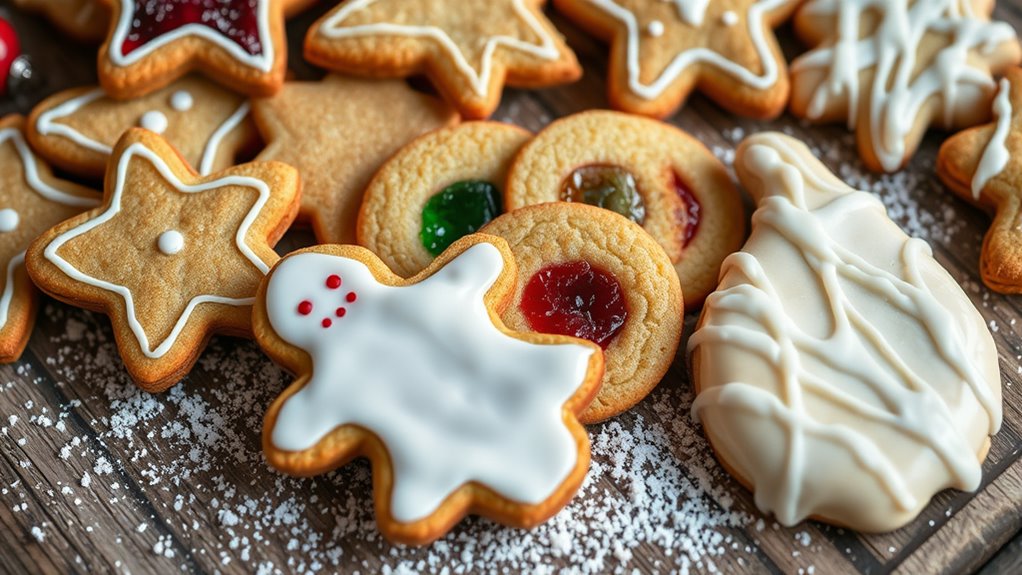

You can make festive Christmas cookies using three popular techniques. Drop cookies are quick and easy—simply scoop dough onto the baking sheet and let heat do the work. Slice-and-bake cookies involve chilling a dough log then slicing for uniform treats, perfect for gifting. Cutout cookies let you create fun shapes with cookie cutters and decorating detail. Exploring these methods will inspire your holiday baking, and if you keep going, you’ll discover tips to make each method even more delightful.
Key Takeaways
- Drop cookies are quick, easy, and ideal for flavors like chocolate chip, offering a rustic look with minimal effort.
- Slice-and-bake cookies involve chilling dough logs for uniform slices, perfect for large batches and decorative toppings.
- Cutout cookies use rolled dough and festive shapes, allowing detailed decorating for visually appealing holiday treats.
- Each technique provides unique creative opportunities, from simple scoops to intricate designs, enhancing holiday baking fun.
- Proper presentation, such as stacking or decorative boxes, helps showcase these cookies and spread holiday cheer.
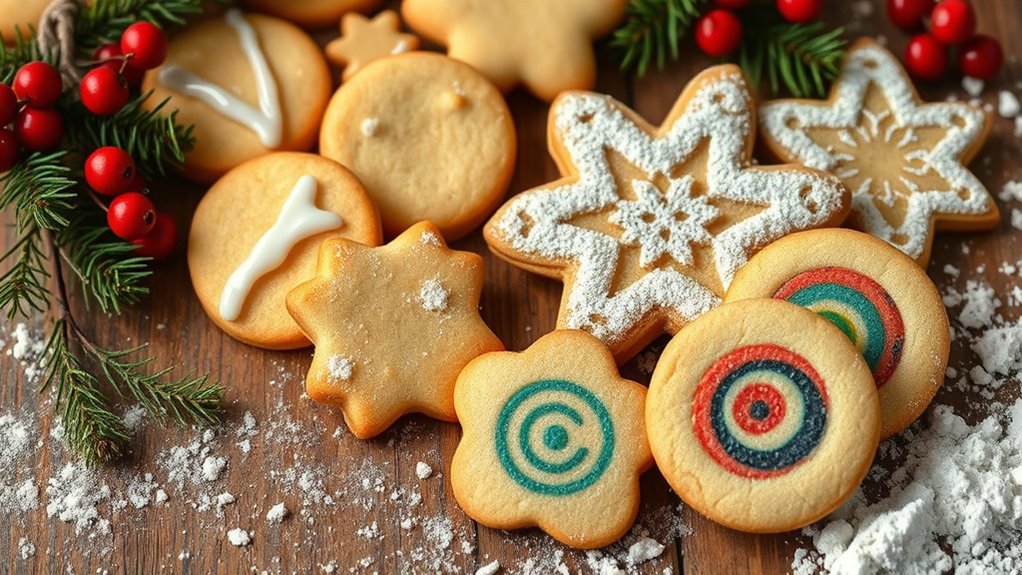
As the holiday season approaches, nothing signals Christmas quite like the irresistible aroma of freshly baked cookies filling your home. The scent of warm spices and sweet dough instantly evokes festive cheer and makes everyone enthusiastic to taste the treats you’ve prepared. Baking cookies is a beloved tradition, especially when you create special holiday cookie gifts to share with friends and family. Whether you’re assembling gingerbread houses or wrapping up a batch of your favorite cookies, mastering different techniques guarantees your treats look as good as they taste.
When it comes to shaping your cookies, the drop method is the easiest and quickest. You simply scoop spoonfuls of dough onto a baking sheet, letting the heat do the work. Drop cookies are perfect for a variety of flavors—think classic chocolate chip or oatmeal raisin—and are ideal when you’re short on time. They maintain a rustic charm and don’t require any rolling or cutting, making them accessible even for beginners. Yet, you can still elevate their presentation by adding a sprinkle of sea salt or drizzling melted chocolate on top.
If you prefer a more uniform and elegant look, the slice-and-bake technique is a smart choice. After chilling a log of dough, you slice it into even rounds before baking. This method allows you to prepare large batches of cookies in advance, then slice them fresh as needed. It’s especially handy when you want to make holiday cookie gifts because you can customize the flavor by rolling the dough in nuts, sprinkles, or colored sugar before chilling. Plus, slice-and-bake cookies tend to have a neat appearance, perfect for stacking in decorative tins or boxes.
For intricate shapes and festive designs, the cutout method is your best bet. Roll out your dough to an even thickness, then use cookie cutters to create holiday motifs like stars, trees, or snowflakes. This approach is especially popular for making gingerbread houses, as the precise shapes lend themselves well to constructing sturdy walls and rooftops. Cutout cookies also lend themselves beautifully to decorating with icing, sprinkles, and edible glitter, making them ideal for holiday cookie gifts. The process might take a little more effort, but the charming, personalized cookies you produce are well worth it.
No matter which technique you choose, the key is to have fun and let your creativity shine. Each method offers unique opportunities for festive decorating, presentation, and sharing. As you experiment with drop, slice-and-bake, and cutout cookies, you’ll find new ways to bring holiday cheer to your home and to the people you cherish most.
Frequently Asked Questions
What Are the Best Types of Flour for Holiday Cookies?
You should use all-purpose flour for most holiday cookies, as it provides the perfect balance of structure and tenderness. If you want gluten-free options, try almond or rice flour—these work well with drop and cutout cookies. For healthier alternatives, consider oat or coconut flour, but remember they may require adjustments. Always check recipes and experiment to find the best flour or flour alternatives for your holiday baking.
How Can I Prevent Cookies From Spreading Too Much?
Did you know chilling cookie dough can reduce spreading by up to 50%? To prevent cookies from spreading too much, chill your dough for at least 30 minutes before baking. Make sure your oven is at the proper temperature, typically around 350°F, to ensure even baking. Using the right flour and avoiding overmixing also help maintain shape, but chilling and correct oven temp are crucial for perfectly shaped cookies.
What Are Creative Decorating Ideas for Christmas Cookies?
You can get creative decorating Christmas cookies by trying different frosting techniques like piping, swirling, or flooding with vibrant colors. Use edible decorations such as sprinkles, edible glitter, or small candies to add sparkle and texture. Layer frosting for a 3D effect or create intricate designs with stencils. Personalize cookies with messages or themed patterns to make them festive and unique. Have fun experimenting to make your cookies truly stand out!
How Long Can Decorated Cookies Be Stored?
Sure, your decorated cookies can last quite a while if you store them properly—think of it as a holiday patience test. Typically, they stay fresh for about one to two weeks in an airtight container at room temperature. For longer decorating longevity, consider refrigeration, which can extend their life to three weeks but might dull your intricate icing work. Just remember, the sooner you indulge, the better the decorating magic remains!
Are There Vegan or Gluten-Free Options for These Cookie Techniques?
Yes, you can make vegan and gluten-free cookies using these techniques. You’ll want vegan substitutes like flaxseed or chia seeds for eggs, and gluten-free flours such as almond, coconut, or rice flour. These options work well for drop, slice-and-bake, and cutout cookies. Just keep in mind that gluten-free dough may need a bit more chilling, and vegan recipes might require some adjustments for texture and flavor.
Conclusion
So, after all this, you might think mastering Christmas cookies is a simple feat. But as you carefully drop, slice, and cut, remember: the true magic isn’t in perfect shapes or flawless decorations. It’s in the chaos, the spills, and the moments you’ll forget to chill the dough or overbake. Sometimes, the most imperfect cookies end up being the most memorable—proof that even holiday baking has its delightful surprises.