Cookware is made from different materials that affect how it cooks and lasts. Stainless steel is tough and resists rust, while cast iron is super durable and keeps heat well. Aluminum heats quickly and spreads heat evenly, perfect for fast cooking. Copper conducts heat the best but needs careful maintenance. Non-stick coatings make cooking and cleaning easier but wear out over time. If you want to understand how each material works and what suits your kitchen, keep exploring.

Get everyday essentials delivered free with Prime
- Fast, free delivery on millions of items
- Prime Video, Amazon Music and more included
- Member-only deals all year
Key Takeaways
- Different metals like stainless steel, cast iron, aluminum, and copper have unique strengths and cooking qualities.
- Non-stick coatings make cooking and cleaning easier but can wear out over time.
- Good cookware resists rust and corrosion, lasting longer with proper care.
- Metal type affects how quickly and evenly heat spreads across the surface.
- Durable materials like cast iron and stainless steel withstand frequent use better.
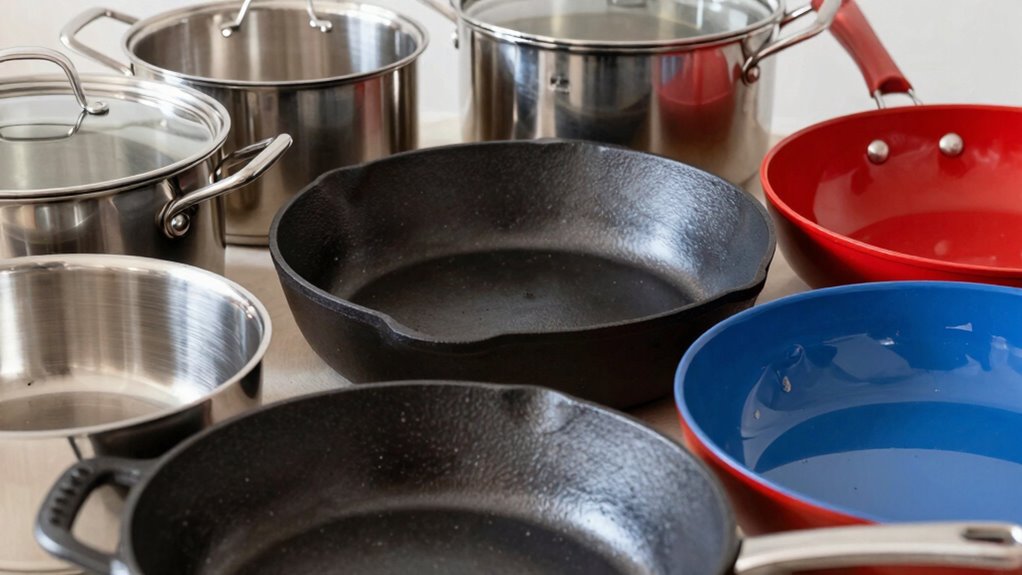
Have you ever wondered what makes some cookware better suited for certain recipes than others? The answer often lies in the materials used to make the pots and pans. Different materials have unique properties that influence how heat is distributed, how durable the cookware is, and how easy it is to clean. Understanding these basics can help you choose the right pieces for your cooking style without getting caught up in confusing jargon.
One common feature you might notice is the presence of non-stick coatings. These coatings make cooking and cleaning much easier because food won’t stick to the surface as much. They’re especially handy for frying eggs or making pancakes. However, non-stick coatings can wear down over time, so they might need replacing after a few years. It’s also important to avoid metal utensils with non-stick cookware because they can scratch and damage the coating, reducing its effectiveness and lifespan. Most non-stick coatings are made from a type of chemical treatment that forms a smooth, slippery surface on the metal. They’re usually applied to aluminum or other lightweight metals, making the cookware lighter and easier to handle.
Speaking of metals, the type of metal alloy used in your cookware plays a big role in how it performs. Metal alloys are combinations of different metals designed to optimize certain qualities. For example, stainless steel is a popular alloy because it’s durable, resistant to rust, and doesn’t react with acidic foods. It’s great for searing and browning because it distributes heat evenly. Cast iron, another metal alloy, is incredibly durable and retains heat well, making it ideal for slow cooking or frying. Aluminum alloys are lightweight and excellent at conducting heat quickly, which means your food heats evenly and faster. Copper alloys are also superb heat conductors but tend to be more expensive and require more maintenance to prevent tarnishing. Additionally, the heat conduction properties of each material can significantly impact cooking efficiency and results. Understanding the corrosion resistance of different metals can also help in selecting cookware that lasts longer and requires less maintenance over time. Proper care and maintenance can extend the lifespan of your cookware, regardless of the material. Moreover, choosing materials with good wear resistance can help your cookware maintain its appearance and performance over many years.
As an affiliate, we earn on qualifying purchases.
Frequently Asked Questions
Which Cookware Material Is Safest for Non-Stick Cooking?
For non-stick cooking, ceramic-coated cookware is the safest choice. It features non-toxic coatings free from harmful chemicals like PTFE and PFOA, making it health-conscious. Ceramic materials are durable, heat evenly, and don’t release toxins when heated. You’ll enjoy cooking without worrying about toxic fumes or chemical leaching, especially if you prefer a non-stick surface that’s both effective and safe for your health.
Can I Use Metal Utensils on All Types of Cookware?
Using metal utensils on all cookware isn’t a good idea—it’s like inviting a tornado into a china shop! Metal utensils can scratch or damage certain materials, especially non-stick or delicate surfaces. Check your cookware’s durability and manufacturer’s instructions; some materials like stainless steel are more tolerant of metal utensils, while others, like ceramic or non-stick coatings, require softer tools. Protect your investment by using the right utensils for each cookware type.
How Do I Clean and Maintain Different Cookware Materials?
To clean and maintain your cookware, follow specific cleaning techniques for each material. For non-stick, use gentle sponges with mild soap; avoid metal utensils. Cast iron needs to be seasoned and washed with minimal soap, then dried thoroughly. Stainless steel can be scrubbed with baking soda for stains. Regular maintenance tips include drying immediately, avoiding metal abrasives, and storing properly. Proper care guarantees your cookware stays in great shape longer.
Are There Eco-Friendly Cookware Options Available?
Yes, eco-friendly cookware options are abundant and truly revolutionary! You can choose biodegradable options made from natural materials like bamboo or cornstarch, which break down faster than you’d believe. Recycling cookware is also a smart move—many brands now offer cookware designed for easy recycling or reuse, reducing waste. These eco-conscious choices help you cook sustainably while protecting the planet, making your kitchen environmentally friendly without sacrificing performance.
How Do I Choose the Right Cookware for My Cooking Style?
To choose the right cookware for your cooking style, consider your preferred cooking techniques—like sautéing, frying, or simmering—and pick materials suited for those methods. Think about your kitchen storage space too; if you have limited room, opt for versatile, stackable pieces. For example, stainless steel works well for searing, while non-stick is great for delicate dishes. Match your cookware to your habits for better results and easier storage.
Conclusion
So, now that you’re a cookware connoisseur, you can confidently pick the perfect pots and pans without feeling like you need a PhD in kitchenware. Remember, whether you choose stainless steel, cast iron, or non-stick, it’s all about what suits your style — and maybe avoiding the kitchen disaster that’s been haunting you. Happy cooking! Because nothing says “chef” quite like a pan that doesn’t betray you mid-sauté.
Columbus Day / Indigenous Peoples' Day Picks
long weekend sales
As an affiliate, we earn on qualifying purchases.