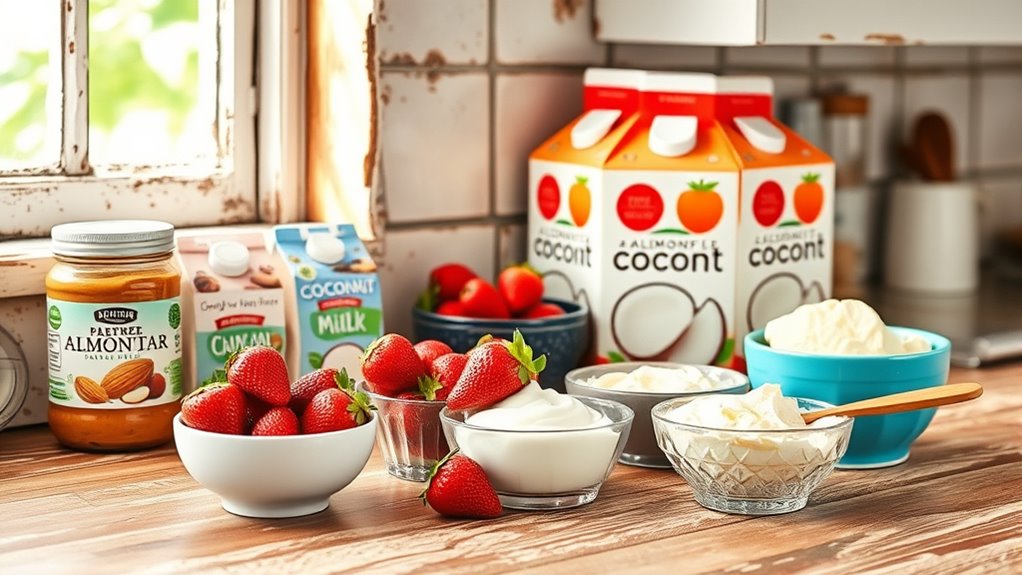

Switching to dairy-free swaps that work is easier than you might think. You can replace milk with plant-based options like almond, soy, oat, or coconut milk, which work well in coffee, cereal, and recipes. Dairy-free desserts like coconut milk ice cream or avocado mousse keep flavor and health in check. These practical swaps are tasty, simple, and fit into your routine, helping you enjoy a healthier lifestyle while exploring new flavors—keep exploring to find your perfect match.

Get everyday essentials delivered free with Prime
- Fast, free delivery on millions of items
- Prime Video, Amazon Music and more included
- Member-only deals all year
Key Takeaways
- Choose plant-based milks like almond, soy, oat, or coconut for dairy-free beverages and recipes.
- Experiment with dairy-free desserts such as coconut milk ice cream and avocado mousse to find favorites.
- Use fortified plant milks to ensure adequate calcium and vitamin D intake without dairy.
- Replace dairy in cooking with nut or seed butters for creaminess and flavor.
- Read labels carefully to select minimally processed, additive-free dairy alternatives.
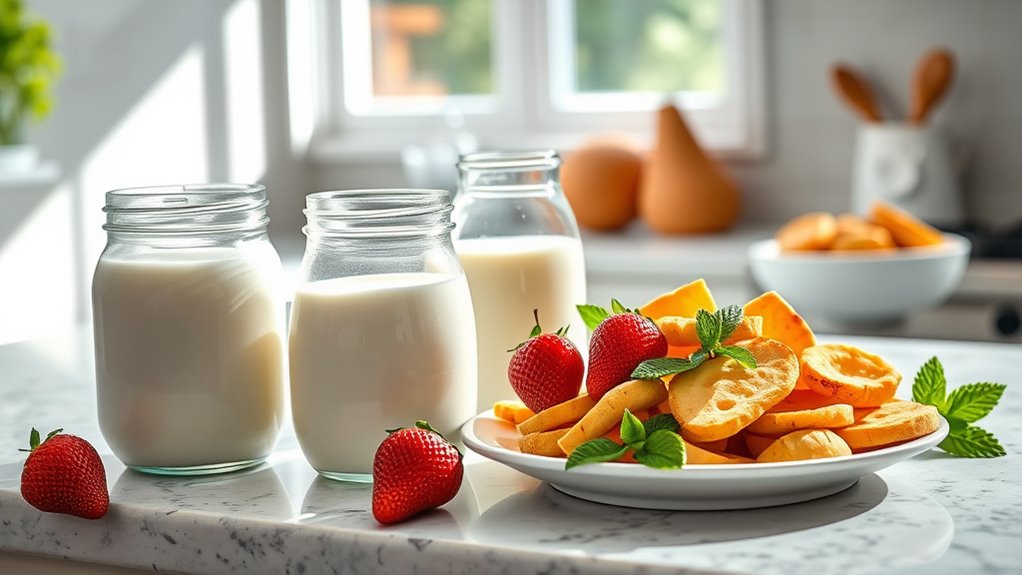
Switching to dairy-free options can substantially improve your health and align with ethical or environmental values. If you’re considering a shift, incorporating plant-based milks into your diet is a simple yet effective step. These milks—such as almond, soy, oat, or coconut—offer a variety of flavors and nutritional profiles, making it easy to replace traditional dairy in your favorite recipes. You’ll find they work well in coffee, smoothies, cereal, and cooking, providing a creamy texture without the saturated fats or lactose. Many brands fortify their plant-based milks with vitamins and minerals like calcium and vitamin D, so you don’t have to sacrifice essential nutrients. Experimenting with different types helps you discover which suits your taste and dietary needs best, making the *shift* smoother.
Switching to plant-based milks simplifies a healthy, ethical, and flavorful dairy-free lifestyle.
When it comes to desserts, dairy-free options are more than just a necessity—they can be downright delicious. Dairy free desserts have gained popularity for their rich flavors and variety, proving that you don’t need dairy to satisfy your sweet tooth. From coconut milk-based ice creams to avocado chocolate mousse, the options are endless. These desserts often use natural ingredients that are free from added sugars and preservatives, making them a healthier choice overall. Plus, many dairy free desserts are easy to prepare at home, allowing you to customize flavors and ingredients to your liking. Whether you’re craving a creamy pudding or a fruity sorbet, you can indulge without compromising your dietary goals or ethical beliefs.
Switching to dairy-free doesn’t mean you have to give up your favorite foods; it simply means finding better alternatives that work for your lifestyle. Plant based milks are versatile and readily available, making them a practical substitute for cow’s milk in countless recipes. Dairy free desserts, on the other hand, provide a satisfying experience without dairy’s drawbacks. This *transition* can also improve digestion, reduce inflammation, and help you manage cholesterol levels more effectively. Incorporating nutritional benefits like added vitamins and minerals further enhances these alternatives, ensuring you meet your dietary needs. As you explore these dairy-free swaps, you’ll often find that they open up new culinary possibilities you hadn’t considered before. The best part? Many of these options are accessible and affordable, so you can enjoy the benefits without breaking the bank.
Embracing dairy-free choices is a proactive step toward better health and a more ethical lifestyle. With plant based milks and dairy free desserts, you get to enjoy the foods you love, guilt-free. It’s about making smarter swaps that fit seamlessly into your routine, ensuring you don’t feel deprived. Instead, you discover new favorite flavors and textures that can enrich your diet. Whether for health reasons or ethical considerations, these swaps are practical, tasty, and sustainable. Once you start, you’ll likely find that dairy-free living becomes second nature, opening up a world of delicious possibilities.
As an affiliate, we earn on qualifying purchases.
Frequently Asked Questions
Are Dairy-Free Alternatives Suitable for Kids and Infants?
Dairy-free alternatives can be suitable for kids and infants if they have dairy allergies or intolerances, but you should check for dairy-free certifications to verify safety. Always consider infant dietary needs, as some replacements lack essential nutrients like calcium and vitamin D. Consult your pediatrician before making major changes, and choose fortified options to support healthy growth. Proper guidance helps you keep your child’s nutrition balanced and safe.
How Do Dairy-Free Swaps Affect Baking and Cooking Textures?
Switching to dairy-free swaps can subtly alter your baking and cooking textures, offering a unique experience. You might notice changes in texture consistency, as some substitutes don’t quite mimic dairy’s creaminess or moisture. The flavor profile also shifts, adding new nuances to your dishes. With a little experimentation, you’ll discover which swaps work best for maintaining your favorite textures and flavors, keeping your cooking deliciously satisfying.
Can I Use Dairy-Free Substitutes in Coffee and Tea?
Yes, you can definitely use dairy-free substitutes in your coffee and tea. A dairy-free creamer or plant-based milk, like almond, soy, or oat milk, works well and adds flavor. Just pour your preferred amount and stir. Many find that these alternatives create a smooth, creamy texture without dairy, making your drinks enjoyable. Experiment to find the taste and consistency you love best.
Are There Any Hidden Dairy Ingredients in Processed Foods?
Yes, hidden dairy can be in processed foods. Check labels carefully because ingredients like whey, casein, and milk solids often hide in unexpected products like bread, snack foods, and even salad dressings. Always read ingredient lists thoroughly to spot hidden dairy. When in doubt, look for dairy-free certifications or ask manufacturers directly. Staying vigilant helps you avoid unintended dairy consumption and manage your dietary needs effectively.
How Do Dairy-Free Options Impact Overall Nutrition and Calcium Intake?
Switching to dairy-free options is like opening a window to fresh air—your nutrition landscape broadens. While some dairy substitutes may have lower calcium absorption, you can boost nutrient diversity by including fortified plant milks, leafy greens, and nuts. With mindful choices, you maintain strong bones and balanced nutrition, proving that a dairy-free diet can be both nourishing and vibrant without sacrificing essential nutrients.
Conclusion
Remember, you don’t have to give up everything to enjoy dairy-free living. With these swaps, you’ll find tasty alternatives that work perfectly for your lifestyle. Keep experimenting, and soon, you’ll discover what suits you best. As the saying goes, “Where there’s a will, there’s a way.” Embrace the journey, and enjoy your new dairy-free options—they might just surprise you!
Fall Picks
fall essentials
As an affiliate, we earn on qualifying purchases.