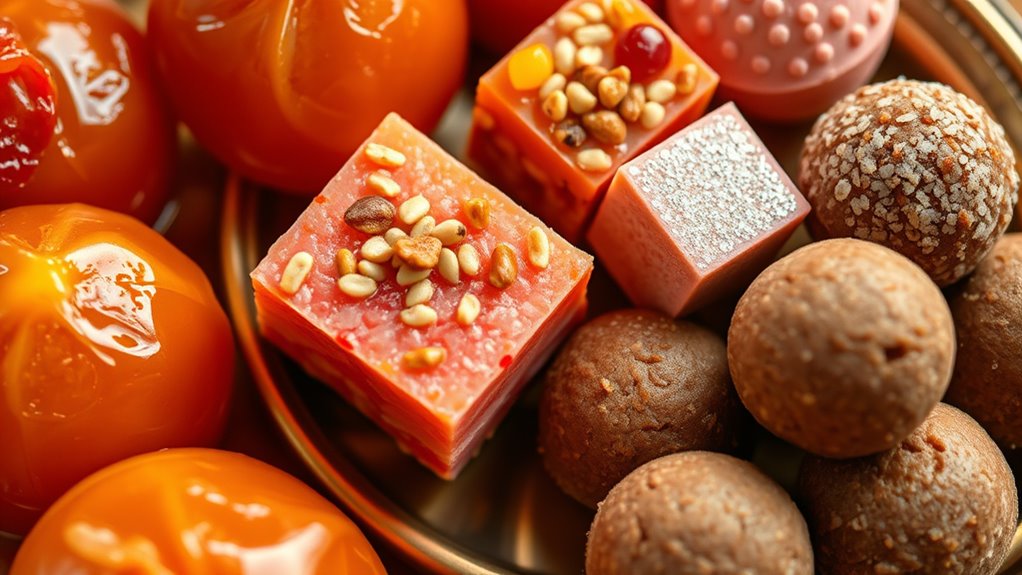

During Diwali, traditional sweets like Gulab Jamun, Barfi, and Ladoo bring joy and rich flavors to your celebrations. You can prepare these treats using authentic recipes that highlight ingredients like ghee, cardamom, and saffron. Simple techniques such as frying, simmering, and rolling into balls or setting help create perfect textures. To make your festival extra special, beautiful presentation and personal touches matter. Keep exploring for more tips to master these festive favorites.

Get everyday essentials delivered free with Prime
- Fast, free delivery on millions of items
- Prime Video, Amazon Music and more included
- Member-only deals all year
Key Takeaways
- Gulab Jamun, Barfi, and Ladoo are traditional Indian sweets commonly enjoyed during Diwali celebrations.
- Each sweet has unique ingredients and preparation methods, like frying for Gulab Jamun and simmering for Barfi.
- Using authentic ingredients such as ghee, cardamom, and saffron enhances flavor and cultural authenticity.
- Presentation and decoration elevate these sweets, making them festive and visually appealing.
- Homemade preparation allows customization, fostering personal touches and cultural sharing during Diwali.
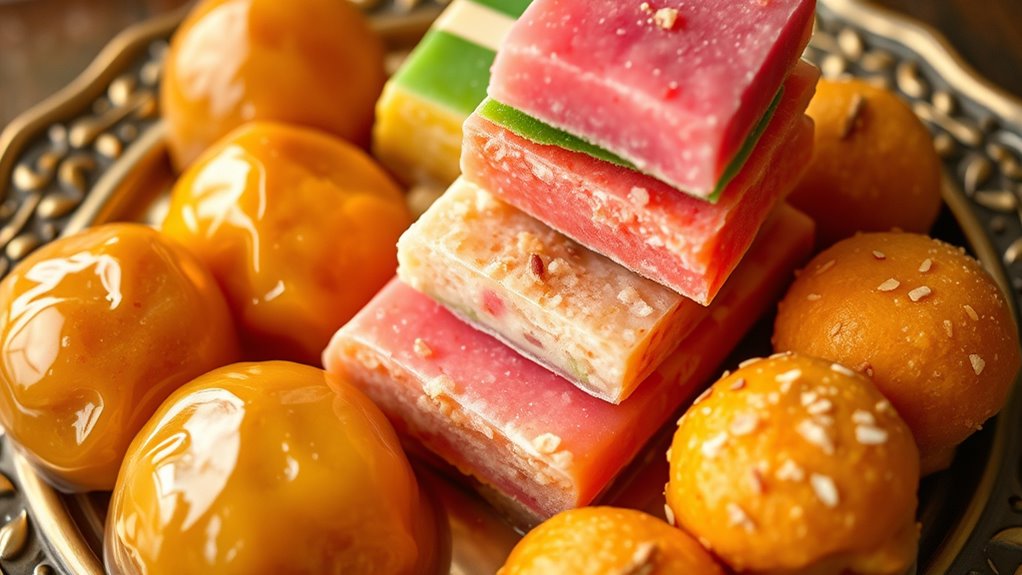
Diwali sweets are an essential part of celebrating the festival, bringing joy and togetherness to families and friends. When you prepare or share these treats, the festive presentation can elevate the entire experience, transforming simple confections into beautiful displays that catch the eye and warm the heart. Whether you’re serving a platter of golden Gulab Jamun, colorful Barfi, or round Ladoos, arranging them with care adds to the celebration’s vibrancy. You don’t need fancy tools; even a simple decorative plate can turn your sweets into a visual delight. Presentation isn’t just about looks; it’s about expressing the spirit of Diwali, showcasing your effort, and making everyone feel special. When you focus on the festive presentation, your sweets become more than just desserts—they become a part of the festival’s joy.
Making these sweets from traditional recipes connects you to centuries of Indian culinary heritage. Gulab Jamun, for instance, involves kneading soft dough from milk powder or khoya, shaping it into small balls, and frying them until they’re perfectly golden. Once cooked, they’re soaked in a fragrant sugar syrup infused with cardamom and rosewater, creating a melt-in-your-mouth experience. Barfi, on the other hand, requires simmering milk or condensed milk with ghee and sugar, then adding flavorings like pistachios, cocoa, or saffron. Once it thickens, you spread it in a tray, let it cool, and cut it into neat squares or diamonds. Ladoos are often made from roasted gram flour or semolina, combined with ghee and sugar, then rolled into smooth, round balls. Each of these recipes embodies tradition and holds cultural significance, making your festive sweets not just delicious but meaningful.
When you stick to traditional recipes, you preserve the authenticity of Diwali’s culinary heritage. These recipes have been passed down through generations and carry stories of celebration, devotion, and community. Following them precisely ensures that your sweets taste as they should—rich, flavorful, and satisfying. Plus, using traditional ingredients like ghee, cardamom, and saffron adds a distinctive aroma and depth of flavor that modern adaptations often lack. By preparing these sweets at home, you also get to customize the level of sweetness or spice, making each batch uniquely yours. Sharing these homemade treats with loved ones enhances the festival’s warmth, reinforcing bonds and creating memories. So, whether you’re a seasoned cook or trying your hand at these recipes for the first time, embracing tradition while adding your personal touch guarantees that your Diwali sweets will be both beautiful and heartfelt.
As an affiliate, we earn on qualifying purchases.
Frequently Asked Questions
How Are Gulab Jamuns Traditionally Flavored?
Gulab Jamuns are traditionally flavored with a blend of Gulab Jamun spices, which often include cardamom, saffron, and rose water. These spices give the sweets their signature aromatic and slightly floral flavor. You can enhance the traditional flavoring by adding a dash of nutmeg or a hint of cinnamon. These spices are essential to achieve the authentic taste that makes Gulab Jamuns so beloved during festivals and special occasions.
What Are the Common Ingredients in Barfi?
Think of barfi as the heart of your sweet table. You’ll find common ingredients like condensed milk, sugar, ghee, and milk powder, which create that rich, fudgy texture. To get it just right, you need a perfect sugar syrup consistency and proper barfi mold techniques to shape it beautifully. With these basics, you can craft a delectable treat that’s both eye-catching and delicious—like hitting the jackpot!
How Is Ladoo Dough Prepared for Different Varieties?
You prepare ladoo dough by roasting or grinding ingredients until you achieve the ideal ladoo dough consistency, which varies depending on the variety. For sweet ladoos, you might use grated coconut or jaggery, while savory ones may include spices and nuts. To customize ladoo flavors, you add flavorings like cardamom or saffron, ensuring the dough binds well and is easy to shape into balls.
Are There Vegan Options for Diwali Sweets?
Yes, you can enjoy vegan sweet alternatives during Diwali. While traditional sweets often contain dairy or ghee, plant-based dessert options like coconut ladoo, date and nut energy balls, or vegan barfi made with coconut milk and natural sweeteners are available. These options satisfy your festive cravings while aligning with vegan principles, proving that celebration and compassion can go hand in hand. Embrace these delicious, cruelty-free treats for a joyful, inclusive festival.
How Long Do Homemade Sweets Stay Fresh?
Homemade sweets typically stay fresh for about 2 to 3 days if stored properly. To preserve their freshness, keep them in an airtight container at room temperature or refrigerate, depending on the type. Gulab Jamun, for instance, stays good longer in the fridge, while delicate barfi and ladoo are best enjoyed within a couple of days. Proper storage duration and careful preservation help make certain your sweets stay delicious longer.
Conclusion
As you savor these classic Diwali sweets like gulab jamun, barfi, and ladoo, you connect with centuries of tradition. Did you know that India produces over 2 million tons of sweets during Diwali? This shows just how much joy these treats bring to millions. So, next time you indulge, remember you’re part of a vibrant celebration that unites families and communities through sweet, shared happiness. Happy Diwali!
Halloween Picks
halloween
As an affiliate, we earn on qualifying purchases.