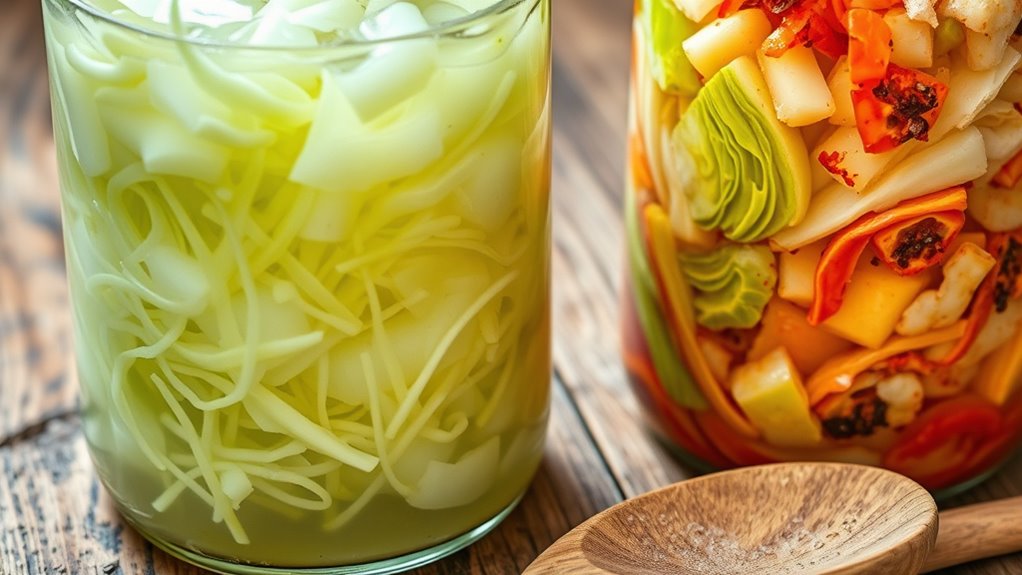
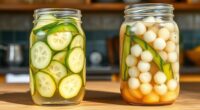
Fermentation transforms vegetables like cabbage into flavorful, probiotic-rich foods such as sauerkraut and kimchi by encouraging beneficial microbes like bacteria and yeast. To start, choose a non-reactive vessel like a glass jar or ceramic crock and add a starter culture or use traditional methods with previous batches. Keep the vegetables submerged to prevent mold and help control conditions for consistent fermentation. Mastering these basics sets you on the path to delicious, healthy ferments—an in-depth guide awaits if you’re curious to learn more.
Key Takeaways
- Both sauerkraut and kimchi rely on lactic acid bacteria fermentation to develop their distinctive flavors.
- Using a proper fermentation vessel, like a glass jar, helps maintain a non-reactive environment and prevents spoilage.
- Starter cultures or traditional fermentation methods introduce beneficial microbes that outcompete harmful bacteria.
- Keeping vegetables submerged and protected from oxygen fosters safe, consistent fermentation.
- Proper timing of adding starter cultures and maintaining ideal conditions ensures a successful and flavorful fermentation process.

Fermentation is a natural process that transforms food and beverages through the action of microorganisms like bacteria, yeast, and molds. When making sauerkraut or kimchi, understanding how to use starter cultures can give you better control over the fermentation process and result in more consistent flavors. Starter cultures are specific strains of bacteria or yeast that you add to your vegetables to kick-start fermentation and guarantee a healthy, balanced microbial environment. They can help prevent unwanted bacteria from taking hold and speed up fermentation, especially if you’re new to the process. You might choose commercial starter cultures designed for fermented vegetables or rely on traditional methods like using a small amount of previously fermented sauerkraut or kimchi as your starter. Whichever route you pick, adding starter cultures can give you peace of mind that your fermentation will proceed smoothly.
Choosing the right fermentation vessel is equally important. You want a container that’s durable, non-reactive, and easy to clean. Glass jars are a popular choice because they don’t react with the acids produced during fermentation. Wide-mouthed jars make it easier to pack vegetables tightly and check on your progress. Ceramic crocks or food-grade plastic containers are also suitable options, provided they’re designed specifically for fermentation. Metal containers are generally not recommended because certain metals can react with the acids, potentially contaminating your ferment. When selecting your vessel, consider how you’ll keep the vegetables submerged. Proper submersion prevents mold and unwanted bacteria from forming on the surface. You might use fermentation weights or a simple cabbage leaf secured on top of the vegetables to keep everything submerged beneath the brine.
Your choice of vessel and starter cultures directly influences the quality of your sauerkraut or kimchi. A good vessel maintains a consistent environment, protecting the vegetables from oxygen exposure, which can cause spoilage. Meanwhile, starter cultures establish a healthy microbial community that outcompetes harmful bacteria and molds. When combined, these elements make the fermentation safer, faster, and more predictable. As you prepare your vegetables, ensure your chosen fermentation vessel is clean and sanitized to prevent contamination. Adding starter cultures at the right time, usually when packing your vegetables into the vessel, jumpstarts the microbial activity and sets the stage for a successful fermentation. With the right vessel and starter cultures, you’ll be well on your way to delicious, probiotic-rich sauerkraut and kimchi.

Cutting Edge Cultures Vegetable Starter Culture, 6 Pouches, 12g
Contains 6 pouches each pouch ferments 5 pounds of vegetables
As an affiliate, we earn on qualifying purchases.
As an affiliate, we earn on qualifying purchases.
Frequently Asked Questions
Can I Ferment Vegetables Other Than Cabbage?
Yes, you can ferment other vegetables besides cabbage. Alternative vegetables like carrots, radishes, turnips, and beets work well and add unique flavor variations. Just make certain they’re properly prepared—washed, sliced, and submerged in brine. Experimenting with different vegetables lets you create diverse, delicious ferments that bring new tastes and textures to your fermentation journey. Keep in mind, each vegetable may ferment slightly differently, so observe and enjoy your flavorful creations.
How Long Does Fermentation Take at Different Temperatures?
Think of fermentation like a river flowing faster or slower depending on the weather. At warmer temperatures, fermentation speeds up, making your vegetables ready in a few days. Cooler temps slow it down, stretching the process to weeks. Temperature effects are key, so keep your ferment at ideal heat—around 65-75°F—to find the perfect balance between quick and flavorful results.
Are There Any Safety Risks With Home Fermentation?
Home fermentation risks are minimal if you follow proper fermentation safety guidelines. You should keep everything sanitized to prevent unwanted bacteria growth, monitor for mold or off smells, and make certain the fermentation environment stays at safe temperatures. Avoid using contaminated ingredients or leaving your fermenting jars exposed to contaminants. By maintaining good hygiene and paying attention to signs of spoilage, you can enjoy safe, delicious fermented foods without significant home fermentation risks.
What Are Common Signs of Spoiled Fermented Foods?
If your fermented foods spoil, you’ll notice mold growth on the surface or foul odor that’s strong and unpleasant. These signs indicate harmful bacteria or mold have taken over. Trust your senses—if you see mold or smell something off, it’s safest to discard the batch. Always guarantee proper fermentation conditions to prevent spoilage and keep your foods safe and delicious.
Can I Reuse Leftover Brine for New Batches?
Yes, you can reuse leftover brine for new batches, but make sure to prioritize fermentation safety. Use brine preservation by tasting it—if it tastes good and smells normal, it’s likely safe. However, if you notice any mold, off odors, or unusual cloudiness, discard the brine. Reusing brine can add beneficial bacteria, but always watch for signs of spoilage to ensure your new batch ferments safely.

32 oz Mason Jar Fermentation Kit, 2 Pack Fermentation Jars, Fermentation Lids, Fermenting Weights and Airlocks, Complete Fermenting Kit for Making and Storing Sauerkraut(Pack of 2)
Complete Fermentation Kit: This kit includes 2pcs 32oz fermenting jars, glass fermentation weights,2 fermenting lids,2 airlocks,2 silicone gaskets,4…
As an affiliate, we earn on qualifying purchases.
As an affiliate, we earn on qualifying purchases.
Conclusion
Now that you’ve uncovered the secrets of fermentation, you’re ready to craft your own sauerkraut or kimchi. Just like ancient alchemists turning cabbage into probiotic gold, you can transform ordinary ingredients into something extraordinary. Keep experimenting, trust your senses, and don’t be afraid to get a little messy—after all, even Leonardo da Vinci would say the journey is worth it. So go ahead, embrace the fermenting revolution and enjoy your delicious, health-boosting creations!

4-Pack of Fermentation Glass Weights with Easy Grip Handle for Wide Mouth Mason Jars
High Quality Materials—Our food-safe glass is lead free and non-porous so it never absorbs food odors, flavors, or…
As an affiliate, we earn on qualifying purchases.
As an affiliate, we earn on qualifying purchases.

Fermentation Crock 1/2 Gallon – Sauerkraut Crock with Lid, Weights & Pounder – Ceramic Fermenting Crock Kit for Pickling Cabbage Kimchi Vegetables – 2 Liter Fermentation Jar – Stoneware Pickle Pot
MAKE YOUR OWN SAUERKRAUT, KIMCHI, AND PICKLES – The Kenley fermentation crock is a natural and easy way…
As an affiliate, we earn on qualifying purchases.
As an affiliate, we earn on qualifying purchases.