The gig economy is dramatically reshaping the entertainment industry by allowing freelancers to take on diverse, short-term projects with more flexibility. As platforms like Upwork and social media connect talents directly to clients worldwide, you can see how this shift offers creative freedom and cost savings. With nearly 70 million Americans working freelance by 2025, this trend is here to stay. Continue exploring to discover the full impact and future possibilities for your industry involvement.
Key Takeaways
- Freelancers offer specialized, project-based skills that reduce costs and increase flexibility for entertainment companies.
- Digital platforms facilitate global talent access, enabling diverse collaborations and innovative content creation.
- The growing freelance workforce allows for rapid adaptation to market trends and project demands in entertainment.
- Freelancers’ ability to showcase portfolios online expands opportunities and builds lasting industry relationships.
- Despite benefits, freelancers face challenges like income instability and lack of traditional benefits, impacting industry sustainability.
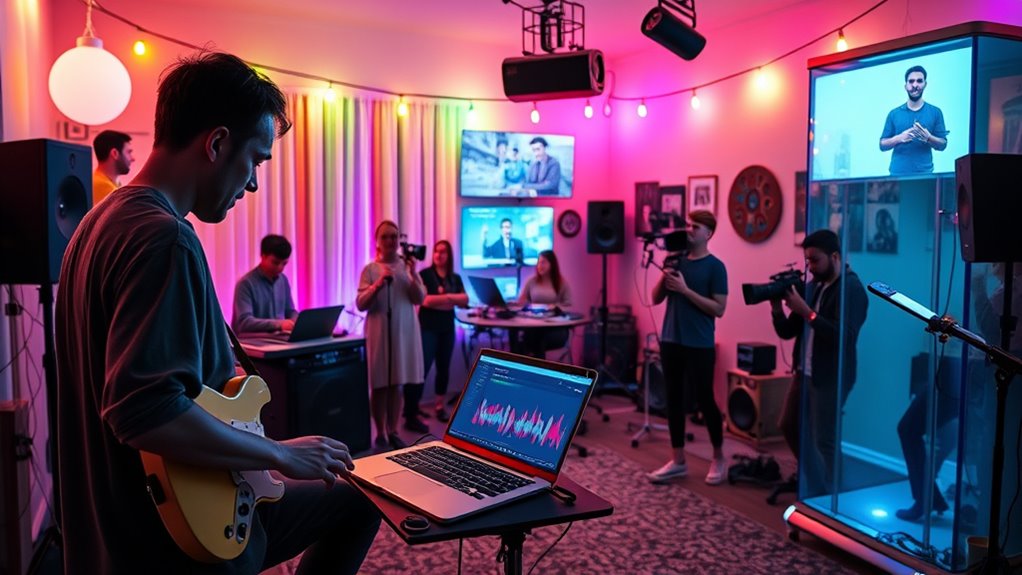
The gig economy is transforming the entertainment industry by enabling freelancers and independent workers to take on short-term projects with greater flexibility. Thanks to technological advancements and digital platforms, accessing freelance opportunities has become easier than ever. You can now find gigs on platforms like Upwork or social media, connecting directly with clients needing specialized skills for a range of entertainment projects. This shift allows creatives and technical experts to work on diverse projects without long-term commitments, giving you the freedom to choose assignments that match your talents and interests. As a result, flexible work arrangements are becoming increasingly popular, especially among younger generations who prioritize independence and work-life balance. By 2025, nearly half the U.S. workforce is expected to be gig workers, reflecting a fundamental change in employment patterns. This growing trend isn’t just a passing phase; it’s a mainstream employment model that continues to expand, with more than 70.4 million Americans working freelance. Freelancing is growing faster than traditional employment, driven by changing expectations and the desire for autonomy. Over 90% of U.S. workers now consider freelancing or independent contracting a viable career option, highlighting how the gig economy is reshaping workforce norms.
In entertainment, freelancers bring specialized skills on a project-by-project basis, making it easier for companies to access a diverse talent pool without the costs associated with full-time staff. You can leverage this flexibility to assemble teams tailored specifically to your project’s needs, whether it’s a music video, film production, or digital content creation. Freelancers often work on multiple projects simultaneously, which helps ensure a steady income stream and allows for greater creativity and innovation. This environment encourages experimentation, pushing the boundaries of traditional entertainment production. Additionally, freelancing offers cost-effective solutions for businesses, reducing overhead costs and enabling quicker adaptation to market demands. Moreover, the rise of digital platforms has streamlined how freelancers find work and showcase their portfolios, further fueling industry growth. The increased availability of online marketplaces has made it easier than ever for freelancers to connect with clients worldwide and expand their professional reach. The ability to easily market skills online has empowered freelancers to diversify their client base and expand opportunities globally. Recognizing the importance of professional reputation, many freelancers invest in building strong portfolios and client relationships to secure ongoing work. Furthermore, the access to a global talent pool allows for diverse project collaboration, enriching content and increasing innovation within the industry.
However, the gig economy isn’t without challenges. Freelancers often lack traditional benefits like health insurance and retirement plans, and income can be unpredictable. Managing multiple clients can become stressful, and maintaining a healthy work-life balance may be difficult. Economic fluctuations and business uncertainties also pose risks to stability. Despite these hurdles, the industry continues to evolve, with platforms like social media and AI-driven tools transforming how freelancers market themselves and execute projects. Younger generations, especially Gen Z and Millennials, are driving the demand for flexible, independent work, fueling niche markets in entertainment. The economic impact is significant, with the freelance economy generating nearly $1.3 trillion annually and supporting local communities through spending. Looking ahead, the number of freelancers in the U.S. is projected to reach 86.5 million by 2027, cementing the gig economy as an integral part of the entertainment landscape and offering new opportunities for innovation and growth.
Frequently Asked Questions
How Do Gig Workers Impact Traditional Entertainment Industry Salaries?
You might notice that gig workers put downward pressure on traditional entertainment salaries. As more freelancers enter the scene, they increase labor supply and often accept lower pay without benefits. This shift makes employers less likely to raise full-time wages, especially since they can rely on cheaper, flexible freelance talent. Consequently, wage growth stagnates, and the gap between gig and salaried workers widens, affecting overall industry pay standards.
What Skills Are Most in Demand for Entertainment Freelancers?
You’ll find that in-demand skills for entertainment freelancers include AI and machine learning expertise, especially in generative AI and data annotation, which command higher rates. Creative skills like video editing, graphic design, and storytelling remain essential. Additionally, proficiency in digital marketing, social media management, and web development helps you stand out. Combining technical and creative talents will make you more versatile and sought after in the competitive entertainment freelance landscape.
How Do Legal Protections Differ for Gig Workers in Entertainment?
You’ll find that legal protections for entertainment gig workers vary by state and federal laws. While some laws, like California’s AB 5, impose strict classification rules, others like Proposition 22 provide exemptions. Federal policies now support collective bargaining, so you can organize without antitrust risks. However, protections are still evolving, and it’s vital to stay informed about local and national regulations that impact your rights, benefits, and ability to unionize.
What Are the Biggest Challenges Faced by Entertainment Freelancers?
So, you thought freelance gigs in entertainment were all glitz and glamour? Think again. Your biggest challenges include hunting for enough work amid fierce competition, dealing with unpredictable income and delayed payments, and footing the bill for your own health insurance and expenses. Long-term stability? Nope. Benefits? Forget it. You’re left juggling the chaos, hoping your next gig doesn’t vanish into thin air or drain your savings.
How Is Technology Transforming Freelance Opportunities in Entertainment?
Technology is transforming your freelance opportunities by giving you access to powerful tools like AI for content creation, enabling you to produce high-quality work more efficiently. Cloud-based workflows let you collaborate remotely, reducing costs and environmental impact. Blockchain guarantees fair compensation and transparency, while decentralized platforms allow you to distribute your work directly to audiences. With faster data transfer from 5G, your reach expands globally, opening new doors for creativity and growth.
Conclusion
As you navigate the evolving landscape of entertainment, remember that freelancers are the heartbeat fueling innovation and diversity. They’re like sparks igniting new ideas in a vast creative forest. Embracing this shift means you’re part of a revolution where flexibility and talent redefine success. So, stay adaptable, and watch how these independent creators reshape the industry, proving that in the gig economy, your unique voice can light up the entire entertainment sky.