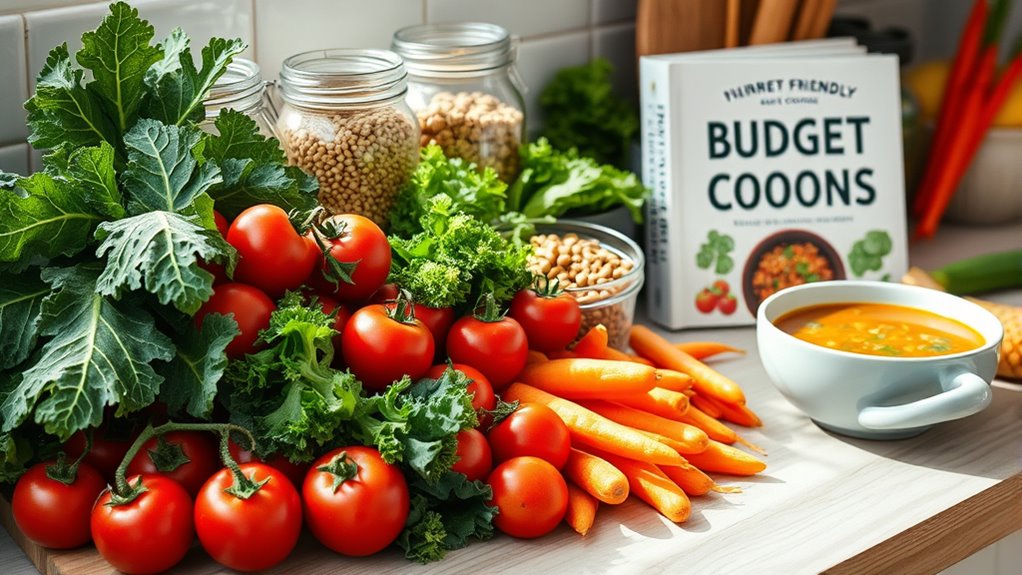

To eat healthy on a budget in 2025, focus on affordable staples like oats, rice, beans, and seasonal produce. Plan your meals ahead to avoid waste and stick to a shopping list. Use canned or frozen options when fresh is expensive, and watch food prices to choose the best deals. Smart budgeting apps can help track your spending, making nutritious eating easier and more affordable. Keep exploring for more budget-friendly tips that can boost your wellness.

Get everyday essentials delivered free with Prime
- Fast, free delivery on millions of items
- Prime Video, Amazon Music and more included
- Member-only deals all year
Key Takeaways
- Plan meals using USDA Food Plans to balance nutrition and cost-effectiveness, adjusting for current prices and inflation.
- Incorporate affordable staples like dried beans, seasonal produce, grains, and canned foods to maximize nutrition and savings.
- Use budgeting tools and meal planning to prevent waste, control spending, and ensure balanced, healthy meals.
- Focus on nutrient-dense, low-cost foods such as legumes, whole grains, and seasonal vegetables to maintain a nutritious diet.
- Stay informed about food price trends and market fluctuations to make strategic shopping decisions and avoid overspending.

Eating healthy on a budget is entirely possible if you make smart choices and plan ahead. By understanding how to navigate food costs and using available resources, you can enjoy nutritious meals without overspending. One effective way to start is by referring to the USDA Food Plans, which show how to maintain healthy eating at different price points—from Thrifty to Liberal. These plans are updated monthly to reflect inflation, helping you stay aware of current costs and adjust your budget accordingly. Using tools like budgeting apps allows you to track your grocery expenses, set limits, and identify patterns that help you cut unnecessary spending. Meal planning is vital; by planning your weekly menu, you reduce food waste and ensure your shopping list is focused solely on what you need, saving money and time.
Smart planning and USDA Food Plans help you eat healthy on a budget without overspending.
Focusing on affordable ingredients makes a big difference. Dried beans, vegetables, and fruits tend to have lower price increases compared to other groceries, making them reliable staples. Incorporating unprocessed meats and legumes as primary protein sources—they’re nutritious and budget-friendly. Grains like oats and rice are economical and versatile, serving as the base for many healthy meals. Buying seasonal produce is another smart move, as fruits and vegetables in season are cheaper and retain their nutritional value. When fresh options aren’t affordable or available, canned beans and vegetables offer convenient, affordable alternatives without sacrificing nutrition. Additionally, understanding food price trends can help you plan your shopping trips more effectively and avoid unexpected expenses. Being aware of inflation and how it impacts food prices allows you to make more informed purchasing decisions.
Developing healthy eating habits helps you stay within your budget. Aim for a balanced diet rich in vegetables, fruits, and legumes, which provide essential nutrients without costing a fortune. Portion control guarantees you don’t overconsume or waste food, further stretching your budget. Incorporating nutrient-dense foods like nuts, seeds, and whole grains—these pack a nutritional punch and are often cost-effective. Planning healthy snacks ahead of time reduces impulse buys at the store, and mindful eating helps you avoid overeating and unnecessary waste. Additionally, understanding projector technology can help you make smarter choices when selecting equipment for your home, ensuring you get the best value for your money.
budget-friendly meal prep containers
As an affiliate, we earn on qualifying purchases.
As an affiliate, we earn on qualifying purchases.
Frequently Asked Questions
How Can I Plan Meals to Reduce Waste and Save Money?
To cut down on waste and save money, you should plan your meals carefully, focusing on accurate portions and flexible menus that reuse leftovers. Forecast your needs to avoid overbuying, shop seasonally, and buy in bulk when possible. Use leftovers creatively, store surplus food properly, and incorporate imperfect produce. Educate yourself on waste reduction strategies, like using reusable containers, to make smarter choices, save costs, and reduce environmental impact.
Are There Specific Superfoods That Are Budget-Friendly?
You ask about budget-friendly superfoods. Focus on affordable options like beans, lentils, oats, and canned fish, which are rich in nutrients and cost less than meat. Incorporate root vegetables such as carrots and potatoes, and add versatile ingredients like cabbage and sweet potatoes for added nutrition. Buying in bulk, choosing store brands, and shopping sales help keep costs down while still enjoying nutrient-dense superfoods.
How Do Seasonal Changes Affect Affordable Healthy Eating Options?
Seasonal changes are the weather’s way of playing peekaboo, and they directly impact your grocery choices. When produce is in season, it’s like catching a rare gem—more abundant, fresher, and cheaper. By shopping seasonally, you can stretch your budget further, enjoy better flavors, and support local farmers. Keep an eye on seasonal trends, and you’ll turn the tide in your favor, making healthy eating both affordable and delightful.
Can Online Shopping Help Me Find Better Deals on Healthy Foods?
Online shopping makes it easier for you to find better deals on healthy foods. You can compare prices across stores, access exclusive discounts, and use digital coupons. Shopping apps and loyalty programs also help save money. Plus, you’ll find more health-conscious options and read reviews to make informed choices. By staying attentive to social media deals and promotions, you maximize savings while keeping nutritious foods within your budget.
What Are Cost-Effective Alternatives to Organic Produce?
Imagine saving enough money to buy a mountain of fresh, nutritious food—without emptying your wallet! Instead of organic produce, you can choose seasonal fruits and vegetables, which are packed with flavor and nutrients, yet much cheaper. Shopping at local farmers markets or joining community-supported agriculture programs can also slash costs. Frozen produce is another smart option, offering the same nutrition at a fraction of the price, helping you eat well without overspending.
Conclusion
By making simple adjustments and choosing your ingredients wisely, you can enjoy nourishing meals without stretching your finances. Remember, small shifts in your shopping habits can lead to big rewards for your health and budget. Embrace these budget-friendly tips as a gentle nudge toward a more vibrant, balanced lifestyle. After all, feeling good and saving money doesn’t have to be a distant dream—sometimes, it’s just a mindful step away.
Halloween Picks
halloween
As an affiliate, we earn on qualifying purchases.