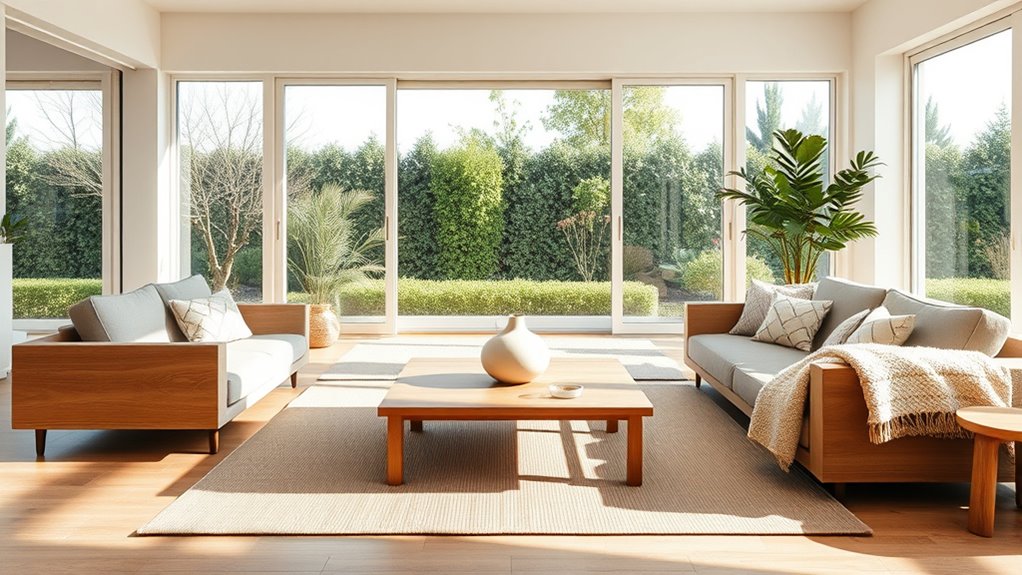

In 2025, Japandi style seamlessly combines Japanese minimalism’s calm, clutter-free aesthetic with Scandinavian warmth and comfort. It emphasizes natural, sustainable materials like wood, bamboo, and handcrafted ceramics, creating spaces that are both serene and inviting. Neutral palettes are accented with bold pops of color, while open layouts and plenty of natural light promote mindfulness and functionality. If you keep exploring, you’ll discover how this harmonious blend supports intentional living and personalized sanctuary.
Key Takeaways
- Japandi style in 2025 combines Japanese minimalism’s simplicity with Scandinavian warmth and coziness.
- Emphasizes sustainability through natural materials like wood, bamboo, and handcrafted textures.
- Features open, clutter-free spaces with neutral palettes accented by bold earthy tones.
- Incorporates biophilic design with green plants to enhance connection to nature.
- Reflects a mindful, intentional approach to living, creating serene, multifunctional environments.

Are you curious about how Japandi style is evolving in 2025? This design trend continues to blend Japanese minimalism with Scandinavian warmth and comfort, but it’s now taking on new dimensions that go beyond just aesthetics. Sustainability, personalization, and functionality are becoming core principles, shaping how you create spaces that feel both serene and intentionally lived in. In 2025, Japandi isn’t just about looks—it’s about fostering a lifestyle rooted in mindful choices and eco-conscious living. You’ll notice a stronger emphasis on natural materials like wood and bamboo, which reflect a commitment to durability and environmental responsibility. These elements are often handcrafted, showcasing the artistry behind each piece—think terracotta, ceramics, or woven rattan—that adds texture and depth to your space.
In 2025, Japandi emphasizes natural materials, handcrafted details, and eco-conscious choices for a serene, personalized living space.
This evolution also brings a focus on intentional living. You’ll want your home to serve multiple purposes, seamlessly combining form and function. Every piece of furniture or decor isn’t just beautiful; it’s purposeful. Minimalism continues to be a hallmark, highlighting clean lines, open spaces, and clutter-free environments. But now, you’ll also see an infusion of warmth through textures like linen cushions, wool throws, and raw wood surfaces, creating a cozy atmosphere that invites relaxation. Large windows and reflective surfaces maximize natural light, making spaces feel airy and open, while neutral colors such as beige, soft whites, and muted greys set a tranquil tone. Yet, in 2025, bold accents—deep greens, terracotta reds, and earthy mustards—add personality and depth, breaking the monochrome palette with touches of richness. Additionally, integrating sustainable materials like high-quality wood and bamboo not only enhances durability but also aligns with eco-conscious principles.
Sustainability remains at the core of Japandi, with eco-friendly choices dictating material selection. Durable, high-quality woods and bamboo dominate, alongside handcrafted ceramics and stoneware that emphasize craftsmanship. You’ll also see a growing presence of biophilic design—green plants integrated into interiors—enhancing the connection to nature and promoting well-being. This approach aligns with the sustainable principles that guide responsible living and design decisions. Incorporating traditional craftsmanship into modern design ensures that each piece carries cultural significance and supports artisans worldwide. Furthermore, the use of cultural influences helps to create a more layered aesthetic that reflects our interconnected world. This creates a more personalized look, blending cultural influences with minimalist principles.
Looking ahead, Japandi in 2025 is more than a style—it’s a philosophy of harmonious living. It’s about creating spaces that are serene, functional, and sustainable, reflecting your values and personality. Expect bold textures, rich colors used as accents, and natural surfaces that add tactile interest. As the trend continues to grow, Japandi will evolve, maintaining its cozy minimalism while embracing modern tastes and global influences. It’s about living intentionally in a space that nurtures both mind and body, making your home a true sanctuary.
Frequently Asked Questions
How Sustainable Are Japandi Furniture Materials?
You might wonder how sustainable Japandi furniture materials are. They’re quite eco-friendly because they often use recycled or upcycled materials like reclaimed wood, stone remnants, and vintage finds. Natural fabrics such as organic cotton, hemp, and recycled polyester are popular, reducing chemical use and pollution. Plus, local craftsmanship and durable designs mean your pieces last longer, minimizing waste and supporting a circular, sustainable approach to furniture.
What Are Common Color Palettes in Japandi Design?
Ever wonder what colors define japandi style? You’ll find neutral bases like beige, cream, and light grey creating calm spaces. Earthy accents such as moss green, terracotta, and muted blues add warmth and natural appeal. Black is used sparingly for contrast, while layered tones and natural materials enhance the minimalist aesthetic. Do you see how these colors blend simplicity with nature, fostering harmony and personal expression in your home?
Can Japandi Style Suit Small Apartments?
Yes, Japandi style suits small apartments perfectly. You’ll maximize space with multi-functional furniture and keep things simple with minimalist decor. Neutral tones like beige and white make rooms feel open, while natural materials add warmth. Incorporate clever storage solutions like floating shelves and woven baskets to stay organized. With its calming, clutter-free vibe and space-saving ideas, Japandi creates a cozy, serene environment ideal for small living spaces.
How Does Lighting Impact Japandi Interiors?
They say, “Lighting is the soul of a space,” and in Japandi interiors, it truly transforms your environment. Your lighting emphasizes serenity through soft, warm tones, highlighting natural textures like wood and linen. Smart, AI-driven systems optimize brightness and energy, while strategic placement and natural light maximize openness. Minimalist fixtures made of natural materials maintain the calm aesthetic, ensuring your space feels tranquil, balanced, and inviting—just as Japandi design intends.
Are There Specific Decor Accessories Unique to Japandi?
You’ll notice that Japandi decor accessories are quite unique, emphasizing natural, handcrafted elements. Handmade ceramics, ikebana vases, and textured planters showcase simplicity and craftsmanship. Incorporate bonsai trees, minimalist wall art, and natural fiber textiles like linen and wool for authentic touches. These accessories serve both functional and aesthetic purposes, blending utility with beauty. By choosing sustainable materials like bamboo and reclaimed wood, you create a warm, harmonious space that reflects Japandi’s core values.
Conclusion
As you embrace the Japandi style in 2025, you’ll find harmony in the humble, highlighting simplicity and serenity. This seamless synthesis of Japanese minimalism and Scandinavian coziness offers a calming, engaging space where functionality meets finesse. Immerse yourself in this dynamic design dance, and discover how delicate details and deliberate decor create a dreamy, delightful environment. Let Japandi inspire your space, transforming it into a sanctuary of serenity, sophistication, and seamless style.