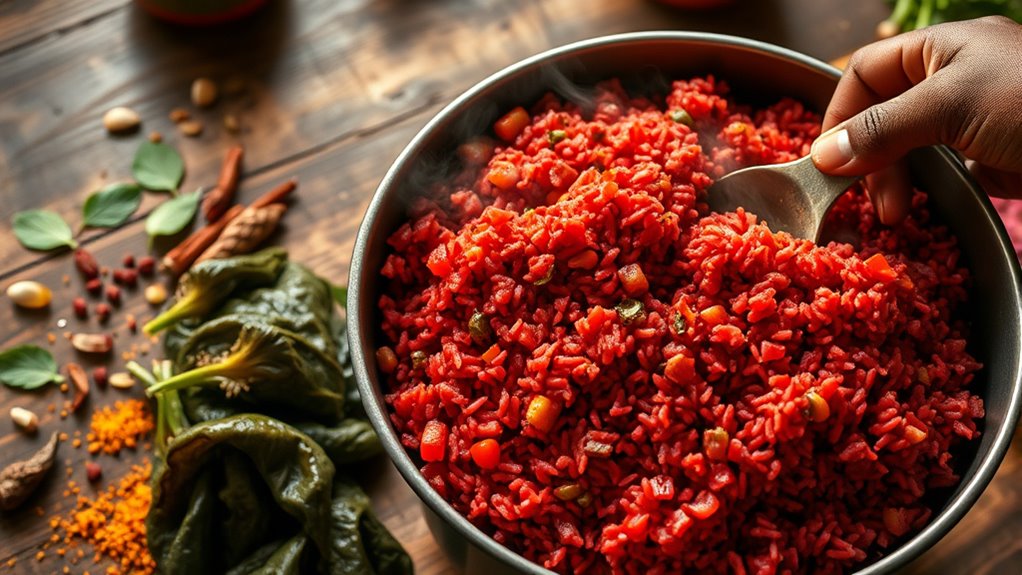
Kwanzaa cooking celebrates cultural heritage by preparing traditional dishes like Jollof rice and braised greens, which symbolize community, resilience, and unity. To make Jollof rice, sauté aromatics, add spices and tomatoes, then simmer the rice until flavorful. For braised greens, slowly cook greens with garlic, onions, and seasonings until tender. You can adapt ingredients to your pantry while keeping the dishes meaningful. Exploring these steps reveals the rich traditions behind sharing food during Kwanzaa.
Key Takeaways
- Jollof rice is a flavorful West African dish made with tomatoes, peppers, onions, and spices, cooked with rice until tender.
- Braised greens involve slow-cooking kale, collard greens, or mustard greens with garlic, onions, and seasonings for rich flavor.
- Ingredient substitutions, like jasmine rice for parboiled rice or kale for collard greens, are common and maintain traditional essence.
- Cooking these dishes during Kwanzaa celebrates cultural heritage, resilience, and community through shared culinary practices.
- Proper preparation involves sautéing aromatics, simmering with broth, and slow braising to enhance flavors and preserve nutrients.

Have you ever wondered how food plays a central role in celebrating Kwanzaa? It’s more than just sustenance; it’s a way to honor cultural traditions, bring family together, and showcase the rich history of African heritage. During Kwanzaa, preparing traditional dishes like Jollof rice and braised greens becomes a meaningful act. These foods aren’t just delicious—they symbolize community, resilience, and the collective spirit of the holiday. When you cook these dishes, you actively participate in a cultural ritual that connects you to ancestors and the broader African diaspora. You might find yourself exploring ingredient substitutions to adapt recipes based on what’s available or personal preferences, which is perfectly fine. For example, if you don’t have traditional ingredients like long-grain parboiled rice, you can substitute with jasmine or basmati rice, adjusting cooking times accordingly. Similarly, for greens, collard greens can be replaced with kale or mustard greens if needed. The goal is to keep the essence of the dish alive while making it accessible to your pantry and taste buds.
In preparing Jollof rice, you’ll want to focus on balancing flavors—tomatoes, peppers, onions, and spices come together to create a vibrant, savory base. You’ll sauté your aromatics, add the rice, and pour in broth or water, allowing everything to simmer until the rice soaks up the rich, spicy sauce. This process embodies the cultural traditions that have been passed down through generations, emphasizing community and shared experience. As you cook, think about how each step reflects a story of resilience and unity. When it comes to greens, braising involves slowly cooking your chosen greens with garlic, onions, and seasonings until tender. This method preserves the greens’ nutrients and enhances their flavor, connecting you to the culinary practices of many African and African-American communities. You can personalize the dish by adding smoked meats, beans, or other ingredients based on your cultural background or dietary needs.
Ultimately, cooking these dishes during Kwanzaa is an act of celebration and remembrance. It’s about more than just the ingredients; it’s about how you adapt, share, and honor cultural traditions through food. Ingredient substitutions allow flexibility, ensuring everyone can participate in this meaningful holiday. Through every stir, simmer, and serve, you’re keeping alive a history that binds communities together, fostering a sense of pride and continuity in your Kwanzaa celebration.
Frequently Asked Questions
What Are the Origins of Jollof Rice?
The origins of jollof rice trace back to West African cuisine, particularly in what is now Senegal. You’ll find that it’s a flavorful rice preparation, often cooked with tomatoes, peppers, and spices. Over time, different countries like Nigeria and Ghana have adapted it, making it a beloved dish across West Africa. Its rich history reflects a blend of local ingredients and culinary traditions, showcasing the region’s vibrant food culture.
Can Braised Greens Be Made Vegetarian?
Absolutely, you can make braised greens vegetarian and turn it into a flavor-packed masterpiece! Use rich vegetarian substitutions like vegetable broth, smoky smoked paprika, or even tempeh for added texture. Master green cooking techniques by sautéing garlic and onions first, then slow-cooking the greens until tender and flavorful. This way, you create a hearty, savory dish that’s perfect for any celebration, all without a hint of meat!
What Are Alternative Grains for Jollof Rice?
You can use alternative grains for jollof rice, such as quinoa, couscous, or millet, which work well as grain substitutes. These options are often gluten-free, making them great gluten-free options for your dish. Quinoa adds protein and a slightly nutty flavor, while millet and couscous offer different textures. Experimenting with these grains can give your jollof rice a unique twist and cater to various dietary needs.
How Long Do Braised Greens Typically Take to Cook?
Surprisingly, braised greens don’t take ages—usually about 30 to 45 minutes. You’ll want to use slow cooking techniques to develop rich flavors and tender textures. The exact time varies based on the greens and your desired softness, allowing for flavor variations. Keep an eye on them, stir occasionally, and you’ll master the perfect balance of tender greens and savory seasoning, all within a manageable cooking window.
Are There Regional Variations of Jollof Rice?
Yes, there are regional variations of Jollof rice, and you’ll notice different flavors depending on where it’s made. You might find West African Jollof with smoky tomato bases, while other regions add local ingredients like seafood or vegetables for unique flavors. Ingredient differences, such as types of rice, spices, and seasonings, also influence the taste. Exploring these variations lets you enjoy a diverse array of delicious, region-specific Jollof rice styles.
Conclusion
So, now that you’re practically a Jollof rice and braised greens aficionado, remember: Kwanzaa isn’t just about cooking—it’s about proving you can turn a pot of greens into a symbol of unity (or just a good excuse to avoid family drama). So go ahead, impress everyone with your culinary prowess. Who knew that celebrating heritage could be so deliciously simple? Just don’t forget to add a little extra spice—both in your food and your life.