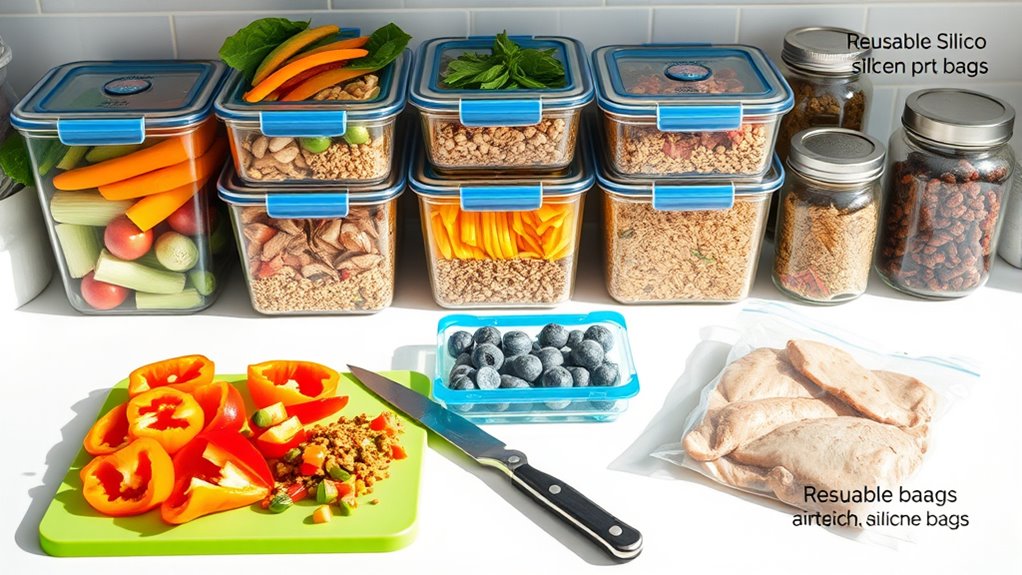
To master meal prep, plan a weekly menu matching your nutritional needs and tastes, then create a detailed shopping list for fresh ingredients like lean proteins, grains, and veggies. Prepare and portion food in airtight containers, labeling them with dates. Store meals in the fridge for up to 3-4 days or freeze for longer shelf life, reheating to a safe temperature before eating. Keep food safety in mind, and you’ll find tips for efficient prep and storage ahead.

Get everyday essentials delivered free with Prime
- Fast, free delivery on millions of items
- Prime Video, Amazon Music and more included
- Member-only deals all year
Key Takeaways
- Plan weekly menus with balanced, diverse ingredients aligning with nutritional goals.
- Use airtight containers, label with dates, and refrigerate or freeze to maintain freshness and safety.
- Prepare ingredients in advance, portion meals, and store properly to streamline reheating and consumption.
- Reheat meals thoroughly to appropriate temperatures, and follow safe thawing practices for frozen foods.
- Regularly check stored meals for spoilage, discard unsafe items, and rotate stock to ensure food safety.

Have you ever wondered how some people manage to eat healthy and save time during busy weekdays? The secret often lies in effective meal prep, which relies on smart planning and organization. One key aspect is portion control. When you pre-portion your meals, you not only avoid overeating but also guarantee you’re getting the right amount of nutrients. Using containers to divide your ingredients into appropriate servings makes it easier to stick to your dietary goals. It also simplifies your daily routine—grab a ready-made meal, and you’re set without the guesswork. To keep things interesting and balanced, you should incorporate ingredient variety into your meal prep. Relying on a diverse range of vegetables, proteins, grains, and seasonings prevents your meals from becoming monotonous and helps you obtain a broad spectrum of nutrients. Mixing different ingredients allows you to enjoy flavorful, colorful plates each day, which can boost your motivation to stick with healthy eating habits.
Planning ahead is essential. Start by designing a weekly menu that includes a variety of meals to match your nutritional needs and taste preferences. Once you have a plan, create a shopping list that covers all the ingredients you’ll need. When selecting ingredients, opt for fresh produce, lean proteins, whole grains, and healthy fats to build balanced meals. Preparing ingredients in advance saves time during busy mornings or evenings. For example, wash and chop vegetables, cook grains or proteins in bulk, and portion everything into containers. This way, assembling a meal becomes as simple as grabbing a container from the fridge.
Storage plays an important role in maintaining the quality and safety of your prepped meals. Use airtight containers to prevent spoilage and keep ingredients fresh. Label each container with the date it was prepared to help you prioritize eating the oldest meals first. Proper refrigeration is imperative; most prepared meals stay good for three to four days. If you’re planning to keep meals longer, consider freezing portions to extend their shelf life and preserve flavors. Just make sure to thaw frozen meals safely in the fridge or microwave before reheating. When reheating, guarantee your food reaches the appropriate temperature to avoid any food safety issues.
airtight food storage containers
As an affiliate, we earn on qualifying purchases.
As an affiliate, we earn on qualifying purchases.
Frequently Asked Questions
How Long Can Cooked Meals Be Stored Safely in the Fridge?
Cooked meals can be safely stored in the fridge for 3 to 4 days. This storage duration helps prevent bacteria growth and guarantees food safety. To maintain quality and safety, always store leftovers in airtight containers and refrigerate promptly. Be sure to reheat leftovers to the proper temperature before eating. If you’re unsure, it’s best to check for any signs of spoilage or an off smell before consuming.
What Are the Best Containers for Meal Prep Storage?
You should choose reusable containers for meal prep storage, as they’re eco-friendly and cost-effective. Look for BPA-free options to guarantee food safety and avoid harmful chemicals. Glass containers are ideal because they’re durable, microwave-safe, and don’t stain or retain odors. If you prefer plastic, opt for BPA-free plastic containers with tight-fitting lids. These containers keep your meals fresh and make reheating and storing convenient.
How Do I Prevent Food From Drying Out During Storage?
To prevent food from drying out during storage, focus on moisture retention by using airtight packaging. Make certain containers are sealed tightly to keep moisture in and air out, which helps maintain freshness. You can also add a small amount of broth or water to foods like grains or vegetables before sealing. Store items in a cool, consistent temperature, and avoid unnecessary opening of containers to preserve moisture and prevent drying out.
Can I Meal Prep for Gluten-Free or Allergy-Specific Diets?
Imagine preparing a batch of allergy-friendly chicken salad with gluten-free substitutions like gluten-free mayonnaise and crunchy vegetables. Yes, you can meal prep for gluten-free or allergy-specific diets by choosing allergy-friendly ingredients and careful substitutions. Always check labels for cross-contamination risks, and plan meals around safe ingredients. This way, you guarantee your meals are both delicious and safe, giving you peace of mind throughout the week.
What Are Tips for Reheating Meals Without Losing Quality?
When reheating meals, use your microwave on medium power to avoid overcooking and preserve flavor. Stir or rotate your food halfway through to ensure even heating. Cover your dishes with a microwave-safe lid or damp paper towel to keep moisture in. If reheating on the stove, do so gently over low heat, stirring occasionally. This way, you maintain the meal’s quality and enjoy it just like fresh.
Conclusion
Think of meal prep as planting seeds in a garden—you’re laying the groundwork for nourishing, stress-free days ahead. By planning smart, prioritizing safety, and storing your meals properly, you’re cultivating a bountiful harvest of health and convenience. With each step, you’re nurturing your well-being, turning chaos into order. Keep tending your kitchen garden, and watch how your efforts blossom into delicious, stress-free meals that sustain you every day.
Fall Picks
fall essentials
As an affiliate, we earn on qualifying purchases.