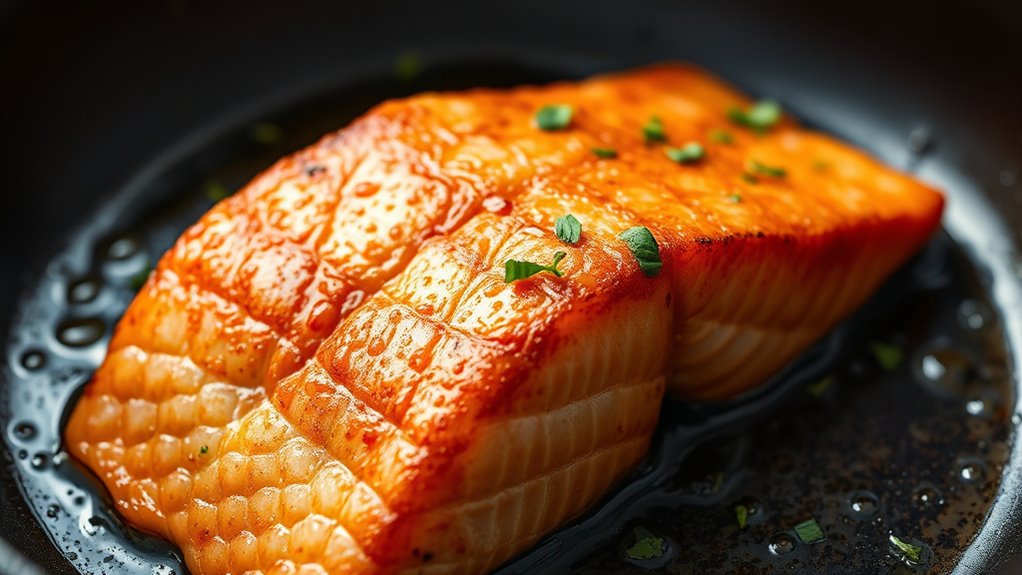

To sear salmon without sticking, start with fresh fish that has bright, clear eyes and firm flesh. Use a heavy-bottomed skillet and make certain it’s hot before adding oil—wait until it shimmers and water droplets sizzle. Pat the fish dry, season lightly, and place it skin-side down if applicable. Don’t flip too early; wait for a crispy crust before turning. Mastering these steps will elevate your pan-searing skills—keep going to discover even more tips.

Get everyday essentials delivered free with Prime
- Fast, free delivery on millions of items
- Prime Video, Amazon Music and more included
- Member-only deals all year
Key Takeaways
- Ensure the pan is properly heated until water droplets sizzle and evaporate instantly before adding oil.
- Pat the salmon dry with paper towels to remove surface moisture, promoting better searing.
- Use a high smoke point oil, like vegetable or canola, and let it shimmer before placing the salmon.
- Place the salmon skin-side down if applicable, pressing gently to ensure contact and prevent sticking.
- Wait until the edges turn opaque and the skin releases easily before flipping to avoid tearing.

If you’re new to seafood, understanding the basics can make your experience more enjoyable and confident. One of the most important factors in preparing delicious seafood is guaranteeing fish freshness. Fresh fish should have clear, bright eyes, firm flesh, and a clean ocean smell. The moment you pick it up, trust your senses to determine quality. Using fresh fish not only enhances flavor but also makes pan-searing techniques more successful. When the fish is fresh, it’s less likely to stick to the pan and will develop a beautifully crisp exterior.
Getting the pan ready is your first step. Use a heavy-bottomed skillet, ideally cast iron or stainless steel, which guarantees even heat distribution. Before adding any oil, make sure your pan is hot enough—this is key to preventing sticking. A good test is to sprinkle a few drops of water into the pan; they should sizzle and evaporate immediately. Once the pan is hot, add a high-quality oil with a high smoke point, like vegetable or canola oil. Let the oil shimmer before placing your fish in the pan. This preheating step is vital in pan searing techniques because it creates a barrier between the fish and the surface, reducing the chances of sticking.
When it’s time to cook, gently pat the fish dry with paper towels. Moisture on the surface can cause sticking and prevent that perfect sear. Season your fish simply with salt and pepper or your preferred spices—nothing too overpowering, so the delicate flavor of the salmon shines through. Carefully place the fish skin-side down if it has skin, pressing gently to ensure contact with the pan. Resist the temptation to move or flip the fish too soon. Wait until you see the edges turn opaque and the skin releases easily from the pan; this indicates it’s ready to flip. Using this patience aligns with proper pan searing techniques, resulting in a crispy crust and tender interior.
Once flipped, cook the other side for just a few minutes until the fish reaches your desired doneness. Remember, overcooking can dry out the fish, so keep a close eye. Rest the salmon briefly before serving to allow the juices to redistribute. Mastering fish freshness and pan searing techniques will give you a confident, successful start to your seafood journey, guaranteeing every bite is flavorful, tender, and perfectly seared without sticking.
cast iron skillet for searing salmon
As an affiliate, we earn on qualifying purchases.
As an affiliate, we earn on qualifying purchases.
Frequently Asked Questions
What Type of Pan Is Best for Searing Salmon?
You should use a non-stick pan or a cast iron skillet for searing salmon. Non-stick pans prevent sticking and make flipping easier, especially if you’re new to searing. Cast iron pans heat evenly, retain high heat, and develop a natural non-stick surface over time. Both options work well, but if you want a crispy crust and even searing, a well-seasoned cast iron skillet is your best bet.
How Do I Prevent Skin From Sticking During Searing?
Think of your pan as a dance partner—trust it to glide smoothly. To prevent skin sticking, make sure the oil is hot enough before adding your salmon; this creates a barrier that helps the skin release easily. Gently place the salmon skin-side down and resist the urge to move it early. With patience and proper oil temperature, your salmon will sear perfectly without sticking, revealing a crisp, golden skin.
What Temperature Should the Pan Be for Perfect Searing?
For perfect searing, keep your pan temperature between 375-400°F (190-204°C). This range ensures ideal searing precision, creating a beautiful crust without overcooking the salmon. Use a medium-high heat, and wait until the pan is hot before adding the fish. You’ll know it’s ready when a slight shimmer appears on the surface. Maintaining the right pan temperature helps prevent sticking and guarantees a delicious, evenly cooked seared salmon.
Can I Reuse Oil After Searing Salmon?
Sure, you can reuse oil after salmon searing, but beware—your kitchen’s about to smell like a seafood joint. Oil reuse is okay if the oil looks clear and smells fresh; if it’s dark or funky, toss it. Remember, salmon searing releases proteins and fats that can degrade the oil quality. So, for best flavor and safety, use fresh oil or strain and store it properly for future cooking adventures.
How Do I Tell When the Salmon Is Perfectly Cooked?
You’ll know your salmon is perfectly cooked when it flakes easily with a fork and shows a color change from translucent to opaque. Typically, it takes about 4-6 minutes per side, depending on thickness. Keep an eye on the cooking time; if you see the color deepening and the flesh turning opaque, your salmon’s ready. Avoid overcooking, which can make it dry.
Conclusion
With these simple secrets, you’ll sail smoothly through salmon cooking, avoiding sticking and scoring stunning, savory results. By balancing heat, using a proper pan, and patiently peeling back the fish, you’ll master the art of a perfect pan-sear. Soon, your kitchen will be filled with the sizzling sound of success, and every bite will boast a beautiful, bold flavor. So, stay steady, sizzle smartly, and savor the sensational seafood you’ve skillfully seared yourself!
Fall Picks
fall essentials
As an affiliate, we earn on qualifying purchases.