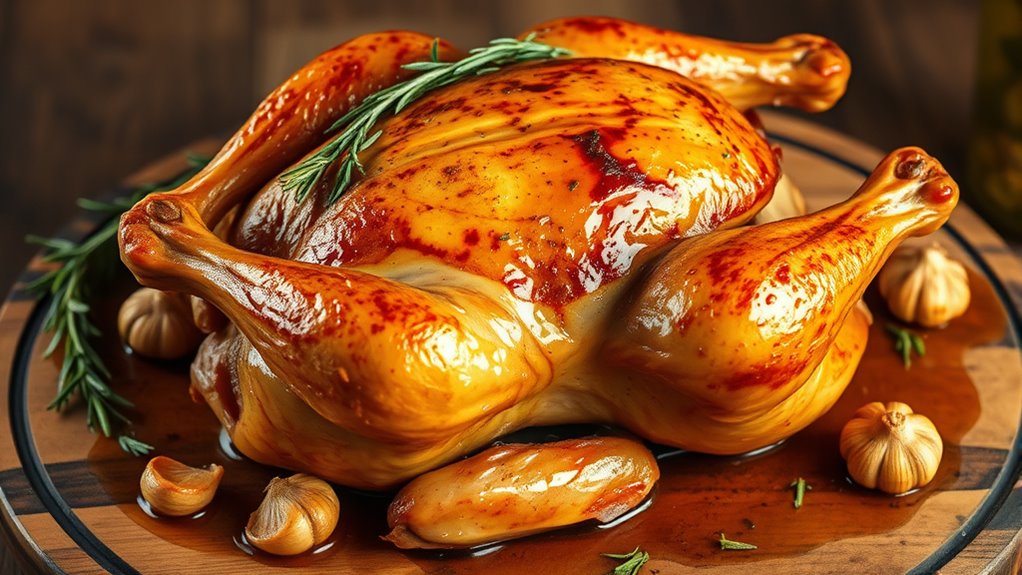

To make a perfect roast chicken, start by selecting quality ingredients and seasoning it generously with salt, pepper, garlic, paprika, thyme, and lemon zest, rubbing under the skin if possible. Pat the chicken dry and stuff the cavity with aromatics like garlic and lemon. Roast at 425°F until the internal temperature reaches 165°F, basting occasionally. Let it rest before carving for juicy, tender meat and crispy skin. Keep going, and you’ll discover how to master every step for a flawless result.
Key Takeaways
- Use quality, well-seasoned ingredients, applying a balanced spice rub evenly, including under the skin if possible.
- Prepare the chicken by patting it dry, trussing the legs, and stuffing the cavity with aromatics for flavor.
- Roast at 425°F, monitoring internal temperature until it reaches 165°F, and baste periodically for crisp skin and juicy meat.
- Tent with foil if skin browns too quickly and maintain consistent oven temperature throughout cooking.
- Rest the chicken for 10-15 minutes before carving for maximum juiciness and serve with neatly sliced portions.
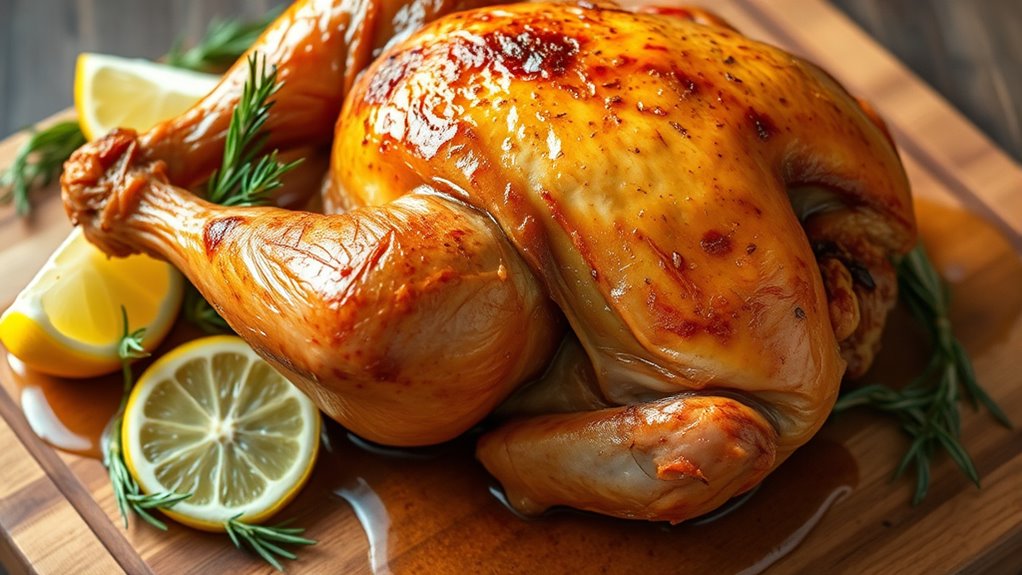
Roast chicken is a classic dish that, when prepared correctly, offers juicy meat with crispy skin every time. To achieve this, start with quality ingredients and pay close attention to seasoning blends. Your choice of seasonings can transform a simple bird into a flavorful masterpiece. A well-balanced blend might include salt, pepper, garlic powder, paprika, thyme, and a touch of lemon zest. Rub this mixture evenly over the chicken, making sure to get under the skin where possible, to infuse every bite with flavor. Don’t be afraid to experiment with herbs and spices to suit your taste. The key is to create a seasoning blend that enhances the natural flavors while adding a layer of complexity.
Once seasoned, it’s *vital* to prepare your chicken properly for roasting. Pat the bird dry with paper towels; this step *guarantees* the skin crisps up beautifully. Trussing the chicken—tying the legs together—helps it cook evenly and retains its shape. Before roasting, consider stuffing the cavity with aromatics like garlic cloves, lemon halves, or sprigs of herbs. This adds depth to the flavor and keeps the meat moist. Using a roasting pan or a rack inside a baking sheet allows hot air circulation, promoting even cooking and a crispy skin. Attention to detail during preparation can significantly enhance your results.
Cooking at the right temperature is *fundamental*. Preheat your oven to 425°F (220°C) to get the skin crispy while keeping the meat juicy. Roast the chicken until the internal temperature reaches 165°F (74°C) in the thickest part of the thigh. This usually takes about 20 minutes per pound, but always rely on a meat thermometer for accuracy. During roasting, you can baste the chicken with its juices or a little melted butter to enhance flavor and skin crispness. Keep an eye on the skin; if it’s browning too fast, tent the chicken with foil to prevent burning.
Carving your roast chicken properly is an art that makes serving neat and easier. Let the chicken rest for 10-15 minutes after removing it from the oven—this allows the juices to redistribute. When carving, use a sharp knife and follow proper carving techniques: start by removing the legs, then the wings, and finally the breast meat. Slice the breast against the grain for tender, juicy pieces. Take your time, and you’ll end up with clean, attractive slices that showcase your effort. With attention to seasoning blends and carving techniques, your roast chicken will be a centerpiece that impresses every time.
Frequently Asked Questions
How Do I Store Leftover Roast Chicken Safely?
To store leftover roast chicken safely, place it in an airtight container or wrap it tightly with aluminum foil or plastic wrap. Keep it in the refrigerator within two hours of cooking to prevent bacteria growth. For longer storage, freeze it. When reheating, guarantee the chicken reaches an internal temperature of 165°F to kill bacteria. Follow proper food storage and reheating tips to enjoy your leftovers safely.
Can I Use a Different Herb for Seasoning?
Did you know that herbs can boost flavor by up to 30%? Yes, you can definitely use herb substitution or try seasoning alternatives to customize your roast chicken. Feel free to swap rosemary for thyme or basil—most herbs work well, but adjust quantities to suit your taste. Experimenting keeps your dishes exciting, so don’t hesitate to get creative with different herbs to find your perfect flavor combo.
What Side Dishes Pair Best With Roast Chicken?
You should pair your roast chicken with vegetable pairings like roasted carrots, green beans, or Brussels sprouts for a fresh, vibrant touch. Grain options such as mashed potatoes, quinoa, or wild rice complement the dish well, adding texture and heartiness. These sides enhance the flavors of your roast chicken, creating a balanced meal. Focus on colorful, seasonal vegetables, and choose grains that suit your taste for a truly satisfying dinner.
How Do I Adjust Cooking Time for Smaller or Larger Chickens?
To adjust cooking time for different chicken sizes, consider your chicken size considerations and modify accordingly. For smaller chickens, reduce the cooking time by about 20-30%, and for larger ones, increase it by 15-20%. Always check for doneness using a meat thermometer, aiming for 165°F. Keep in mind that cooking time adjustments depend on weight, so monitor closely to prevent over or undercooking.
Is It Necessary to Brine the Chicken Beforehand?
Did you know that brining can increase moisture retention by up to 20%? You don’t have to brine your chicken, but it’s highly recommended for flavor enhancement and juiciness. Brining benefits include tender meat and more even seasoning. If you have time, soaking your chicken in a simple saltwater solution helps guarantee a flavorful, succulent roast. It’s a small step that makes a big difference in your final dish.
Conclusion
Now that you’ve mastered the perfect roast chicken, think of it as a shining jewel in your culinary crown. With each step, you’ve crafted something truly special—juicy, crispy, and full of flavor. Remember, great cooking is like tending a garden; patience and care bring out the best in your dish. So, enjoy your beautifully roasted chicken as a tribute to your effort and skill—your kitchen masterpiece is ready to impress!