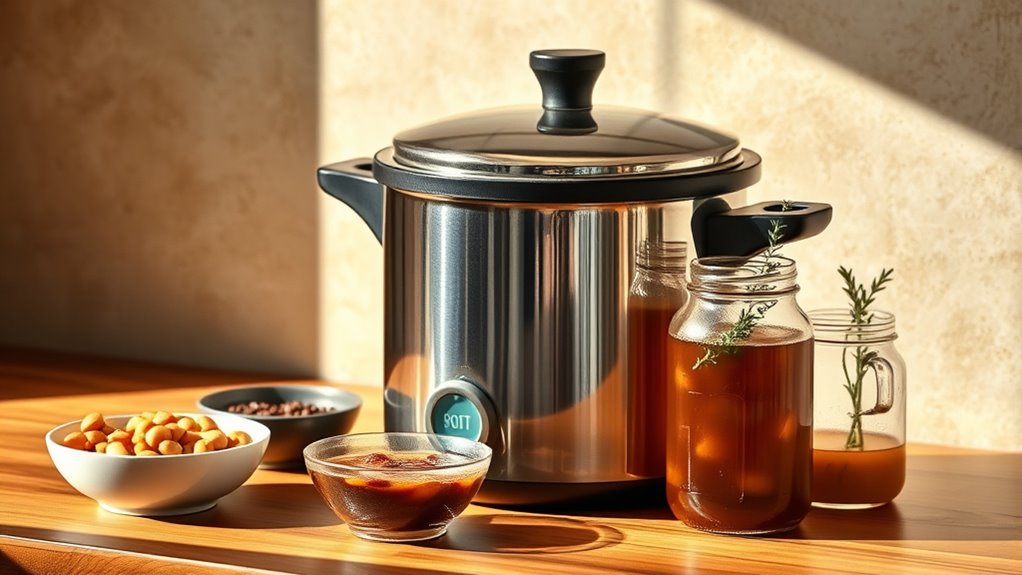
To cook beans, stocks, and stews in a pressure cooker, start by inspecting the sealing ring and ensuring the pressure release valve is clean and functioning. Don’t overfill; leave space for steam buildup. Soak beans beforehand for quicker cooking and to prevent foaming. Use the correct liquid amount and cut ingredients evenly. Always wait for pressure to release completely before opening. For more tips on safe and efficient pressure cooking, keep exploring how to master your cooker.
Key Takeaways
- Soak beans beforehand to reduce cooking time and prevent foaming or vent blockage.
- Use appropriate liquid levels to ensure proper pressure buildup and avoid burning.
- Cut ingredients uniformly for even cooking, especially in stews.
- Follow safety checks on sealing rings and pressure release valves before each use.
- Wait for complete pressure release before opening the lid to ensure safe handling.

A pressure cooker is a versatile kitchen tool that can markedly cut down cooking times while preserving flavors and nutrients. When cooking beans, stocks, or stews, it’s essential to understand how to use your pressure cooker safely and effectively. Safety tips are crucial because improper use can lead to accidents or food mishaps. Always check that the sealing ring is in good condition and properly seated before each use. Make sure the pressure release valve is clean and functioning correctly. Never overfill the cooker; leaving enough space allows steam to build and prevents pressure buildup that could be dangerous. It’s also wise to consult your specific model’s manual for guidance on maximum fill levels and operation procedures. When cooking beans, for example, soaking them beforehand can reduce cooking time and help prevent foaming or blockage of the vent, which can cause the cooker to malfunction. If you encounter issues during cooking, troubleshooting methods come in handy. For instance, if the pressure cooker isn’t reaching pressure, check that the heat source is adequate and that the lid is sealed tightly. If steam is leaking from the lid, inspect the sealing ring for cracks or misplacement, and replace it if necessary. Sometimes, food particles or debris block the pressure release valve, leading to improper pressure buildup. Clearing the valve carefully can resolve the issue. Also, if you notice the cooker isn’t releasing pressure properly after cooking, ensure the valve isn’t clogged or stuck. Remember, never force the lid open after cooking; always wait for the pressure to fully release, either naturally or using the quick-release method. When making stocks, using the right amount of liquid is vital—too little can cause burning, while too much might result in longer cooking times. For stews, cut ingredients into uniform pieces for even cooking, and use a natural release to prevent hot liquid from splattering when opening the lid. Troubleshooting is also about recognizing signs of wear and tear, like a warped lid or damaged gasket, which should be replaced immediately. Regular maintenance and careful attention to safety tips help ensure your pressure cooker performs well and keeps you safe. By understanding the basics of pressure cooking and being prepared for common troubleshooting scenarios, you’ll gain confidence in preparing beans, stocks, and stews efficiently and safely. Always remember to follow safety guidelines, listen to your cooker, and keep it well-maintained for the best results in your culinary adventures. Additionally, familiarizing yourself with the pressure regulation features of your model can enhance safety and cooking precision.
Frequently Asked Questions
How Do I Prevent Food From Sticking to the Pressure Cooker?
To prevent food from sticking to your pressure cooker, start by using a non-stick coating or lightly greasing the bottom. Always guarantee you add enough liquid to create steam and prevent burning. Stir ingredients properly before sealing the lid, and during cooking if possible, to avoid sticking. Proper stirring helps distribute heat evenly, reducing the chance of food sticking and burning, keeping your pressure cooker clean and functioning well.
Can I Cook Different Types of Beans Together?
Did you know that mixing different bean types can boost nutritional value and create unique flavors? Yes, you can cook various bean combinations together in your pressure cooker. Just make sure they have similar cooking times and adjust the pressure accordingly. This allows for better flavor blending and variety in your dishes. Keep in mind, some beans may require pre-soaking to ensure even cooking and prevent mushiness.
What’s the Best Way to Store Leftover Pressure-Cooked Dishes?
To store leftover pressure-cooked dishes, place them in airtight containers for ideal food storage. Make sure the food cools completely before sealing to prevent bacteria growth. Label the containers with dates and store them in the refrigerator, where they’ll stay fresh for 3-4 days. When reheating leftovers, do so evenly, ensuring they reach a safe temperature. Proper food storage and reheating leftovers keep your meals safe and delicious.
How Do I Adjust Cooking Times for Altitude?
When cooking at higher altitudes, you need to adjust your pressure cooker’s cooking times due to altitude adjustments. Typically, increase cooking time by about 5-10% for every 1,000 feet above sea level. You might also need to add a little extra liquid because of faster evaporation. Keep an eye on your dishes, and don’t hesitate to add time gradually if they aren’t fully cooked, ensuring consistent results despite altitude variations.
Are There Safety Tips for Opening a Pressure Cooker After Cooking?
Did you know that over 50% of pressure cooker accidents involve improper opening? To stay safe, always use the correct pressure release methods—natural or quick release—based on your recipe. Before opening, guarantee the safety valve is clean and functioning properly to prevent steam leaks. Never force the lid open until you’re sure all pressure is released. Regular safety valve maintenance keeps your pressure cooker safe and reliable.
Conclusion
Mastering pressure cooker basics transforms your cooking game entirely, turning ordinary ingredients into culinary masterpieces in a fraction of the time. With these skills, you’ll access flavors so intense and textures so perfect, they’ll make gourmet restaurants seem amateurish. Imagine impressing everyone with dishes so effortlessly luxurious, they’ll swear you’ve got a secret culinary wizardry. Embrace these techniques, and soon, your kitchen will become a domain where beans, stocks, and stews reign supreme—redefining what’s possible in home cooking.