To prevent mushy stir-fries, start by preparing vegetables with uniform, bite-sized cuts and add the hardy ones first, saving delicate greens for later. Cook in small batches over high heat, stirring constantly to avoid overcrowding, which causes steaming. Mix your sauce thoroughly and add it gradually for the right consistency. Stop cooking as soon as everything is vibrant and just tender to keep that crisp texture. Keep these tips in mind, and you’ll master a perfect stir-fry every time.

Get everyday essentials delivered free — and shop member deals
- Fast, free delivery on millions of items
- Access to Prime Big Deal Days deals on October 6–7
- Prime Video, Amazon Music and more included
Key Takeaways
- Cut vegetables uniformly and into appropriate sizes to ensure even cooking and maintain crunch.
- Add vegetables in stages based on their cooking times to prevent overcooking delicate items.
- Cook in small batches to keep the pan hot and avoid steaming, which causes sogginess.
- Stir constantly and keep the heat high to quickly cook vegetables without losing crunch.
- Remove from heat immediately once vegetables are vibrant and just tender to preserve texture.
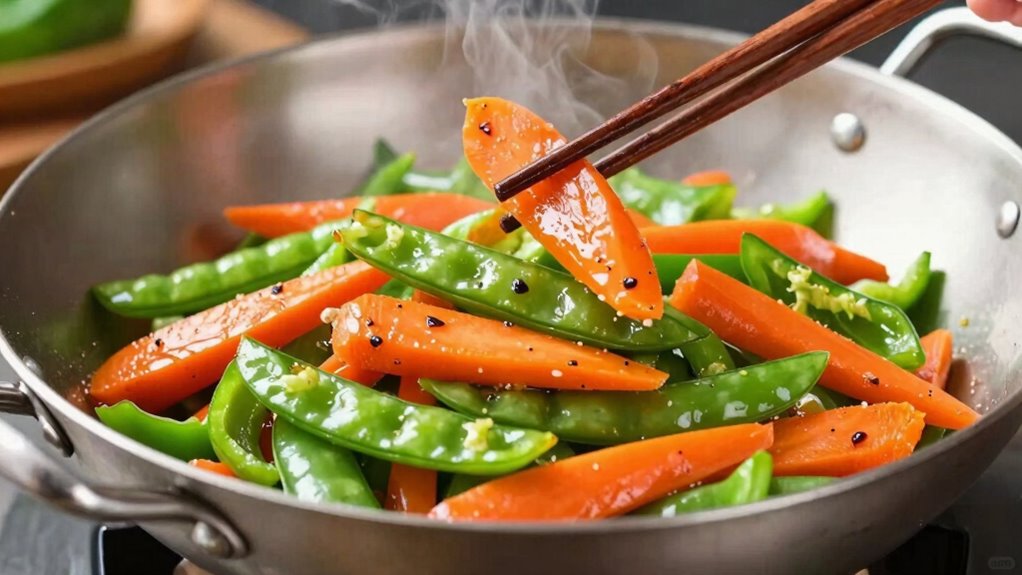
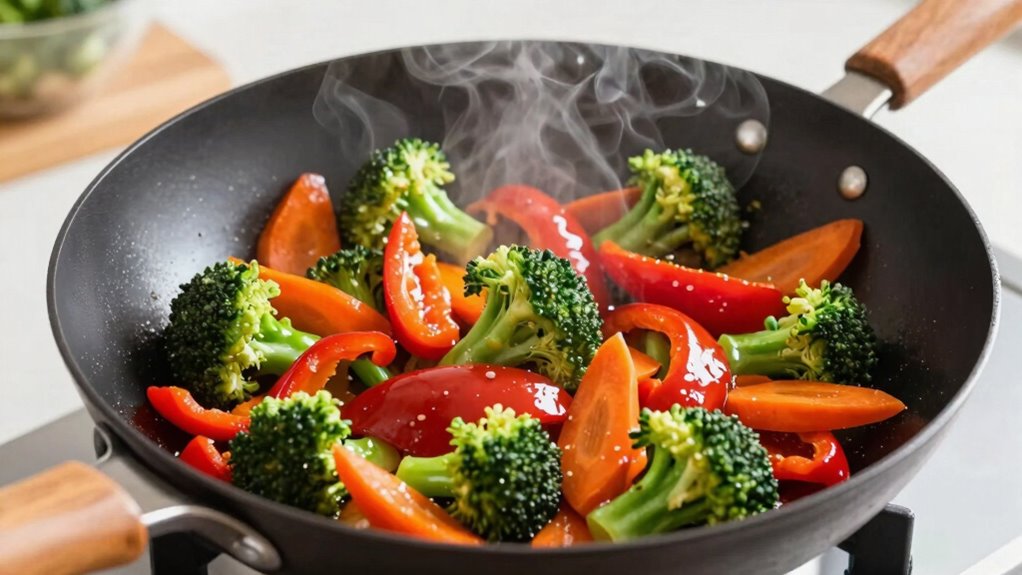
A perfect stir-fry should be crisp, vibrant, and full of flavor, but all too often, vegetables turn mushy and limp. To achieve that ideal balance, you need to pay attention to how you handle your ingredients and cooking method. One key aspect is vegetable texture. If you cut your vegetables into uniform, bite-sized pieces, they’ll cook evenly and retain their crunch. Thick or uneven cuts can lead to overcooking some pieces while others remain raw or limp. Also, choosing the right vegetables is essential. Hardy vegetables like carrots, bell peppers, and broccoli hold up better during stir-frying, while more delicate ones like zucchini or leafy greens cook quickly and can become soggy if not added at the right time.
Achieve crisp, vibrant stir-fry vegetables by uniform cutting and selecting sturdy, well-suited ingredients.
Timing is vital when it comes to vegetable texture. You want to add vegetables in stages based on their cooking times. Start with those that need longer to cook, and add quicker-cooking items later. This prevents overcooking and keeps everything crisp. Keep your stir-fry moving constantly—stirring helps distribute heat evenly and prevents vegetables from sitting in the hot oil too long, which can lead to sogginess. Also, avoid overcrowding the pan. When too many vegetables are in the pan, the temperature drops, resulting in steaming rather than stir-frying, which can make your vegetables limp. Cook in batches if necessary, to maintain high heat and achieve that perfect sear.
Another vital element is your sauce. A well-balanced sauce not only adds flavor but also influences sauce consistency and vegetable texture. If your sauce is too thick, it can cling heavily to vegetables, making them soggy. Too thin, and it won’t coat the ingredients well or add flavor. To prevent this, mix your sauce ingredients thoroughly before adding them to the pan, and add it gradually, stirring constantly to achieve the desired consistency. Remember, the sauce should be thick enough to cling but not so gloopy that it drowns the vegetables.
Finally, don’t overcook the vegetables once you’ve added the sauce. As soon as they turn vibrant and just tender, remove the stir-fry from heat. Overcooking will turn those crisp vegetables into mush. By paying attention to vegetable texture, timing, and sauce consistency, you’ll serve a stir-fry that’s crisp, flavorful, and visually appealing—never limp or soggy.
As an affiliate, we earn on qualifying purchases.
Frequently Asked Questions
Can the Type of Oil Affect Stir-Fry Texture?
Yes, the type of oil can affect your stir-fry’s texture. Using high-quality oils with a high smoke point, like avocado or refined peanut oil, allows you to cook at higher temperatures without breaking down. This quick searing helps keep vegetables crisp and prevents them from becoming mushy. Low-quality or oils with low smoke points tend to burn or produce excess moisture, leading to a soggy, less desirable stir-fry.
Should Ingredients Be Dried Thoroughly Before Cooking?
Yes, you should dry ingredients thoroughly before cooking to prevent excess moisture. Proper moisture removal during ingredient preparation helps guarantee your stir-fry stays crisp and avoids becoming mushy. Pat vegetables and proteins dry with paper towels to remove surface water, especially if they’ve been washed or marinated. This step is vital for maintaining the right texture and achieving a perfect stir-fry, so don’t skip it for better results.
How Does the Size of Vegetable Cuts Impact Crispiness?
Think of your stir-fry like a jazz band—each instrument (vegetable) needs to be in sync for the perfect harmony. When you cut vegetables uniformly, they cook evenly, maintaining their crispiness. Larger cuts can turn soggy, like a soloist out of tune. Use proper cutting techniques to guarantee all pieces are similar in size, so they cook quickly and stay crispy, creating a balanced, delicious stir-fry every time.
Is It Better to Cook Stir-Fry in Batches or All at Once?
Cooking your stir-fry in batches is better because it helps maintain ingredient freshness and prevents overcrowding, which can cause steaming instead of frying. When you cook in batches, you can focus on crisping each ingredient properly. Also, add sauce towards the end to avoid sogginess. This method guarantees your vegetables stay crisp, flavors stay vibrant, and the overall dish remains perfectly textured.
Does the Choice of Wok or Pan Influence Stir-Fry Texture?
Yes, your choice of wok or pan influences stir-fry texture. A wok’s shape, with high, sloping sides, promotes quick, even cooking and prevents sogginess by allowing excess moisture to escape. Pan material matters too; carbon steel heats quickly and retains heat well, giving your ingredients a nice sear. Avoid non-stick pans, which trap moisture, making your stir-fry mushy. Selecting the right wok shape and durable material helps you achieve crisp, flavorful results.
Conclusion
By following these simple tips, you can enjoy perfectly crisp and flavorful stir-fries every time. Remember to avoid overcrowding the pan, cut ingredients uniformly, and cook quickly over high heat. Isn’t it worth a little extra effort for that vibrant, restaurant-quality crunch? With practice, you’ll master the art of stir-frying and impress everyone at your table. So, why settle for soggy when you can have crisp and delicious? Happy cooking!
Halloween Picks
halloween
As an affiliate, we earn on qualifying purchases.