
To gauge meat doneness without cutting, rely on visual cues, feel, and temperature checks. Look for signs like clear juices and the change in color, such as opaque fish or no pink chicken. Gently press the meat to feel its firmness—softer means rarer, firmer means more cooked. Use a meat thermometer for precision, especially with thick cuts. Keep practicing these techniques, and you’ll become more confident in your ability to judge doneness perfectly. If you keep reading, you’ll discover more expert tips.

Get everyday essentials delivered free with Prime
- Fast, free delivery on millions of items
- Prime Video, Amazon Music and more included
- Member-only deals all year
Key Takeaways
- Use a meat thermometer to check internal temperature without cutting into the meat.
- Assess firmness by gently pressing the meat to gauge doneness by touch.
- Observe visual cues like color, juices, and texture for different meats.
- Develop experience recognizing texture and appearance changes during cooking.
- Combine temperature, touch, and visual signs for the most accurate doneness assessment.
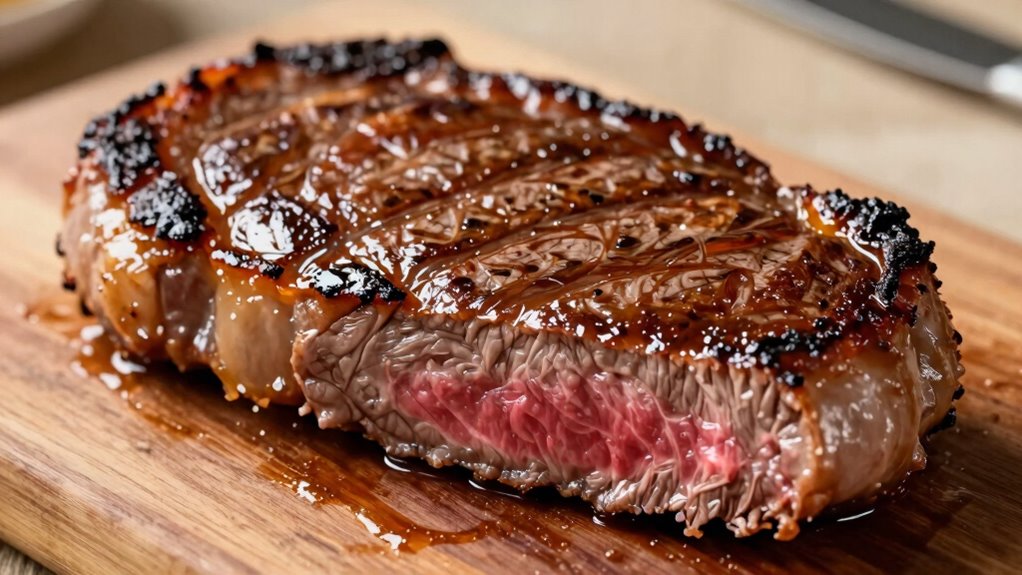
Have you ever wondered how to tell if your meat is perfectly cooked without cutting into it? Mastering this skill starts with understanding different cooking techniques and paying attention to how your meat reacts during the process. Instead of slicing into your steak or roast, you can use methods like the touch test, thermometers, and visual cues to determine doneness. These techniques save you from losing juices and ruining the presentation.
First, your choice of meat sourcing plays a crucial role in how you judge doneness. Higher-quality meats, especially those labeled grass-fed or organic, often have distinct textures and marbling that can help you gauge their readiness. Knowing the cut’s origin and quality informs your expectations about how it should feel and look when cooked properly. For example, a well-sourced cut may require less cooking time or a different approach compared to a cheaper alternative.
When it comes to cooking techniques, using a reliable meat thermometer is one of the easiest ways to avoid guesswork. Insert the probe into the thickest part of the meat, avoiding bones or fat, and compare the temperature to recommended levels for your preferred doneness. For instance, a medium-rare steak typically hits around 130-135°F, while a fully cooked chicken breast reaches 165°F. This method provides precision and consistency, especially when you’re cooking multiple pieces or trying new recipes.
The touch test is another excellent technique that relies on your sense of feel. As you cook, gently press the meat with your finger or tongs and compare the firmness to different parts of your hand or other objects. For example, a rare steak feels soft, similar to pressing the area beneath your thumb when your hand is relaxed, while a well-done steak feels firmer, like pressing the base of your thumb when your hand is fully closed. This method takes practice but becomes intuitive over time. Developing an understanding of meat texture can significantly improve your ability to judge doneness by feel. Additionally, paying attention to cooking techniques that enhance your skills can make this method even more effective. Practice and experience are key to honing your doneness detection skills, making it easier to trust your instincts over time.
Visual cues also help, especially for poultry and fish. Look for clear juices, moist but not runny textures, and color changes. For instance, cooked fish should be opaque and flaky, while chicken should have no pinkness and clear juices when pierced. Additionally, understanding meat marbling can guide you in predicting how the meat will respond during cooking and how you can better judge its doneness by appearance and texture.
Frequently Asked Questions
Can You Tell if a Steak Is Done by Smell Alone?
Yes, you can often tell if a steak is done by smell alone. Use smell testing techniques to recognize specific aromas: a rare steak has a faint, meaty scent, while a well-done one emits a stronger, roasted aroma. As you cook, pay attention to these aromas, and trust your nose. With practice, you’ll become more confident in gauging doneness just by smell, without cutting into the meat.
How Does Resting Meat Affect Its Doneness?
Resting meat is essential because about 5°F of carryover cooking occurs after removing it from heat. This process allows the meat temperature to even out, ensuring your steak reaches the perfect doneness. Without resting, you risk overcooking, resulting in a tougher texture. So, let your meat rest for a few minutes; it lets the juices redistribute and helps you hit that ideal temperature, making every bite tender and flavorful.
What Tools Help Gauge Doneness Without Cutting?
You can use kitchen thermometers, like instant-read or probe thermometers, to accurately gauge doneness without cutting into your meat. Simply insert the thermometer into the thickest part to check the temperature. Additionally, try the touch test—pressing on the meat to compare its firmness with the feel of different parts of your hand. These tools help you achieve perfect doneness every time, ensuring juicy, tender results.
Is Color Always an Accurate Indicator of Doneness?
Color is like a painter’s palette, but it’s not always reliable for doneness. You shouldn’t rely solely on visual cues because lighting and ingredients can deceive. Instead, use cooking thermometers to get precise readings, ensuring your food hits the safe zone. While color offers hints, trusting your thermometer guarantees a perfect cook every time, turning your kitchen into a professional-grade culinary studio.
How Do Different Cooking Methods Impact Doneness Signals?
Different cooking techniques affect doneness signals through various sensory cues. For example, grilling often emphasizes surface color and firmness, while roasting relies more on internal temperature and aroma. Searing creates a crust that signals readiness, whereas braising involves tenderness and moisture cues. You should pay attention to these sensory cues, as they’re influenced by the cooking method and help you judge doneness without cutting into your food.
Conclusion
Think of your steak as a symphony, each note representing a level of doneness. With practice, you’ll learn to read its melody by touch, color, and aroma—no need to open the score. Like a seasoned conductor, trust your senses to guide you to perfect harmony. Soon, you’ll master the art of reading doneness effortlessly, savoring each bite as if composing a culinary masterpiece with every dish.
Fall Picks
fall essentials
As an affiliate, we earn on qualifying purchases.