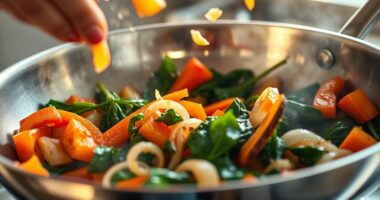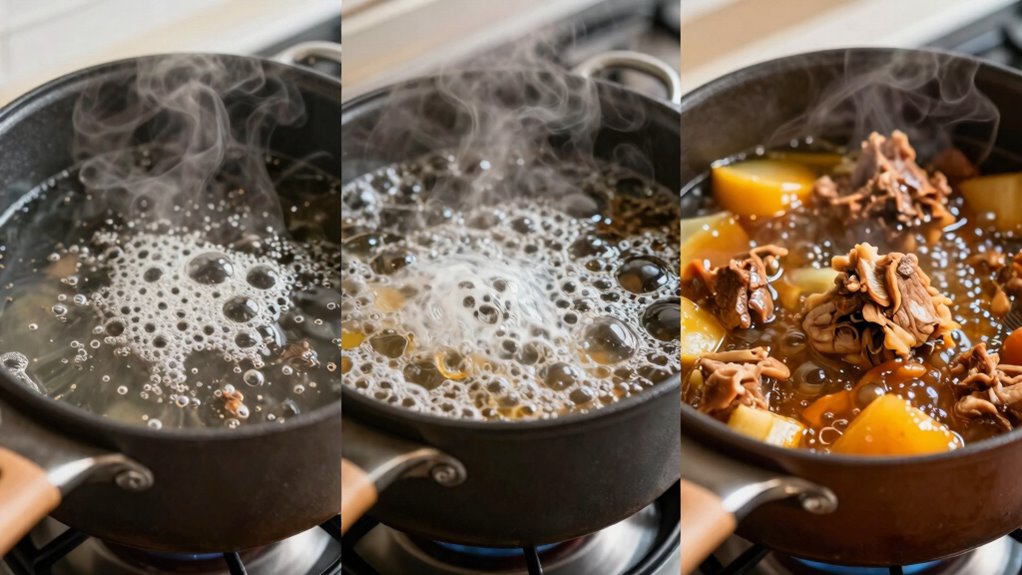

Simmering occurs between 185°F and 205°F with small, gentle bubbles, ideal for delicate ingredients like fish and soups. Boiling happens at around 212°F with vigorous bubbles, which speeds up cooking but can break down flavors or textures. Stewing involves cooking larger cuts at a gentle simmer, allowing flavors to meld and connective tissues to break down. Understanding these differences lets you control heat and achieve perfect results—there’s more to discover if you keep exploring.

Get everyday essentials delivered free with Prime
- Fast, free delivery on millions of items
- Prime Video, Amazon Music and more included
- Member-only deals all year
Key Takeaways
- Simmering occurs at 185°F to 205°F with gentle bubbles, ideal for delicate ingredients and flavor development.
- Boiling is at around 212°F with vigorous bubbles, suitable for rapid cooking like pasta or blanching.
- Stewing involves slow, gentle bubbling just below boiling, used for tenderizing large cuts of meat and melding flavors.
- Simmering preserves ingredient texture and nutrients, while boiling can cause overcooking and flavor loss.
- Control over temperature is crucial in simmering and stewing, whereas boiling is less precise but faster.
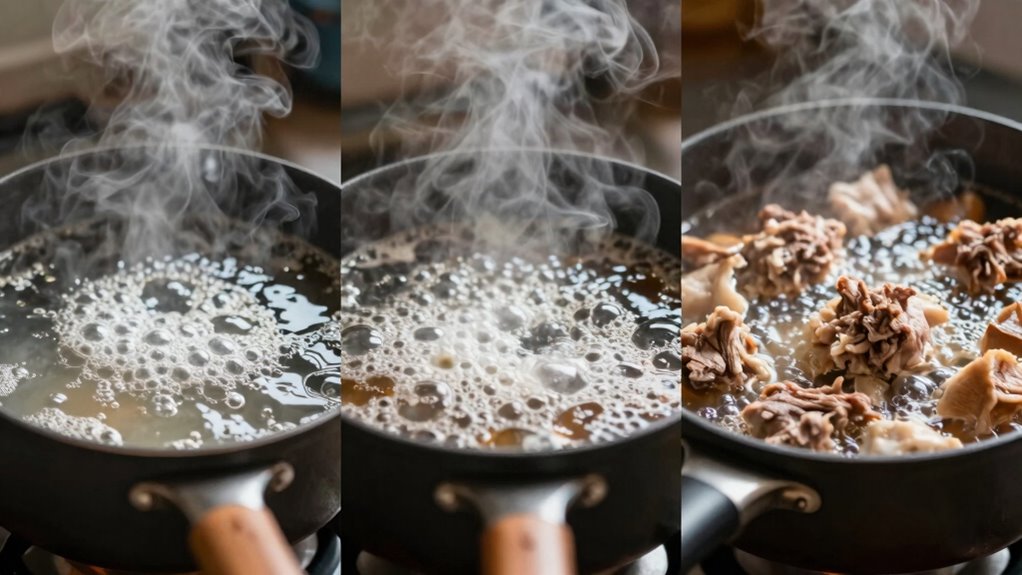
Have you ever wondered how simmering, boiling, and stewing differ when cooking? These are all essential cooking techniques, but understanding how they vary can help you achieve better results in the kitchen. The key difference lies in temperature control, which directly impacts the texture and flavor of your dishes. When you simmer, you’re working at a temperature just below the boiling point—roughly 185°F to 205°F. This gentle heat is perfect for delicate ingredients like fish or for developing rich flavors in soups and sauces without overcooking. You’ll notice small bubbles gently rising to the surface, but they’re not vigorous or breaking the surface like in boiling. Maintaining this stable, low temperature allows you to cook ingredients evenly and preserves their texture. Proper temperature control is crucial for cooking techniques, ensuring you achieve the desired consistency and taste. A consistent simmer also helps prevent ingredients from breaking apart or becoming tough, which can happen with higher heat levels. Additionally, controlling the temperature precisely can help prevent the loss of delicate flavors and nutrients during cooking.
Boiling, on the other hand, requires a higher temperature—around 212°F at sea level—where vigorous bubbles rapidly break the surface. This technique is best for quickly cooking sturdy foods like pasta, potatoes, or blanching vegetables. Boiling is a more aggressive cooking method that can sometimes break down delicate ingredients or cause them to lose flavor and texture if overdone. When you boil, you’re exercising less control over the cooking process, which is why it’s often reserved for tasks that need rapid cooking. The high temperature speeds up heat transfer but can also lead to overcooking if you’re not attentive.
Stewing is a slightly different approach, involving cooking ingredients slowly in a small amount of liquid at a temperature just below boiling. While it shares similarities with simmering, stewing typically involves larger cuts of meat or chunky vegetables that benefit from prolonged, gentle heat. Temperature regulation is vital here because you want the liquid to stay hot enough to cook thoroughly without reaching a full boil, which could cause ingredients to break apart or become tough. The slow, steady heat allows flavors to meld, connective tissues to break down, and ingredients to tenderize, resulting in a hearty, flavorful dish. Additionally, maintaining proper heat helps prevent evaporation and ensures the stew develops its rich, layered flavors. Proper temperature control is essential to prevent over-reduction or uneven cooking, which can compromise the dish’s quality.
Frequently Asked Questions
Can I Use a Microwave Instead of Stovetop for These Methods?
You can use a microwave as an alternative cookware for simmering, boiling, or stewing, but it’s not always ideal. Microwave safety is vital, so make sure your container is microwave-safe. While it’s convenient, microwaves don’t provide the same even heat distribution as stovetops, which can affect cooking quality. For small or quick tasks, it works, but for more controlled simmering or stewing, stovetop methods are generally better.
What Cookware Is Best for Simmering, Boiling, and Stewing?
You should choose sturdy cookware like cast iron, stainless steel, or heavy-duty aluminum for simmering, boiling, and stewing—these materials conduct heat evenly, improving your cooking results. Opt for pots with tight-fitting lids to prevent moisture loss and maintain consistent temperatures. Notably, stainless steel is popular among chefs for its durability and easy cleanup. Using the right cookware and lid type ensures your dishes simmer perfectly, enhancing flavors and textures.
How Do Altitude Changes Affect Boiling and Simmering Points?
Altitude changes lower the boiling point due to reduced atmospheric pressure, meaning water boils at less than 212°F (100°C). You need altitude adjustments in cooking, like increasing cooking time or pressure, to compensate for boiling point variations. When you’re at higher elevations, expect water to boil sooner but at a lower temperature, which can affect simmering and stewing processes, requiring you to adapt your recipes accordingly.
Are There Specific Seasonings Suited for Each Cooking Method?
Imagine adding a whisper of herbs to a gentle simmer, where flavors meld softly, or tossing bold spices into a vigorous boil, releasing vibrant aroma. Seasoning compatibility varies: delicate herbs like parsley suit simmering, while hearty spices like cumin excel in stewing. For flavor enhancement, tailor your seasonings to the cooking method, ensuring each dish’s taste stays balanced and vivid, elevating every bite you create.
How Can I Tell if Food Is Overcooked Using These Techniques?
You can tell if food is overcooked by noticing certain indicators, like a mushy texture or falling apart easily, which are common overcooking signs. Texture changes often become too soft or dry, especially with prolonged simmering, boiling, or stewing. If your dish loses its firmness or becomes overly tender, it’s likely overdone. Keep an eye on these signs to prevent overcooking and preserve the desired texture.
Conclusion
Now that you know the differences between simmering, boiling, and stewing, you’re ready to cook like a pro. Don’t worry if it feels confusing at first—you’ll get the hang of it with practice. Remember, each method brings out unique flavors and textures, so experiment and enjoy the process. Cooking is all about learning and having fun, so trust yourself and don’t stress if things aren’t perfect right away. Happy cooking!
Halloween Picks
halloween
As an affiliate, we earn on qualifying purchases.