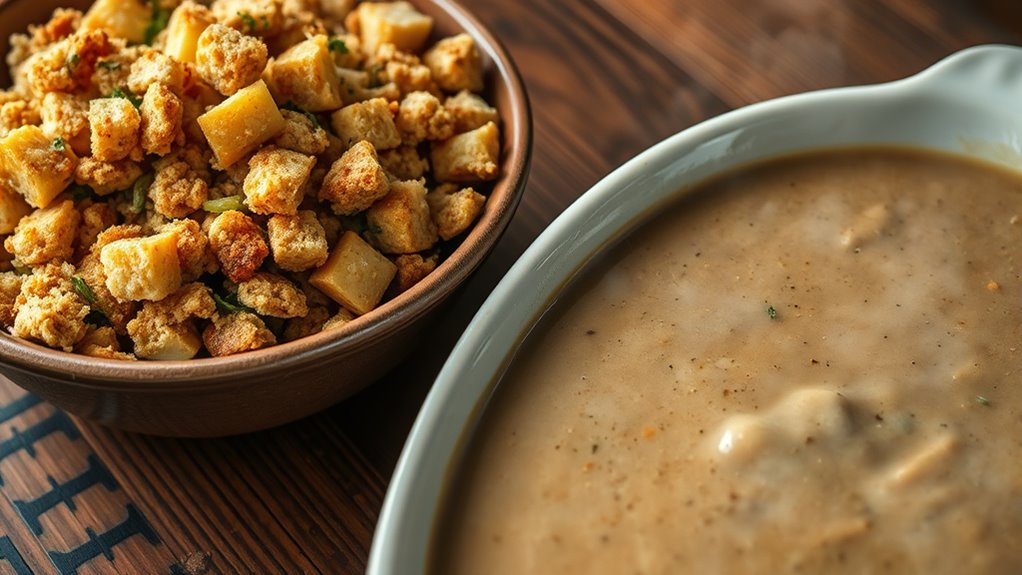

Stuffing is cooked inside the bird, absorbing juices and flavors, while dressing is baked separately in a casserole dish, giving you more control over texture and seasoning. Techniques vary depending on regional traditions—some prefer moist, soft stuffing, while others enjoy crisp, browned dressing with a topping. You can customize both to suit dietary needs or family favorites by adjusting ingredients. If you’d like to explore different methods and variations further, there’s plenty more to discover.
Key Takeaways
- Stuffing is cooked inside the bird, enhancing flavor and moisture; dressing is baked separately as a casserole for a crispy top.
- Techniques vary: stuffing involves cavity insertion and moist baking, while dressing often uses baking dishes with customizable ingredients.
- Variations include regional ingredient preferences, such as sausage or nuts in stuffing, and herbs or vegetables in dressing.
- Dietary adaptations like vegan, gluten-free, or allergen-free options modify ingredients and preparation methods.
- Proper handling and baking times are crucial for food safety and achieving desired textures, whether moist or crispy.
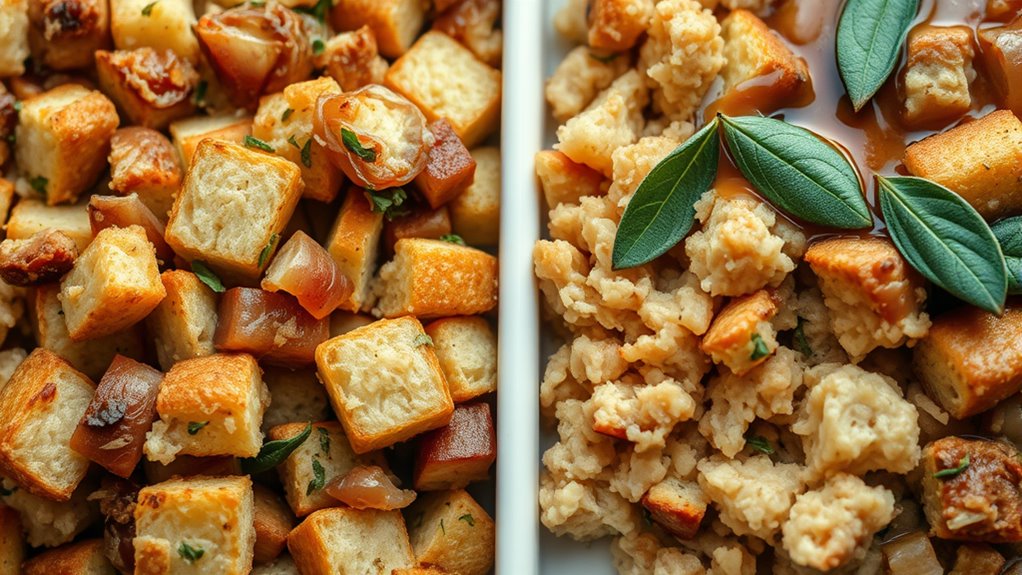
Many people use the terms “stuffing” and “dressing” interchangeably, but they actually refer to different dishes depending on tradition and preparation. Your choice often hinges on cultural traditions and dietary restrictions. In some regions, stuffing is considered a classic holiday staple, made by inserting seasoned bread or grain mixture directly into the cavity of a bird like turkey or chicken. This method has deep roots in certain culinary traditions, especially in the South and Midwest, where stuffing is closely linked to family gatherings and festive celebrations. Conversely, dressing is typically prepared separately from the bird, often baked in a casserole dish. This distinction isn’t just semantic; it reflects regional and cultural preferences, with dressing being more common in the North and some Southern households.
Stuffing is typically cooked inside the bird; dressing is usually baked separately in a casserole dish.
Cultural traditions shape how you perceive and prepare these dishes. For example, if you come from a family with Southern roots, you might associate stuffing with holiday feasts, where the flavor and aroma seep into the bird during roasting. Dressing, on the other hand, might be viewed as a side dish, more customizable and easier to control in terms of ingredients. These cultural differences influence how you approach the recipe: some prefer stuffing for its moistness and flavor absorption, while others favor dressing for its crisp topping and versatility.
Dietary restrictions also play a vital role in your choice. If you’re vegetarian or vegan, traditional stuffing or dressing recipes often contain meat or animal fats, which might not suit your diet. Fortunately, many recipes can be adapted using plant-based ingredients, like vegetable broth instead of meat-based stocks or vegan butter substitutes. People with gluten sensitivities or celiac disease need to be mindful of bread or grain choices, opting for gluten-free options to avoid health issues. For those with allergies to nuts, dairy, or other common ingredients, recipes can be easily modified to exclude these, ensuring everyone can enjoy the dish without concerns.
Additionally, understanding proper preparation techniques can significantly influence the outcome, whether you prefer stuffing or dressing. Your personal or family traditions, along with dietary restrictions, influence how you prepare stuffing or dressing. Whether you prefer stuffing cooked inside the bird or dressing baked separately, understanding the cultural and dietary context helps you make an informed choice. These considerations also guide your recipe modifications, ensuring the dish aligns with your values and needs. Ultimately, both stuffing and dressing are adaptable, comfort foods that can honor tradition or accommodate dietary restrictions, making them versatile parts of your culinary repertoire.
Frequently Asked Questions
Can Stuffing Be Cooked Outside the Bird Safely?
Yes, you can cook stuffing outside the bird safely by using proper food safety practices. To guarantee it’s safe and delicious, use the right cooking methods like baking in a covered dish or casserole. Make sure the stuffing reaches an internal temperature of 165°F (74°C) to kill bacteria. This way, you avoid foodborne illnesses and enjoy a flavorful, perfectly cooked stuffing.
What Are the Best Bread Types for Stuffing and Dressing?
Think of bread types for stuffing and dressing as the foundation of a sturdy castle. Crusty sourdough adds a bold flavor, while soft, airy white bread creates a tender base. For richer flavor pairings, cornbread or brioche work beautifully. Consider your desired bread textures—crisp, flaky, or chewy—and choose accordingly to build a memorable dish that perfectly complements your holiday feast.
How Do Gluten-Free Options Affect Stuffing and Dressing Recipes?
Gluten-free substitutes like cornbread, gluten-free bread, or rice can work well in your stuffing or dressing. You might notice texture differences, so consider adding moisture or binders like eggs or broth to improve cohesion. Keep in mind that gluten-free options may be softer or crumblier, so you may need to adjust your recipe slightly to achieve the desired texture and flavor.
Are There Regional Variations in Stuffing and Dressing Recipes?
You know what they say, “Variety is the spice of life.” Regional flavor profiles influence stuffing and dressing recipes, leading to delicious variations across the country. In the South, you might find cornbread-based stuffing with Cajun spices, while in New England, bread stuffing with sage reigns supreme. Ingredient substitutions reflect local ingredients and traditions, making each regional version unique and authentic to its cultural roots.
How Can I Make Stuffing or Dressing Ahead of Time?
To make stuffing or dressing ahead of time, prepare your recipe as usual, then let it cool completely. Use airtight containers for storage, and keep it in the refrigerator for up to 2 days or freeze for longer storage. For make-ahead tips, reheat thoroughly in the oven or microwave, adding a little broth if it’s dry. This approach guarantees your dish stays fresh and flavorful for your gathering.
Conclusion
Whether you prefer stuffing or dressing, remember they’re like different paths leading to the same delicious destination—your perfect holiday meal. Think of stuffing as the treasure hidden inside the bird and dressing as the welcoming cushion of flavors around it. Whichever you choose, your culinary adventure can be tailored to your taste buds. So, embrace the variety, get creative, and make your feast as memorable as the moments around your table.