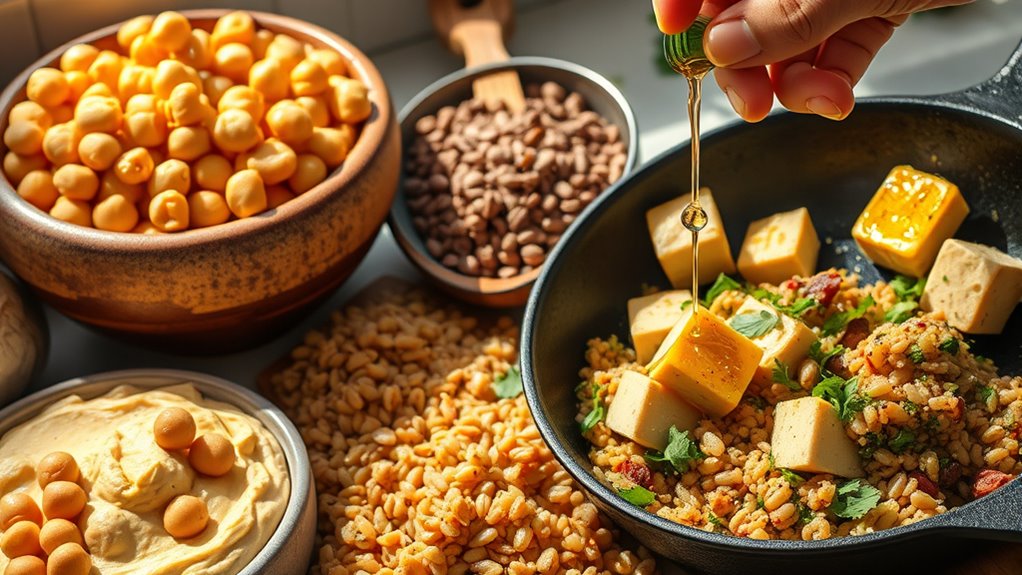
To boost your protein intake on a vegan diet, incorporate plant-based protein powders like pea, rice, or hemp into smoothies and oatmeal. Use tofu in a variety of dishes by pressing, marinating, and cooking it through baking or stir-frying to enhance flavor and texture. Combining these with beans, lentils, nuts, and seeds ensures a well-rounded, satisfying diet. Keep exploring different recipes and techniques to maximize both nutrition and taste on your plant-based journey.
Key Takeaways
- Incorporate plant-based protein powders like peas, rice, hemp, and chia seeds into smoothies or baked goods for quick protein boosts.
- Prepare tofu by pressing to remove moisture, marinating for flavor, and cooking through baking, grilling, or scrambling.
- Combine diverse sources such as beans, lentils, nuts, seeds, and tofu for a balanced, nutrient-rich vegan diet.
- Use minimal additives in minimally processed plant proteins to maximize nutritional benefits and flavor.
- Experiment with various cooking techniques and seasonings to enhance taste and texture of vegan protein dishes.
If you’re looking to boost your protein intake on a vegan diet, there are plenty of nutritious and versatile sources to choose from. Among these, plant-based protein powders are an excellent option because they’re convenient, easy to incorporate into smoothies, oatmeal, or baked goods, and come from various sources like peas, rice, hemp, and chia seeds. These powders pack a punch of amino acids and can help fill any gaps in your protein intake, especially if you’re active or trying to build muscle. When selecting a plant-based protein powder, look for minimally processed options with few additives to maximize nutritional benefits. They’re a quick, effective way to meet your daily protein goals without adding extra calories or fats.
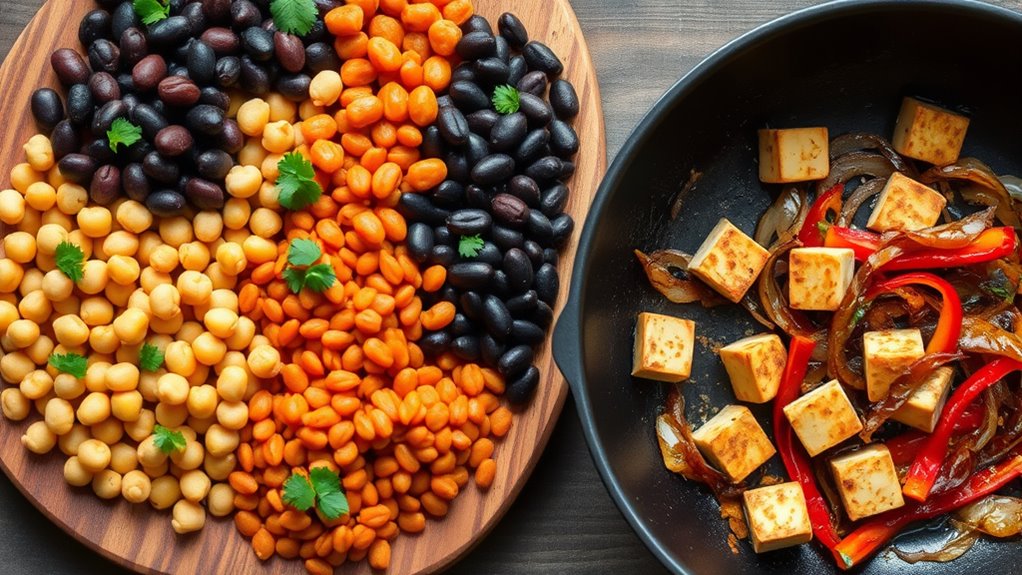
Another key vegan protein source is tofu, which is highly versatile and can be prepared in numerous ways. Tofu is made from soybeans and is rich in both protein and essential amino acids. Tofu preparation techniques are crucial to uncover its full potential in your dishes. For example, pressing tofu removes excess moisture, allowing it to absorb flavors better and achieve a firmer texture. Marinating tofu before cooking enhances its taste, giving it a savory, flavorful profile. Baking, grilling, pan-frying, or scrambling tofu are all popular methods that can suit any meal—whether you want crispy cubes for a stir-fry, a soft scramble for breakfast, or grilled slices for a sandwich. Remember, the key to great tofu dishes is not only in the preparation but also in the seasoning. Using soy sauce, nutritional yeast, garlic, and spices can elevate plain tofu into a delicious, protein-packed main or side dish.
Both plant-based protein powders and tofu are adaptable, making them excellent staples in your vegan cooking arsenal. With protein powders, you get a quick boost when you’re in a hurry, and they blend seamlessly into liquids and baking creations. Tofu, on the other hand, offers a hearty, meat-like texture that can be incorporated into countless recipes, from curries to salads. Mastering tofu preparation techniques guarantees you maximize flavor and texture, helping you enjoy a varied, satisfying vegan diet. Combining these sources with other beans, lentils, nuts, and seeds will give you a well-rounded protein intake, supporting your health and energy levels. Additionally, understanding the evolution of plant-based diets can help you stay informed about emerging protein sources and innovative cooking methods. So, experiment with different methods and recipes—your body will thank you for it.
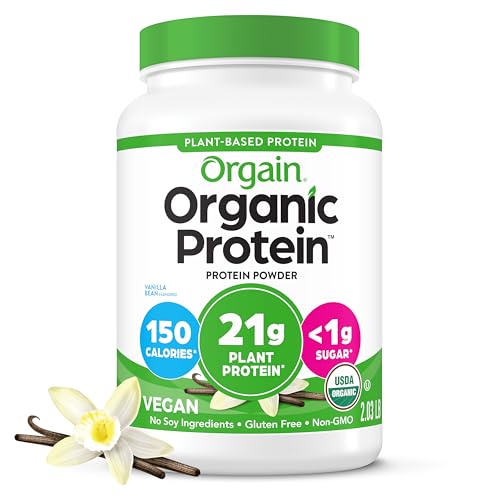
Orgain Organic Vegan Protein Powder, Vanilla Bean – 21g Plant Protein, 6g Prebiotic Fiber, No Lactose Ingredients, No Added Sugar, Non-GMO, For Shakes & Smoothies, 2.03 lb (Packaging May Vary)
CLEANER INGREDIENTS: 21g of Organic plant based protein and 1g sugar. Our protein blend contains Organic peas, brown…
As an affiliate, we earn on qualifying purchases.
As an affiliate, we earn on qualifying purchases.
Frequently Asked Questions
Can Vegan Proteins Provide Complete Amino Acids?
Yes, vegan proteins can provide complete amino acids if you use complete protein pairing. Plant-based amino acids are sometimes incomplete on their own, but when you combine different sources like beans and rice or hummus and whole wheat bread, you form a complete protein. This way, you guarantee your body gets all essential amino acids. With mindful pairing, you can easily meet your protein needs on a vegan diet.
Are There Any Allergenic Concerns With Vegan Protein Sources?
You should know that vegan protein sources can sometimes trigger allergenic concerns. For instance, about 1 in 100 people are allergic to nuts, and soy sensitivities affect many individuals. Nut allergies can cause severe reactions, while soy sensitivities might lead to digestive issues. If you’re prone to allergies, always check labels and choose hypoallergenic options to enjoy plant-based proteins safely.
How Do Storage Methods Affect Vegan Protein Quality?
Proper storage preservation is essential to maintain vegan protein quality. You should keep these proteins in airtight containers, in cool, dry places, away from sunlight to prevent spoilage. Refrigerating or freezing items like tofu or tempeh slows microbial growth, extending shelf life. Always check expiration dates and signs of spoilage, such as off smells or mold, to guarantee you’re consuming safe, high-quality vegan proteins, maximizing their nutritional benefits.
What Are Quick Vegan Protein Recipes for Busy Mornings?
On busy mornings, whip up a quick vegan protein smoothie bowl topped with nuts and seeds for added crunch, or prepare a hearty breakfast burrito filled with tofu scramble and veggies. These recipes are fast, nutritious, and customizable. You can also add your favorite smoothie bowl toppings or switch up breakfast burrito fillings to keep things interesting, ensuring you start your day energized without spending much time in the kitchen.
How Can I Enhance Flavor in Vegan Protein Dishes?
To enhance flavor in vegan protein dishes, try spice blending to add depth and complexity. Use bold spices like cumin, paprika, or turmeric to elevate the taste. Additionally, employ marinade techniques—combine soy sauce, lemon juice, garlic, and herbs—to infuse your proteins with rich flavor. Let your ingredients sit for at least 30 minutes, allowing the flavors to meld. These methods make your dishes more vibrant and satisfying.

Tofu Press Mould (2PCS) Food Grade Plastic DIY Homemade Tofu Maker Pressing Mold Kit/Cheese Press + Soybean Curd Cheese Cloth Kitchen Tools
Specially Designed: You can use it to make softer and tighter tofu.If you belong the person who likes…
As an affiliate, we earn on qualifying purchases.
As an affiliate, we earn on qualifying purchases.
Conclusion
As you explore various vegan protein sources and cooking methods, you’ll find that experimenting often leads to delightful surprises. Sometimes, a simple ingredient like chickpeas or tofu unexpectedly becomes your favorite dish, just when you least expect it. Embrace these coincidences—they turn cooking into an exciting journey. With a little curiosity and creativity, you’ll discover delicious, nourishing meals that keep your plant-based diet fresh and satisfying every time.
Orgain Organic Vegan Protein Powder, Vanilla Bean – 21g Plant Protein, 6g Prebiotic Fiber, No Lactose Ingredients, No Added Sugar, Non-GMO, For Shakes & Smoothies, 2.03 lb (Packaging May Vary)
CLEANER INGREDIENTS: 21g of Organic plant based protein and 1g sugar. Our protein blend contains Organic peas, brown…
As an affiliate, we earn on qualifying purchases.
As an affiliate, we earn on qualifying purchases.
Orgain Organic Vegan Protein Powder, Vanilla Bean – 21g Plant Protein, 6g Prebiotic Fiber, No Lactose Ingredients, No Added Sugar, Non-GMO, For Shakes & Smoothies, 2.03 lb (Packaging May Vary)
CLEANER INGREDIENTS: 21g of Organic plant based protein and 1g sugar. Our protein blend contains Organic peas, brown…
As an affiliate, we earn on qualifying purchases.
As an affiliate, we earn on qualifying purchases.