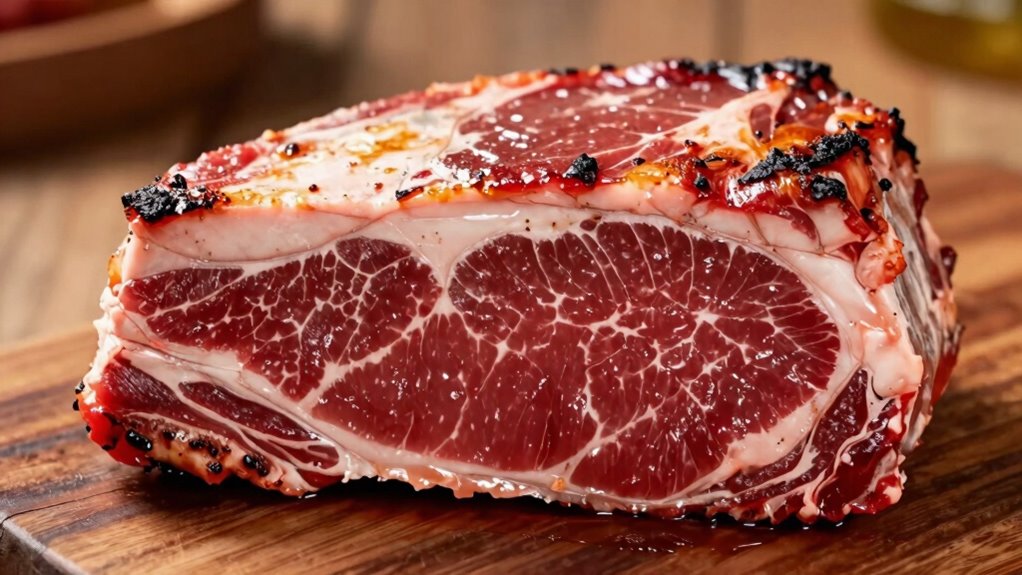

Resting meat is essential because it lets the juices redistribute evenly, making your dish more tender, juicy, and flavorful. When you cut into it immediately, the juices rush out, leaving the meat dry and less tasty. Resting also allows the internal temperature to stabilize and muscles to relax, boosting tenderness. Proper resting transforms good results into outstanding ones. If you stay engaged, you’ll discover even more ways resting elevates your cooking to perfection.

Get everyday essentials delivered free with Prime
- Fast, free delivery on millions of items
- Prime Video, Amazon Music and more included
- Member-only deals all year
Key Takeaways
- Resting redistributes juices evenly, preventing them from spilling out and making the meat juicier and more flavorful.
- It allows internal temperature to stabilize, ensuring meat reaches perfect doneness without overcooking.
- Resting relaxes muscle fibers, resulting in increased tenderness and improved texture.
- Proper resting enhances overall presentation and makes dishes more visually appealing.
- It maximizes flavor retention and improves the final eating experience.
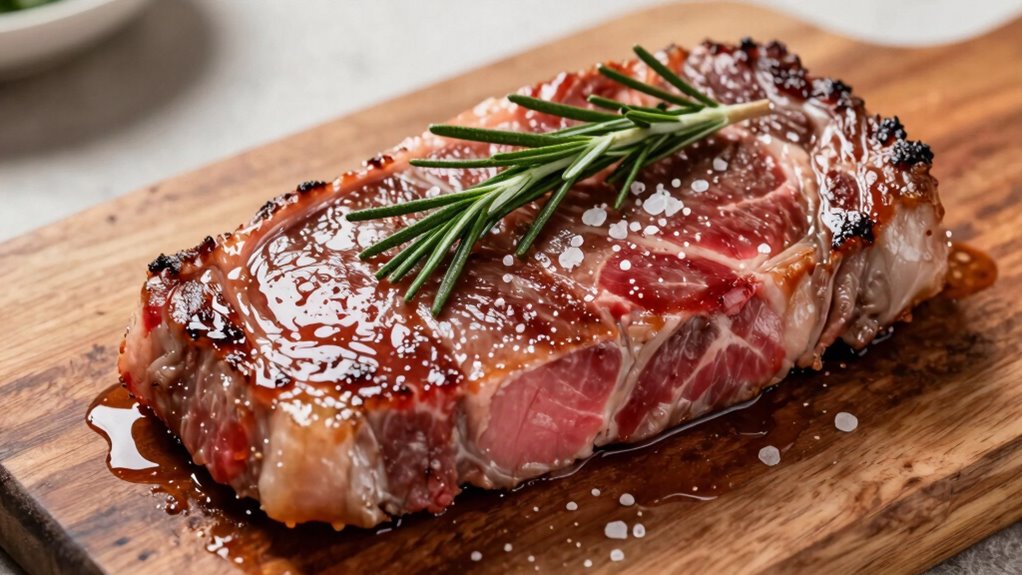
Resting meat after cooking is a crucial step that many home cooks overlook, but it considerably impacts the final flavor and texture of your dish. When you remove meat from the heat, the juices inside are still active and moving. Resting allows these juices to redistribute evenly throughout the meat, preventing them from rushing out the moment you cut into it. Without this essential pause, your meat might look tempting on the outside but end up dry and less flavorful inside. Proper resting is a simple yet powerful technique that elevates your cooking from good to outstanding.
Understanding how to incorporate resting into your cooking techniques is necessary for achieving ideal results. When you cook meat, especially larger cuts like roasts or steaks, the internal temperature continues to rise slightly even after you remove it from the heat source. This phenomenon, known as carryover cooking, makes resting even more important. It ensures the meat reaches its perfect doneness without overcooking. During this period, the muscle fibers relax, which helps make the meat more tender. If you cut into it immediately after cooking, you disrupt this process and lose those valuable juices, resulting in a less flavorful bite. Additionally, meat temperature control plays a key role in determining the final texture and juiciness. Achieving optimal resting often involves monitoring meat temperature carefully to prevent over- or under-cooking. Proper meat storage before cooking also influences how well the meat responds to resting and how much moisture it retains.
Meat storage also plays a role in the resting process. Properly stored meat before cooking guarantees it retains its moisture and quality, which is crucial for the resting phase. If the meat has been frozen or stored improperly, it may not respond as well to resting, and you might notice more moisture loss or uneven cooking. Once cooked, resting helps lock in what moisture is left, but starting with good storage habits makes a big difference. Keep your meat in the refrigerator or freezer until you’re ready to cook, and always thaw it safely to maintain its natural juices. Proper meat storage preserves the tenderness and flavor that you want to maximize during resting. Additionally, understanding the science behind resting can help you optimize your cooking process and achieve better results every time.
In the end, resting your meat isn’t just about following a rule—it’s about respecting the science behind good cooking techniques. It’s a straightforward step that ensures your meat is juicy, tender, and flavorful. Incorporating resting into your routine improves not only taste but also the overall presentation of your dish. When you understand the importance of this pause, you’ll see a noticeable difference in every bite. So, next time you cook a steak or roast, give it the time it needs to rest. Your taste buds will thank you, and you’ll enjoy the full potential of your culinary effort.
As an affiliate, we earn on qualifying purchases.
Frequently Asked Questions
How Long Should I Rest Different Types of Meat?
You should rest different meats based on their size and type to guarantee ideal meat temperature and juiciness. For steaks, rest for 5-10 minutes; larger roasts, like prime rib, need 15-20 minutes. Poultry requires about 10 minutes, while thicker cuts like brisket might need 20-30 minutes. Resting allows juices to redistribute, making your meat tender and flavorful, so don’t skip this step for the best results.
Can Resting Meat Affect Its Flavor?
Yes, resting meat affects its flavor by enhancing flavor retention and juiciness. When you let meat rest, the juices redistribute, preventing them from spilling out when you cut into it. This process amplifies the meat’s natural flavors, making every bite more flavorful. Resting also keeps the meat moist, boosting juiciness, which together create a richer, more satisfying taste experience. So, don’t skip this step for better flavor and texture.
Does Resting Meat Make It More Tender?
Resting meat acts like a gentle pause, allowing its natural tenderness to emerge, much like a quiet moment that reveals its true essence. By giving it time, you enhance flavor and retain juiciness, making each bite tender and flavorful. The resting period redistributes juices, softening the meat’s texture, so you experience the full depth of taste and moistness. In this way, resting transforms a good meal into a memorable one.
Is Resting Necessary for All Cooking Methods?
Resting isn’t necessary for all cooking methods, but it’s highly beneficial for meat preservation and achieving ideal results. Cooking science shows that resting allows juices to redistribute, keeping meat moist and tender. For thicker cuts, resting prevents juices from escaping when sliced. While quick methods like stir-frying don’t need resting, slow-roasted or grilled meats benefit from it. Overall, resting improves texture and flavor, making your meat more enjoyable.
What Happens if I Skip Resting Meat?
Skipping resting meat is like cutting a symphony short — you miss out on its full harmony. When you don’t let it rest, the juices escape, leaving your meat dry and flavorless. Resting enhances flavor and preserves juiciness, transforming each bite into a tender, flavorful experience. You’ll notice a difference in succulence and richness, making your meal truly memorable. So, don’t rush — let your meat rest and savor every juicy, flavorful bite.
Conclusion
So, savor the secret of resting your roast, and see the savory, succulent results. Resting allows the juices to settle, smoothing out the sizzle and strengthening the flavor. Skipping this step might seem small, but it sabotages the steak’s succulence. Stay steadfast in this simple step, and you’ll serve up a spectacular, tender triumph every time. Remember, resting isn’t just a pause—it’s the perfect pause for perfection.
Halloween Picks
halloween
As an affiliate, we earn on qualifying purchases.