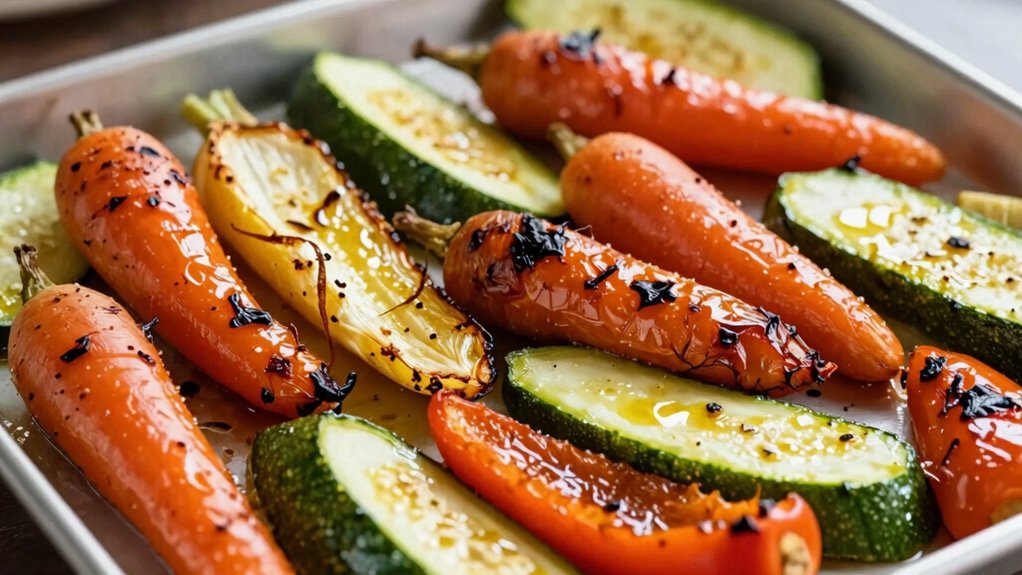
The main reason your roasted vegetables never brown properly is often due to insufficient oven heat or uneven placement on the baking sheet. If the oven isn’t hot enough—ideally 425°F or higher—and the vegetables are overcrowded, they’ll steam instead of roast, preventing browning. To get that beautiful caramelized exterior, you need proper temperature, space, and preheated surfaces. Keep these tips in mind, and you’ll discover more secrets to perfect, browned vegetables.

Get everyday essentials delivered free with Prime
- Fast, free delivery on millions of items
- Prime Video, Amazon Music and more included
- Member-only deals all year
Key Takeaways
- Insufficient oven temperature prevents the Maillard reaction and caramelization needed for proper browning.
- Overcrowding or uneven placement causes inconsistent heat exposure, hindering uniform browning.
- Using too much moisture or wet seasonings creates steam, which inhibits browning.
- Not preheating the baking sheet reduces initial heat transfer, delaying browning.
- Inaccurate oven temperature leads to lower heat, resulting in pale, limp vegetables.
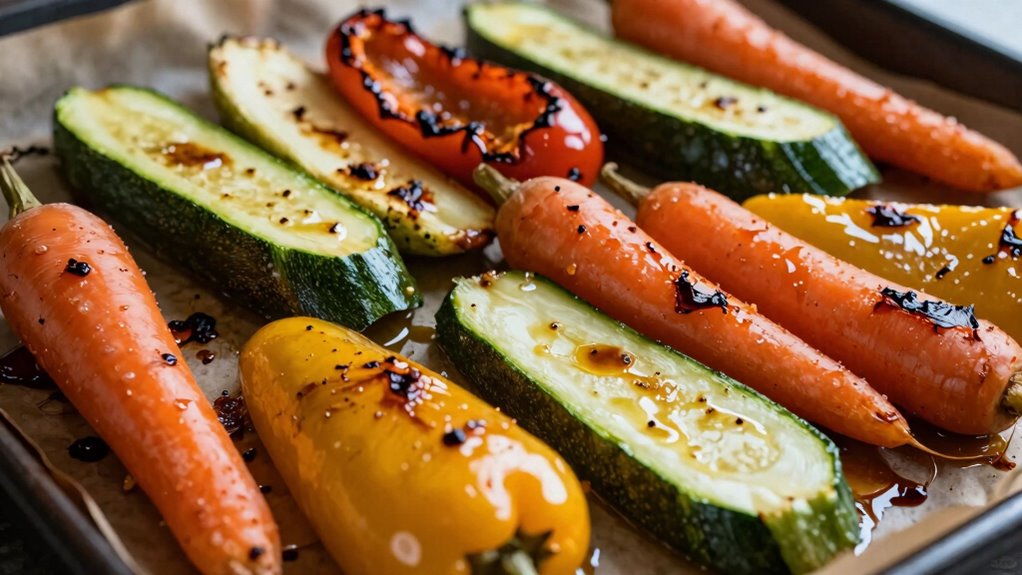
Roasted vegetables can be a delicious and healthy side dish, but sometimes they never develop that appealing, golden-brown color you’re aiming for. The problem often comes down to how you’re seasoning and controlling the oven temperature. If your vegetables turn out pale or limp, it’s likely because they haven’t undergone the proper caramelization process, which happens at higher heat and with the right seasoning techniques.
First, consider your seasoning techniques. When you toss vegetables with oil, make sure you’re using enough to coat each piece evenly. Oil helps transfer heat and promotes browning, but it also acts as a barrier if applied too sparingly. Adding salt before roasting can also draw out moisture, encouraging caramelization. Don’t be shy with herbs and spices either—adding a touch of sugar or honey can boost browning because sugar caramelizes at high heat. But avoid overloading on seasonings that contain moisture, like wet marinades, which can create steam and prevent browning altogether.
Use enough oil, salt, and a touch of sugar for perfectly browned, flavorful roasted vegetables.
Oven temperature plays an essential role in achieving that golden hue. Many home ovens run cooler than they should for roasting vegetables. To get that perfect brown, you should preheat your oven to 425°F (220°C) or even higher if your oven allows. A higher temperature accelerates the Maillard reaction and caramelization, giving your vegetables that rich, crisp exterior. If your oven’s temperature isn’t accurate, use an oven thermometer to verify the heat. Without sufficient heat, the vegetables will cook through but won’t develop that desirable color and texture. Additionally, understanding the importance of caramelization and how it contributes to browning can help you tweak your technique for better results. Recognizing the role of heat in the caramelization process can make a significant difference in achieving that perfect roasted vegetable. Moreover, proper food placement on the baking sheet ensures even heat exposure, which is crucial for browning. Ensuring that the oven temperature is consistent and high enough is fundamental to achieving that desirable, golden-brown exterior. To further enhance browning, consider preheating the baking sheet before adding the vegetables, which can provide an extra boost in heat transfer.
oven thermometer for accurate temperature
As an affiliate, we earn on qualifying purchases.
As an affiliate, we earn on qualifying purchases.
Frequently Asked Questions
Can the Type of Vegetable Affect Browning During Roasting?
Yes, the type of vegetable affects browning during roasting. Denser vegetables like carrots and potatoes brown better due to their higher sugar content, which enhances flavor and promotes caramelization. Softer vegetables like zucchini may not brown as much, risking nutrient loss or uneven cooking. Choosing the right vegetables guarantees flavor enhancement and nutrient retention, making your roasted dishes tastier and more nutritious. Properly selecting and preparing vegetables is key to achieving perfect browning.
Does the Size of Vegetable Pieces Influence Browning?
Yes, the size of vegetable pieces influences browning during roasting. Smaller pieces tend to brown more evenly and quickly, enhancing flavor development and ensuring a delightful texture preservation. Larger chunks might not brown as well, leading to uneven flavor enhancement and a softer texture. To achieve maximum browning, cut vegetables into uniform, medium-sized pieces, balancing flavor and texture while preventing overcooking or undercooking.
How Does Oven Humidity Impact Vegetable Browning?
Oven humidity impacts vegetable browning by influencing moisture content and oven airflow. Higher humidity traps moisture, creating steam that hampers browning, while dry air allows moisture to escape, promoting crispness and caramelization. When humidity is low, airflow helps remove excess moisture, aiding browning. Conversely, excessive humidity, caused by trapped moisture, stifles browning, making it harder for vegetables to develop that desirable golden crust.
Is Pre-Soaking Vegetables Before Roasting Beneficial?
Pre-soaking vegetables before roasting isn’t typically necessary and can sometimes hinder flavor enhancement and texture preservation. It may introduce excess moisture, preventing proper browning and making vegetables soggy. Instead, dry them thoroughly to guarantee they roast evenly and develop a delicious, caramelized exterior. Proper drying helps preserve their natural texture and enhances flavor, giving you those perfectly browned, flavorful vegetables you’re aiming for.
Do Different Roasting Pans Affect Browning Results?
Different roasting pans definitely impact browning, with studies showing that darker, thicker pans promote more even, caramelized surfaces. Your choice of pan influences heat conduction, affecting cooking techniques and flavor enhancement. A shiny, thin pan reflects heat, leading to less browning, while a matte, heavy-duty pan absorbs heat better. For ideal results, select a pan suited for high heat and even cooking, ensuring your vegetables develop that perfect golden, crispy exterior.
Conclusion
Think of your oven as a garden where your vegetables are seeds waiting to bloom. If the soil isn’t warm enough or lacks the right nutrients, they won’t turn vibrant or caramelized. By ensuring your oven is hot and your vegetables are prepared properly, you’re nurturing them to reach their full, browned potential. With patience and the right conditions, you’ll harvest perfectly roasted veggies that glow with flavor—like a garden in full, delicious bloom.
Columbus Day / Indigenous Peoples' Day Picks
long weekend sales
As an affiliate, we earn on qualifying purchases.