

As inflation continues to threaten the value of traditional currencies, many are reevaluating their investment strategies. You might find Robert Kiyosaki's perspective particularly compelling. He believes Bitcoin's decentralized nature and limited supply make it a safer asset compared to the dollar. But what exactly drives his confidence in Bitcoin? There are several key factors at play that could reshape how you think about your own financial future.
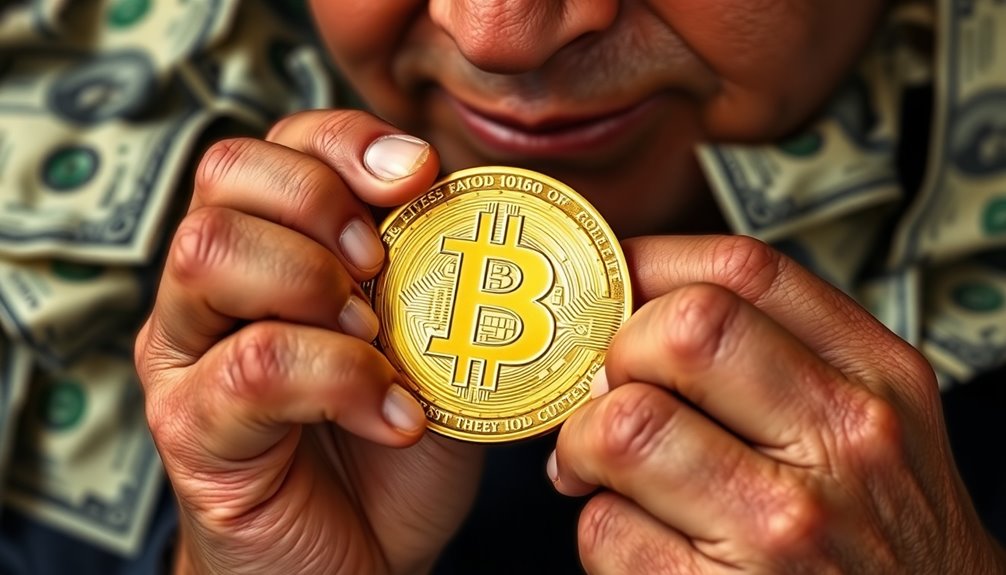
As you navigate the evolving landscape of investments, you might find yourself considering Bitcoin over traditional currencies like the dollar. With its decentralized nature, Bitcoin operates independently of government control, attracting those seeking alternatives to fiat currency. Influential figures like Robert Kiyosaki champion Bitcoin, asserting its safety and potential returns, especially in a world where inflation concerns loom large. Kiyosaki recommends gold and Bitcoin as safer investment choices amidst inflation worries.
Bitcoin's volatility is one of its defining characteristics. Its annualized standard deviation is nearly four times that of the S&P 500, making it a rollercoaster ride for investors. However, this volatility can also present opportunities. In seven out of the last ten years, Bitcoin emerged as the best-performing asset, yet it faltered in the other three, showcasing the unpredictable nature of this digital currency. You'll need to weigh the risks carefully. Automation's role in business intelligence can help investors analyze market trends and make informed decisions.
While Bitcoin has historically outperformed traditional indices in terms of risk-adjusted returns during certain periods, its performance variability means you can't rely solely on past results. The finite supply of Bitcoin—capped at 21 million units—adds to its allure as a potential store of value. This scarcity contrasts sharply with the declining dollar value and rising inflation concerns, leading investors to consider Bitcoin as a hedge, much like gold.
As market sentiment shifts, many are drawn to the notion of holding a decentralized asset that could withstand economic fluctuations. When investing in Bitcoin, your strategy matters. Dollar-Cost Averaging (DCA) can be a smart move, especially during bear markets. This method reduces timing risks and allows you to accumulate Bitcoin gradually.
Conversely, Lump Sum Investment (LSI) might yield better results during bull markets, but it comes with higher timing risks. Regardless of your approach, it's crucial to remember that a long investment horizon is recommended due to Bitcoin's inherent volatility. Diversification remains key in any investment portfolio. Including Bitcoin can be challenging, considering its unpredictable price swings.
Yet, as technological advancements continue to enhance Bitcoin's appeal, many see it as more than just a digital currency; it's a potential asset class in its own right. Kiyosaki's advocacy for Bitcoin emphasizes the importance of financial education and independence. As you explore the world of alternative investments, understanding Bitcoin's potential couldn't only reshape your portfolio but also bolster your financial confidence.
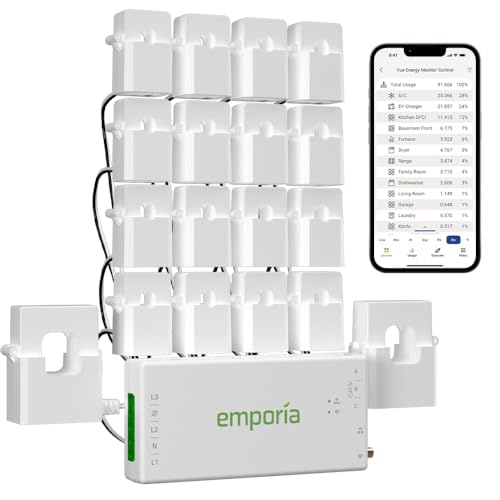
Emporia Vue 3 Home Energy Monitor - Smart Home Automation Module and Real Time Electricity Usage Monitor, Power Consumption Meter, Solar and Net Metering for UL Certified Safe Energy Monitoring
SAFETY YOU CAN TRUST WITH UL CERTIFICATION: With Emporia Energy, your home energy monitoring is safe, reliable, and...
As an affiliate, we earn on qualifying purchases.
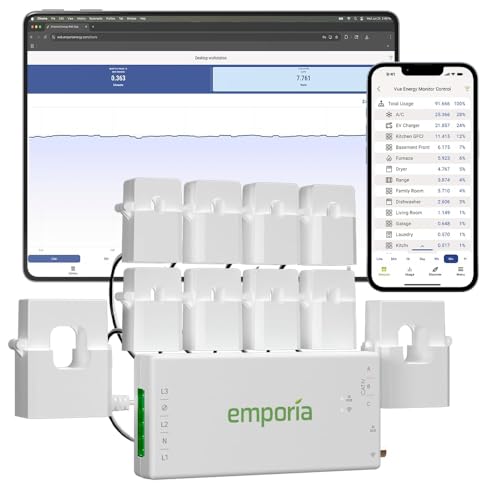
Emporia Vue 3 Home Energy Monitor - Smart Home Automation Module and Real Time Electricity Usage Monitor, Power Consumption Meter, Solar and Net Metering for UL Certified Safe Energy Monitoring
SAFETY YOU CAN TRUST WITH UL CERTIFICATION: With Emporia Energy, your home energy monitoring is safe, reliable, and...
As an affiliate, we earn on qualifying purchases.

30A AC Power Meter, 125V L5-30P to L5-30R Generator Plug-in Energy Monitor with LCD Display, Voltage Current Wattage Frequency kWh Tester for Industrial and Backup Power Use
Clear Multi-Parameter Monitoring: Displays voltage, amperage, watt load, frequency, power factor, and total kWh. Provides straightforward readings to...
As an affiliate, we earn on qualifying purchases.

Smart Home Energy Monitor with Real-Time Accurate Energy Consumption Tracking, Supports Home Assistant, Electricity Usage Monitor with Local Control, Open API & Web UI, Solar Metering, ETL Certified
✨NEW✨ OpenClaw Support: Refoss devices now support OpenClaw AI-driven automation with Home Assistant for smarter, seamless control.
As an affiliate, we earn on qualifying purchases.