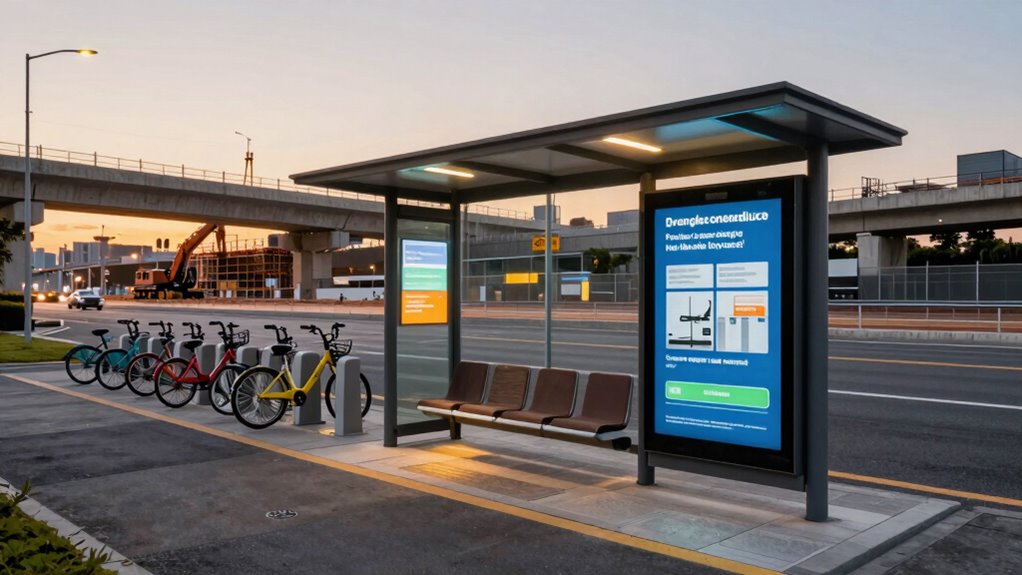

Convenience upgrades focus on improving your daily experience quickly and cost-effectively, often enhancing accessibility or user comfort. Infrastructure upgrades, on the other hand, involve foundational changes that support long-term stability and system resilience, requiring more time and funding. While convenience improvements offer immediate benefits, infrastructure investments guarantee durability and efficiency over time. Understanding these differences helps you see how both play a role in creating better and more sustainable systems—stay tuned to learn how they work together.

Get everyday essentials delivered free with Prime
- Fast, free delivery on millions of items
- Prime Video, Amazon Music and more included
- Member-only deals all year
Key Takeaways
- Convenience upgrades improve user experience quickly and at lower costs but may require frequent updates.
- Infrastructure upgrades establish a durable foundation, supporting long-term stability and often involve higher costs and longer timelines.
- Convenience upgrades focus on immediate accessibility, while infrastructure projects enhance overall system resilience and sustainability.
- Infrastructure upgrades reduce maintenance costs over time, whereas convenience upgrades may need repeated investments.
- Both types influence system performance, but infrastructure investments prioritize long-term urban resilience and ecological considerations.

When evaluating improvements to a city or facility, it’s important to understand the difference between convenience upgrades and infrastructure upgrades. Convenience upgrades focus on making daily interactions easier and more comfortable for users. Think of things like installing new benches, updating signage, or adding Wi-Fi hotspots. These changes often have a lower initial cost and can be implemented quickly, but they might not last as long or considerably impact the overall system. The goal here is to improve the user experience immediately, providing quick wins that make the environment more pleasant or accessible.
In contrast, infrastructure upgrades tend to address the core systems that support the entire city or facility. These are larger projects like replacing water pipelines, upgrading electrical grids, or expanding public transportation networks. While these investments typically require more funding and take longer to complete, they offer greater longevity and resilience. Infrastructure upgrades often lead to a more stable and efficient foundation, which benefits users over many years. When weighing these options, you need to think about the trade-off between cost versus longevity. Convenience upgrades might be cheaper upfront but may need frequent updates or replacements, increasing long-term costs. Infrastructure improvements, though expensive initially, often reduce maintenance expenses and improve system reliability, which enhances the overall user experience over time. Additionally, understanding system resilience can help prioritize long-term benefits over short-term fixes. Recognizing the importance of biodiversity in urban planning can also contribute to creating more sustainable and resilient communities that support both human and ecological health. Moreover, considering urban ecology can further enhance the sustainability and adaptability of city infrastructure. Incorporating climate resilience strategies is essential to ensure these systems can withstand environmental changes and extreme weather events. Furthermore, integrating nature-based solutions can significantly boost the overall resilience and sustainability of urban infrastructure.
Popular right now

Vitamix Propel Series 510 Professional-Grade Blender, 3 Programs, Black

Samsung 48-Inch S90H OLED 4K Smart TV (2026)

Breville Bambino Espresso Machine, Brushed Stainless Steel
As an affiliate, we earn on qualifying purchases.
Frequently Asked Questions
How Do Cost Differences Impact Upgrade Decisions?
Cost differences considerably influence your upgrade decisions. You conduct a cost-benefit analysis to determine which option offers the best value, balancing expenses against benefits. Stakeholder priorities guide your choices, as some may favor quick convenience upgrades for immediate gains, while others prefer infrastructure upgrades for long-term sustainability. Ultimately, you weigh these factors to select the upgrade that aligns with your budget, goals, and stakeholder expectations, ensuring ideal resource allocation.
What Are Examples of Convenience Upgrades?
Imagine transforming your space with a simple touch—convenience upgrades do just that. You might install smart technology, like automated lighting or thermostats, making life easier and more efficient. Aesthetic enhancements, such as stylish fixtures or modern paint, also fall into this category, boosting comfort and visual appeal without major overhaul costs. These upgrades focus on immediate convenience, making your environment smarter and more beautiful with minimal disruption.
How Do Infrastructure Upgrades Affect Long-Term Planning?
Infrastructure upgrades play a crucial role in shaping your long-term planning by boosting urban resilience and promoting environmental sustainability. By investing in robust systems like renewable energy, efficient transportation, and resilient water management, you prepare your city to handle future challenges such as climate change and population growth. These upgrades guarantee your community remains sustainable, adaptable, and resilient, ultimately securing a healthier, more stable environment for generations to come.
Can Convenience Upgrades Be Temporary Solutions?
Certainly, convenience upgrades can serve as elegant temporary solutions, providing quick fixes to pressing needs. You might see them as refined stopgaps, addressing immediate concerns without long-term commitments. While they can enhance user experience temporarily, it’s wise to regard them as interim measures rather than permanent fixtures. These quick fixes allow you to adapt swiftly, but planning for more sustainable, infrastructure upgrades ensures lasting benefit and stability over time.
Who Typically Funds Infrastructure Upgrades?
You’ll find that infrastructure upgrades are usually funded by a mix of sources, including government agencies, private investors, and public-private partnerships. Stakeholder roles vary, with government entities often taking the lead on planning and funding, while private partners may contribute capital or expertise. Funding sources depend on the project’s scale and importance, but overall, these upgrades require significant collaboration among multiple stakeholders to guarantee successful implementation.
Conclusion
Understanding the difference between convenience upgrades and infrastructure upgrades is like knowing the difference between sprinkles and the cake itself. Convenience upgrades make your daily life easier, like adding a new app or upgrading a gadget. Infrastructure upgrades, on the other hand, are the backbone, supporting the entire system, like fixing roads or power grids. Both are essential, but remember—without solid infrastructure, convenience upgrades are just icing on an empty cake.