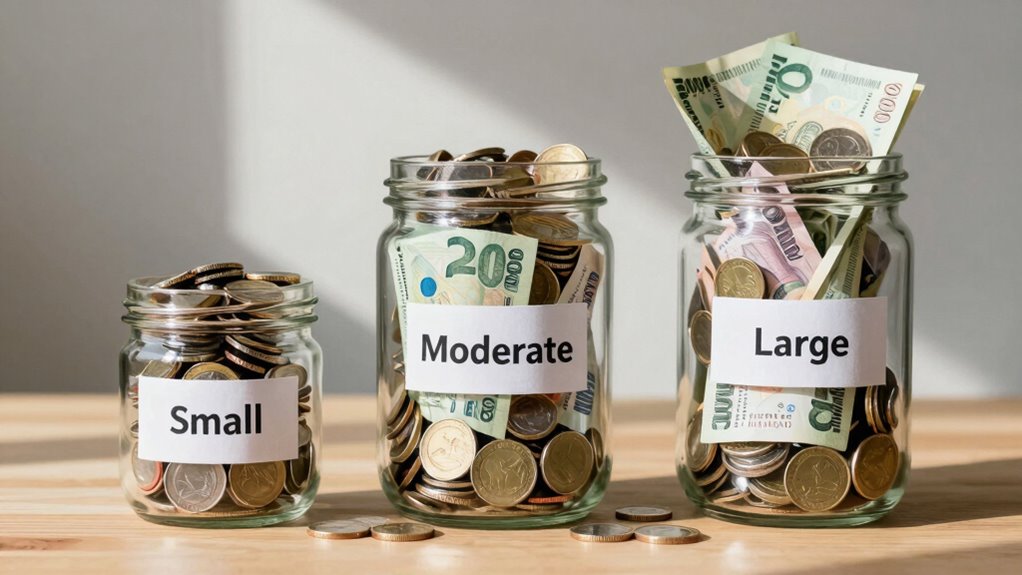

Your ideal emergency fund size depends on your lifestyle, job stability, and financial responsibilities. If you have a stable job and minimal expenses, three months’ worth of living costs may suffice. However, if you support a family or have irregular income, aim for six months or more. Adjust your savings based on potential costs like medical bills or repairs. Want to find out how to tailor your fund for your specific situation? Keep exploring for practical tips.

Get everyday essentials delivered free with Prime
- Fast, free delivery on millions of items
- Prime Video, Amazon Music and more included
- Member-only deals all year
Key Takeaways
- The fund size varies from three to six months of living expenses depending on job stability.
- Minimalists living alone may need a smaller fund, around three months’ expenses.
- Families or those with significant obligations should aim for six months or more.
- Variable income earners benefit from larger emergency funds for financial flexibility.
- Personal lifestyle, responsibilities, and potential expenses determine the appropriate fund size.

Ever wondered how much you should actually set aside for an emergency fund? The right amount varies depending on your lifestyle, income, and expenses, but the goal remains the same: to provide financial safety when unexpected costs pop up. Your emergency fund acts as a safety net, preventing minor setbacks from spiraling into financial crises. To determine the ideal size, you need to contemplate your monthly expenses and how quickly you could cover them if your income suddenly stopped.
Your emergency fund provides vital financial safety, covering expenses if your income suddenly stops.
If you have a stable job with predictable expenses, saving enough to cover three to six months’ worth of living costs is a good benchmark. This range offers enough security to handle job loss, medical emergencies, or urgent repairs without resorting to high-interest debt. For those with variable incomes—like freelancers or gig workers—aiming for a larger emergency fund makes sense. It provides added cushion during leaner months, ensuring you don’t have to scramble for cash when times get tough. Understanding financial resilience can help you better prepare for unexpected financial challenges.
Your savings strategies should adapt to your lifestyle. If you live alone with minimal expenses, you might find that a smaller emergency fund suffices, perhaps covering just three months of costs. Conversely, if you support a family or have significant financial obligations, aiming for six months or more provides peace of mind. It’s essential to prioritize your fund size to your specific circumstances, balancing your comfort with practical savings goals. Building an emergency fund isn’t about rushing to reach a specific number overnight. It’s about consistent savings that grow over time, reinforcing your financial safety. Start by setting aside a small percentage of your income each month, and gradually increase this as your financial situation improves. Automating your savings can help, making it a regular habit that’s less likely to be skipped. Regularly reviewing your financial planning can ensure your emergency fund remains aligned with your evolving needs. Additionally, understanding the concept of liquidity helps you select the right types of savings accounts or assets for quick access when needed. As you accumulate savings, consider the importance of diversification within your emergency fund to mitigate risk and ensure availability of funds. Remember, the key to effective savings strategies is regularity and discipline, ensuring your emergency fund continues to grow steadily.
Ultimately, the right emergency fund size depends on your unique financial picture. Think about the unexpected costs that could arise—medical bills, car repairs, or sudden unemployment—and plan accordingly. By aligning your savings goals with your lifestyle, you’ll build a safety net that gives you confidence and stability, no matter what the future holds. Understanding what emergency fund size is appropriate for your situation can make all the difference in your financial resilience. Your emergency fund isn’t just a number; it’s a crucial part of your overall financial safety, giving you peace of mind and resilience when life throws you curveballs.
As an affiliate, we earn on qualifying purchases.
Frequently Asked Questions
How Often Should I Review and Adjust My Emergency Fund?
You should review and adjust your emergency fund at least once a year or whenever your financial situation changes considerably. Regular reviews are essential for effective financial planning and risk management. Life events like a new job, move, or family changes can impact your needs. By staying proactive, you guarantee your emergency fund remains sufficient, providing peace of mind and protecting you from unexpected financial setbacks.
Can I Combine Savings for Multiple Financial Goals Into My Emergency Fund?
Think of your emergency fund as a safety net, but yes, you can merge savings for multiple goals like retirement planning and debt management. Instead of splitting funds, prioritize building a robust emergency stash first. Once secured, you can then allocate specific amounts to each goal. Combining savings simplifies your finances, ensuring you’re prepared for life’s surprises while steadily working towards your broader financial aspirations.
What Expenses Are Typically Covered by an Emergency Fund?
An emergency fund typically covers essential expenses during unexpected events, boosting your disaster preparedness and financial resilience. You should use it for sudden medical bills, car repairs, job loss, or urgent home repairs. This fund helps you stay afloat when life throws surprises, ensuring you can handle financial setbacks without resorting to high-interest debt. Building a solid emergency fund strengthens your ability to recover quickly from unforeseen financial challenges.
How Does Inflation Affect the Ideal Emergency Fund Size?
Inflation impact means your emergency fund needs regular savings adjustments to stay effective. As prices rise, the amount you’ve saved might not cover unexpected expenses anymore. You should review your fund periodically, increasing it to match inflation rates. This way, your emergency fund remains sufficient to cover essential costs during unforeseen events, ensuring you’re financially protected despite rising living expenses.
Should I Keep My Emergency Fund in Cash or Investments?
You should keep your emergency fund in cash for quick access and risk management. While some investment options offer higher returns, they come with increased risk and potential delays in access during emergencies. Cash provides stability and immediate liquidity, ensuring you’re prepared for unexpected expenses. Balancing safety and accessibility is key, so consider keeping your emergency fund in a readily available account like a savings account for peace of mind.
Conclusion
So, whether you’re living solo or managing a family, your emergency fund should reflect your lifestyle’s rhythm. It’s like finding the perfect beat—too small, and you risk missing the tempo; too large, and you might drown out your financial harmony. Coincidentally, the right size isn’t just about numbers but about feeling secure and prepared. Keep syncing your fund with your life’s unique cadence, and you’ll find stability in the most unexpected moments.
Fall Picks
fall essentials
As an affiliate, we earn on qualifying purchases.