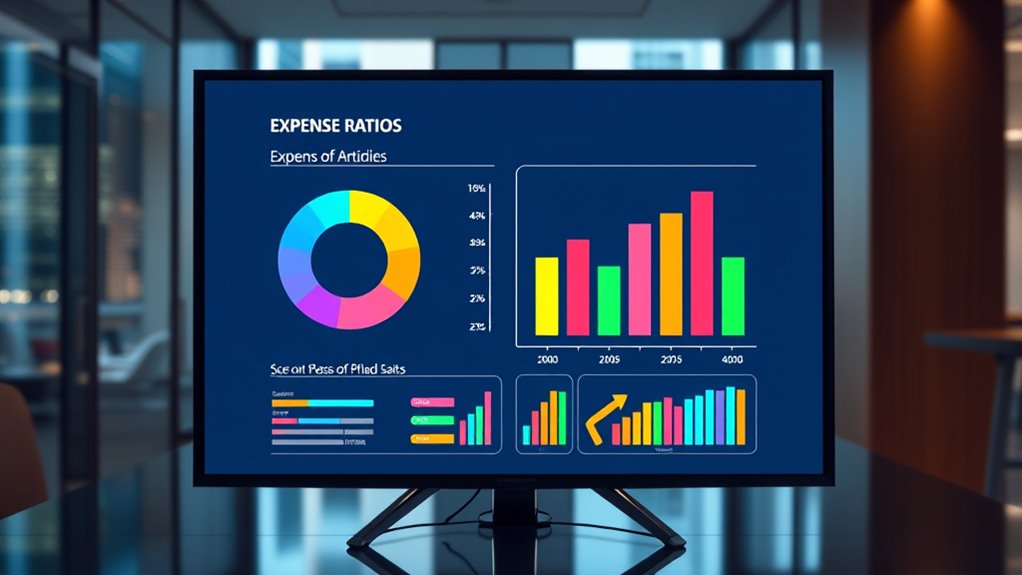

Expense ratios show how much your investment fund charges annually as a percentage of your total investment. These fees cover costs like management, research, and trading. Higher expense ratios can eat into your returns over time, reducing your overall growth. Choosing funds with lower fees can help maximize your gains in the long run. To learn more about how expense ratios impact your investments, keep exploring this topic further.
Key Takeaways
- Expense ratios represent the annual fee charged by mutual funds or ETFs as a percentage of assets.
- They directly reduce investment returns before profits are distributed or reinvested.
- Lower expense ratios typically indicate more cost-efficient funds, especially when performance is similar.
- Active funds usually have higher expense ratios due to frequent trading and research costs.
- Understanding expense ratios helps investors select funds that maximize long-term growth and cost efficiency.

Understanding expense ratios is essential because they directly impact your investment returns. When you invest in mutual funds or exchange-traded funds (ETFs), you’re paying for the fund management and the administrative costs involved in running the fund. The expense ratio is a percentage that tells you how much of your investment is used annually to cover these costs. It’s vital to understand that this fee is deducted from your returns before you see any profits, so a higher expense ratio can considerably reduce your overall gains over time.
Expense ratios directly reduce your investment returns over time.
Fund management plays a major role in determining the expense ratio. Active funds, where managers frequently buy and sell securities to try to beat the market, tend to have higher expense ratios because of the increased research, trading, and management costs. Conversely, passive funds, like index funds, usually have lower expense ratios because they follow a set index and require less active management. The fee structures behind these funds are designed to compensate fund managers for their work, but they vary widely depending on the fund’s strategy and management style. When you choose a fund, you should compare these fee structures carefully to understand what you’re paying for and how it might affect your investment.
Fund management companies set the expense ratio based on their operational costs, the complexity of the investment strategy, and the level of active management involved. Some funds might have a flat fee, while others include a sliding scale based on the assets under management. These fees are usually expressed as a percentage of your total investment in the fund. For example, an expense ratio of 0.50% means that each year, 0.50% of your invested amount is deducted to cover the fund’s costs. It’s important to note that even small differences in expense ratios can compound over time, especially with long-term investments. Additionally, understanding fund management styles can help you choose funds that align with your investment goals and risk tolerance.
While evaluating funds, you should consider not just the expense ratio but also how it fits into your overall investment plan. Lower expense ratios are generally preferable, especially when comparing similar funds, but don’t overlook other factors like fund performance, risk, and the reputation of the fund management team. Ultimately, understanding the fee structures helps you make informed decisions, ensuring that you’re not overpaying for management services while still getting the investment strategy that aligns with your goals. Being aware of these costs enables you to optimize your portfolio and maximize your potential returns over the long run.

Epson RapidReceipt RR-70W Wireless Mobile Tax Receipt and Color Document Scanner with Complimentary Data Management Software for PC and Mac
ScanSmart AI PRO Technology — Intelligently convert and extract scanned information into smart digital data – making your...
As an affiliate, we earn on qualifying purchases.
Frequently Asked Questions
How Do Expense Ratios Impact Overall Investment Returns?
Expense ratios directly impact your overall investment returns by reducing fund performance. When the fund charges higher investor costs, less of your money remains invested, which can diminish your gains over time. Lower expense ratios help maximize your returns, so it’s essential to compare funds and choose those with reasonable costs. Remember, even small differences in expense ratios can markedly affect your long-term investment growth.
What Is the Difference Between Expense Ratios and Load Fees?
Think of expense ratios and load fees as two different ingredients in your investment recipe. Expense ratios cover fund management costs and are ongoing, expressed as a percentage of your investment. Load fees, on the other hand, are like a one-time toll for buying or selling shares. Both are part of fee structures, but expense ratios affect your returns over time, while load fees impact your initial investment cost.
Are Low Expense Ratios Always Better for Investors?
Low expense ratios generally benefit you because they reduce fund management costs, allowing more of your investment to work for you. However, they aren’t always better if they come with poor investment performance or inexperienced fund managers. You should balance expense ratios with fund performance and management quality. Sometimes, paying a slightly higher fee is worthwhile if it means better returns and experienced management that aligns with your financial goals.
How Can I Compare Expense Ratios Across Different Funds?
Imagine you’re at a marketplace, comparing different stalls. To compare expense ratios across funds, you need a clear fund comparison and fee analysis. Look at each fund’s expense ratio side by side, noting how small differences can add up over time. Focus on funds with similar investment strategies, and consider their long-term performance. This way, you’re making an informed choice, ensuring your money works smarter for you.
Do Expense Ratios Include All Fund-Related Costs?
Yes, expense ratios include most fund-related costs like fund management fees and administrative expenses, but they usually exclude trading costs. Trading costs, such as brokerage fees and bid-ask spreads, aren’t part of the expense ratio and can add to your total expenses. So, when comparing funds, consider both the expense ratio and potential trading costs to get a complete picture of your investment’s costs.

NeatReceipts Mobile Scanner and Digital Filing System - PC
Slim and lightweight, can run on USB from your computer
As an affiliate, we earn on qualifying purchases.
Conclusion
Understanding expense ratios is like knowing the true cost of a boat’s voyage—you need to account for all the hidden fees that can chip away at your gains. By keeping an eye on these costs, you steer your investments more wisely and avoid surprises that can sink your returns. Remember, every dollar spent on expenses is a mile less in your journey toward financial goals. Stay vigilant, and your investment ship will sail smoothly.
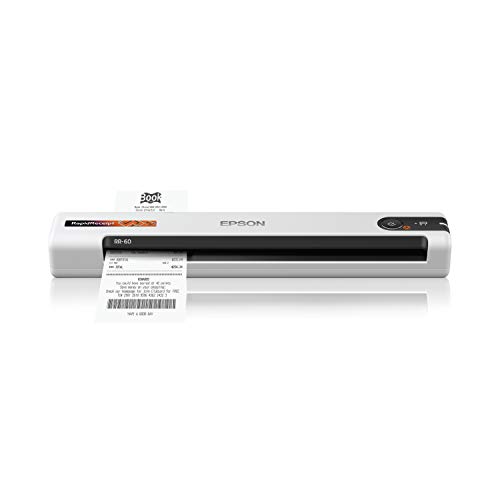
Epson RapidReceipt RR-60 Mobile Tax Receipt and Color Document Scanner with Complimentary Data Management Software for PC & Mac
ScanSmart AI PRO Technology — Intelligently convert and extract scanned information into smart digital data – making your...
As an affiliate, we earn on qualifying purchases.

ScanSnap iX1600 Receipt Edition Color Duplex Invoice Document Scanner for Mac and PC Works with QuickBooks Online, Black
Simplify business finance management: Scan important Invoices and Receipts into QuickBooks Online right from the preconfigured touch panel
As an affiliate, we earn on qualifying purchases.