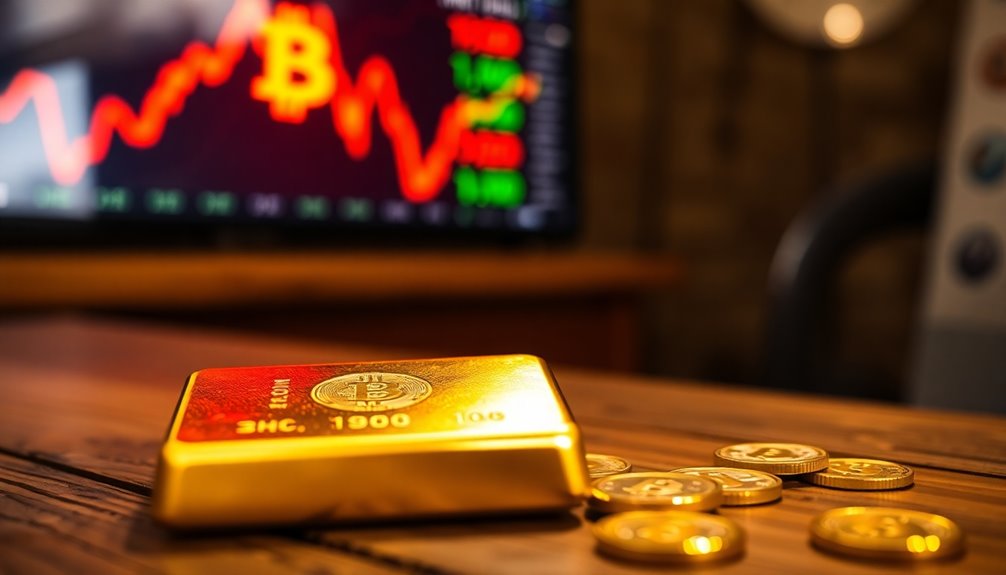

As Trump's trade war escalates, you're likely noticing a shift in how investors are prioritizing their assets. Gold, with its established reputation for stability, is becoming the go-to safe-haven choice, overshadowing Bitcoin's allure of high returns. This trend raises questions about the future of digital currencies and the enduring appeal of traditional assets. What does this mean for your investment strategy in such uncertain times?

Get everyday essentials delivered free with Prime
- Fast, free delivery on millions of items
- Prime Video, Amazon Music and more included
- Member-only deals all year

In today's uncertain economic landscape, gold stands out as a reliable safe-haven asset, outshining Bitcoin. When trade tensions rise and economic crises loom, gold's long history of stability becomes especially appealing. Unlike Bitcoin, which is notorious for its extreme volatility, gold maintains its value, making it a go-to choice for investors seeking low-risk options. Safe-haven assets provide a reliable shelter amidst economic chaos, which is precisely what gold offers during tumultuous times.
Gold's scarcity and durability have long established it as a store of value. Investors like you appreciate that gold often serves as an effective hedge against inflation, preserving your purchasing power over time. Recently, gold reached record highs as safe-haven demand surged during escalating trade conflicts. This trend highlights gold's enduring appeal, especially during tumultuous periods when market uncertainties spike. Additionally, historical performance shows that gold has consistently outperformed many other asset classes during economic downturns.
On the other hand, Bitcoin may catch your attention with its potential for significant returns, but it comes with high risks due to its unpredictable nature. While Bitcoin offers decentralization and independence from central banks, this allure doesn't negate its volatility. You must weigh the prospects of substantial gains against the potential for dramatic losses, which can be daunting for many investors.
Liquidity is another area where gold shines. It's highly liquid and widely traded on global markets, allowing you to easily convert it into cash or trade it through established exchanges. Though Bitcoin's liquidity is improving, it still faces challenges in mainstream acceptance. You might find that gold's well-established market infrastructure provides a sense of security that Bitcoin's developing framework doesn't quite match yet.
Looking ahead, analysts predict a steady increase in gold's value. Ongoing demand as a safe haven suggests that gold will continue to attract cautious investors like you. In contrast, Bitcoin's future remains uncertain, heavily influenced by evolving regulatory developments. While increased institutional investment could bolster Bitcoin's status, you still need to consider your risk appetite before diving in.
Ultimately, both gold and Bitcoin can play valuable roles in a diversified investment portfolio. Your choice will depend on your financial goals and risk tolerance. As you navigate this landscape, remember that gold's long-standing reliability positions it as a more stable safe-haven asset compared to Bitcoin, especially during uncertain times.
As an affiliate, we earn on qualifying purchases.
Halloween Picks
halloween
As an affiliate, we earn on qualifying purchases.