

Procrastinating on your money admin secretly costs you more than you realize. It leads to financial chaos, missed payments, and higher late fees, damaging your credit score over time. The stress of unmanaged records can become overwhelming and cause impulsive financial decisions. Without regular organization, you risk losing track of savings and deductions, making tax season more complicated and costly. Keep going, and you’ll discover how taking small steps now can prevent long-term financial setbacks.

Get everyday essentials delivered free with Prime
- Fast, free delivery on millions of items
- Prime Video, Amazon Music and more included
- Member-only deals all year
Key Takeaways
- Procrastination leads to financial disorganization, making future tracking and management more time-consuming and error-prone.
- Delaying record-keeping risks missing tax deductions, credits, and saving opportunities, increasing overall tax and financial costs.
- Postponing financial reviews hampers goal adjustments, resulting in missed savings, debt reduction, and long-term planning benefits.
- Avoidance causes stress and anxiety, which can lead to impulsive financial decisions and worsening mental health.
- Lack of proactive management increases the likelihood of costly mistakes, penalties, and financial setbacks over time.
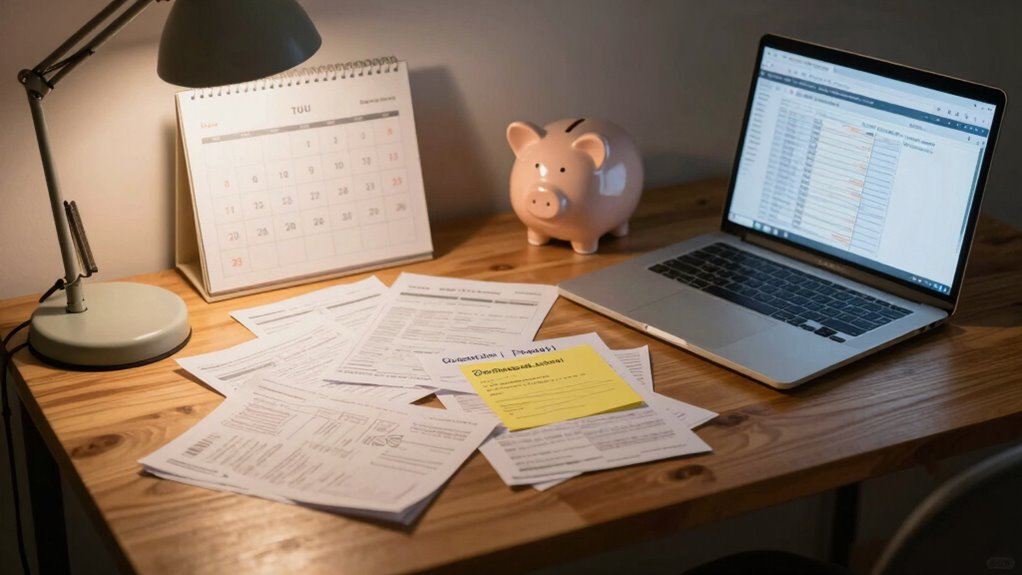
Procrastinating on managing your finances can cost you more than just time; it can drain your savings and hinder your financial goals. When you delay organizing your financial documents or reviewing your accounts, you create chaos that’s hard to untangle later. A lack of financial organization makes it difficult to track your spending, identify unnecessary expenses, or spot opportunities to save. Over time, this disorganization can lead to missed payments, late fees, and even damage your credit score. The longer you put off sorting your financial records, the more overwhelming it becomes to get everything in order.
Failing to stay on top of your finances also complicates tax preparation. When tax season arrives, scrambling to gather receipts, bank statements, and other documents only increases your stress. If you haven’t maintained good records throughout the year, you risk missing deductions or credits that could save you money. This oversight can lead to owing more in taxes than you should or facing penalties for incomplete filings. Investing just a little time each month to keep your financial documents organized can make tax preparation much smoother and less costly. It’s a small effort that pays off, especially when it’s time to file your taxes.
Organizing financial records monthly simplifies taxes and saves money during tax season.
Procrastinating on money management doesn’t just impact your current financial health; it also undermines your long-term goals. Without regular oversight, you might miss opportunities to contribute to retirement accounts or pay down debts efficiently. When you delay reviewing your budget or financial plan, you lose the chance to adjust your strategy based on changing circumstances. This inertia can cause you to fall behind on savings goals or even fall into debt traps you could have avoided with timely action. The longer you wait, the harder it becomes to correct course, and the more money you risk losing out on. Developing good financial habits can help you stay proactive and avoid these pitfalls. Recognizing the importance of financial tracking can help you maintain clarity and control over your financial progress. Additionally, understanding the significance of financial literacy can empower you to make smarter decisions and prevent costly mistakes. Cultivating these skills is essential for building resilience against financial setbacks that can occur unexpectedly.
Furthermore, procrastination breeds stress and anxiety around your finances. When you avoid dealing with bills or investments, they tend to pile up, making the situation worse. This mental burden can impact your overall well-being and lead to impulsive decisions, like taking high-interest loans or cashing out investments prematurely. The key is to implement simple routines that keep your financial organization on track. Setting aside just a few minutes each week to review your accounts, update your records, or plan for taxes can prevent these costly consequences. Additionally, utilizing digital tools designed for financial management can streamline the process and keep your records accurate. When you take proactive steps, you gain control, reduce stress, and ensure your financial future stays on course.
As an affiliate, we earn on qualifying purchases.
Frequently Asked Questions
How Can I Start Managing My Finances Effectively Today?
Start managing your finances today by creating a simple budget plan that outlines your income and expenses. Use expense tracking tools or apps to monitor where your money goes each month. This helps you identify unnecessary costs and prioritize savings. Make it a habit to review your budget weekly, adjusting as needed. Taking these steps now will give you control over your finances and prevent future financial stress.
What Are the First Steps to Overcome Procrastination?
To overcome procrastination, start by improving your time management skills—set small, achievable goals and create a clear schedule. Use motivation strategies like rewarding yourself for completing tasks and visualizing the benefits of managing your finances. Break down large tasks into manageable steps, and commit to taking action today. Staying consistent and mindful of your progress will boost your confidence and help you develop better habits over time.
How Does Procrastination Affect Long-Term Financial Goals?
You might think procrastination only causes short-term stress, but it seriously hampers your long-term financial goals. Delays in managing finances lead to broken financial discipline and inconsistent budgets, making it harder to save or invest effectively. Over time, these habits prevent wealth growth and can cause missed opportunities. To stay on track, prioritize regular money admin tasks, maintain budget consistency, and recognize that small steps today build your financial future.
Are There Tools to Help Track My Money Management Habits?
Yes, there are tools like budgeting apps and expense trackers that can help you monitor your money management habits. These tools automatically categorize your spending, set savings goals, and provide real-time insights into your finances. By using budgeting apps, you stay organized and aware of your financial habits, making it easier to avoid procrastination and stay on track with your long-term financial goals.
What Psychological Reasons Lead to Avoiding Financial Tasks?
You might avoid financial tasks because of overwhelming financial anxiety, which feels like juggling flaming swords while riding a unicycle. Decision paralysis kicks in, making even simple choices seem like climbing Everest without gear. Your brain might see money management as a threat, triggering fear and avoidance. This emotional overload causes procrastination, making you postpone tasks to dodge these intense feelings, even though it worsens your financial situation in the long run.
Conclusion
Ignoring your money admin is like leaving a tiny leak unattended in a boat; at first, it’s barely noticeable. But over time, that drip erodes the hull, risking a flood you can’t control. Tackling those tasks now might seem small, but it strengthens your vessel against storms ahead. Don’t let procrastination turn a minor drip into a sinking tide—patch it up today, and keep your financial ship sailing smoothly.
Halloween Picks
halloween
As an affiliate, we earn on qualifying purchases.