By 2025, remote work has become a major part of many workplaces, with nearly a quarter of U.S. employees working remotely at least part of the time. This trend shows a clear shift from the traditional office setup, supported by benefits like increased engagement, lower turnover, and better productivity. While the office isn’t entirely gone, its role is evolving. If you want to understand how this change shapes the future of work, there’s more to discover.
Key Takeaways
- Nearly 23% of U.S. workers work remotely at least part-time in 2025, indicating a significant shift from traditional office reliance.
- Over half of remote-capable workers now follow hybrid schedules, blending remote and on-site work.
- Remote work benefits like higher engagement, lower turnover, and increased productivity are encouraging organizations to maintain flexible arrangements.
- Companies adopting remote work face fewer vacancies and lower hiring costs, suggesting a reduced need for traditional office spaces.
- By 2030, major firms like Facebook project up to 50% of their workforce working remotely, signaling a possible decline of the traditional office era.

Remote Work in 2025
Have you noticed how remote work has become an integral part of the modern workforce? As of March 2025, nearly 23% of U.S. employees, or about 36 million people, work remotely at least part of the time. This represents an 87% increase from pre-pandemic levels, and projections suggest that by 2025, almost a quarter of Americans will be working remotely. The trend isn’t limited to the U.S.; globally, up to 56% of W2 workers could be be working from home if they’re allowed, indicating that remote work will likely continue to grow and possibly accelerate in the coming years. Remote work prevalence has remained steady from early 2024 through early 2025, showing a sustained shift in work culture.
Your educational background influences your likelihood of remote work. If you hold an advanced degree, you’re among the 42.8% of U.S. workers who work remotely. Conversely, only about 9.1% of high school graduates with no college education work remotely. Those with some college or an associate degree show an 18.4% remote work rate, while individuals with a bachelor’s degree have a 37.6% rate. Less than 3.3% of people without a high school diploma work remotely. This data highlights how education plays a notably role in remote work opportunities. Additionally, educational attainment impacts access to remote work, as higher education levels often correlate with roles that can be performed remotely.
If you work in a job that can be performed remotely, you’re likely to be in one of three categories. About 27% of such workers are fully remote, enjoying the flexibility of working entirely from home. Over half—around 53%—have adopted hybrid schedules, blending remote and on-site work to balance collaboration and flexibility. Only 21% work exclusively on-site, even when their jobs could be done remotely. Hybrid arrangements are popular because they offer the best of both worlds, allowing employees to maintain social connections while benefiting from the convenience of remote work. Full remote work is especially appealing for its ability to reduce commute times, improve work-life balance, and increase productivity.
The benefits of remote work are well-documented. It substantially boosts employee engagement and has been linked to a 13% improvement in performance. Remote workers also experience a 50% lower quit rate, saving companies money on turnover costs. Additionally, organizations see an average profit increase of about $2,000 per employee when remote work is implemented. Remote work also makes workplaces more accessible for people with disabilities, increasing participation in the labor force. Environmentally, fewer commutes mean lower emissions and reduced traffic congestion, contributing to a more sustainable future. Moreover, the rise of remote work has led some companies to reconsider traditional office spaces, investing in virtual collaboration tools and flexible work policies.
Despite its advantages, some companies face challenges. Firms pushing for a return to the office encounter longer vacancy times and higher hiring costs. Remote-friendly organizations typically experience lower turnover—about 25% less—and nearly half of employees say they’re more likely to stay with their current employer if remote options exist. This shift toward remote work fuels innovation and adaptation, making flexibility a key factor in attracting and retaining talent. By 2030, companies like Facebook expect up to 50% of their workforce to work remotely, confirming that the office era may be evolving into something fundamentally different. [US companies report that remote work can save up to $11,000 per employee annually in office costs.

TP-Link Deco 7 BE25 Dual-Band BE5000 WiFi 7 Mesh Wi-Fi System | 4-Stream 5 Gbps, 240 Mhz | Covers up to 6,600 Sq.Ft | 2X 2.5G Ports Wired Backhaul | VPN,MLO, AI-Roaming, HomeShield, 3-Pack
𝐃𝐞𝐜𝐨 𝟕 𝐒𝐮𝐩𝐞𝐫𝐜𝐡𝐚𝐫𝐠𝐞𝐝 𝐰𝐢𝐭𝐡 𝟒-𝐒𝐭𝐫𝐞𝐚𝐦 𝐁𝐄𝟓𝟎𝟎𝟎 𝐃𝐮𝐚𝐥-𝐁𝐚𝐧𝐝 𝐖𝐢𝐅𝐢 𝟕 - Achieve full speeds of up to 4324 Mbps...
As an affiliate, we earn on qualifying purchases.
Frequently Asked Questions
How Will Remote Work Impact Global Economic Inequality?
Remote work will likely widen global economic inequality, as you benefit most if you have high skills, education, and access to technology. If you’re in a low-skill, in-person job, you might see little to no advantage. You could also face barriers like limited broadband or regional disparities, which restrict opportunities. Overall, remote work might reinforce existing gaps, making it harder for marginalized groups to catch up economically.
Will Remote Work Lead to a Decline in Urban Populations?
Is the future of cities a sinking ship? Not necessarily. While many remote workers are moving to suburbs for more space and affordability, urban populations aren’t shrinking uniformly. Some cities, like Chicago and Seattle, still attract remote workers, maintaining their vibrancy. You’ll find that the migration pattern is more like a dance—dispersed and diverse—rather than a mass exodus. Urban centers continue to evolve, adapting to the new remote work landscape.
How Might Remote Work Influence Environmental Sustainability?
Remote work can boost environmental sustainability by reducing your commute-related emissions, which can cut your carbon footprint considerably. When you work remotely, energy use shifts from office buildings to homes, but overall emissions still decline, especially if your home uses clean energy. Additionally, less office waste and lower urban air pollution from reduced traffic contribute positively. However, you should be mindful of potential suburban sprawl and increased home energy use.
What Skills Will Be Most Valuable in a Remote-First Future?
In a remote-first future, you’ll find that digital communication, collaboration tools, and cybersecurity skills become essential. Your ability to manage time effectively, stay adaptable, and demonstrate empathy enhances team dynamics. Data analysis and tech literacy boost your value, while leadership skills like project management and talent development keep remote teams thriving. Embracing lifelong learning and staying tech-savvy guarantees you remain competitive in this evolving work landscape.
Will Remote Work Diminish Company Culture and Employee Loyalty?
You might wonder if remote work will let company culture and loyalty fade like a distant echo. The truth is, it doesn’t have to. By fostering trust, maintaining open communication, and valuing flexibility, you can build a strong culture no matter where your team works. Remote work can actually strengthen loyalty when you focus on connection and shared purpose, turning distance into a bridge rather than a barrier.

TP-Link Deco X55 AX3000 WiFi 6 Mesh System - Covers up to 6500 Sq.Ft, Replaces Wireless Router and Extender, 3 Gigabit Ports per Unit, Supports Ethernet Backhaul, Deco X55(3-Pack)
Wi-Fi 6 Mesh Wi-Fi - Next-gen Wi-Fi 6 AX3000 whole home mesh system to eliminate weak Wi-Fi for...
As an affiliate, we earn on qualifying purchases.
Conclusion
As you consider the shifting landscape of work in 2025, one thing’s clear: the office era might be just a memory in the making. But what comes next? Will remote work fully dominate, or is there still a surprise waiting just around the corner? Keep your eyes open—what unfolds could redefine your own work life in ways you never saw coming. The future’s story is still being written. Are you ready to see how it ends?
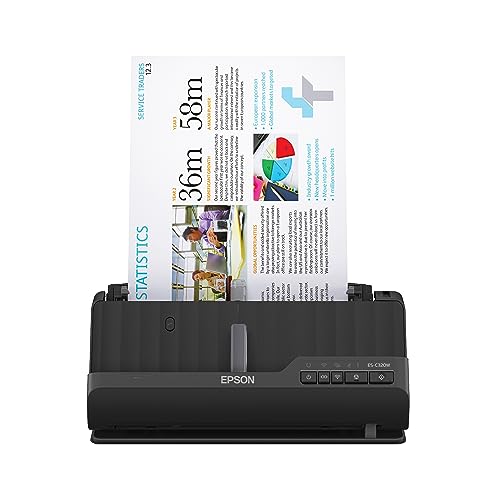
Epson Workforce ES-C320W - Wireless Compact Desktop Document Scanner - 2-Sided Scanning Auto Doc Feeder - Can Scan Paper and Cards - Black
ULTRA-COMPACT DESIGN – Save 60% of desk space in nearly any setting effortlessly with this compact scanner, perfect...
As an affiliate, we earn on qualifying purchases.

Epson Workforce ES-400 II Color Duplex Desktop Document Scanner for PC and Mac with Auto Doc Feeder (ADF), Image Adjustment Tools
FAST DOCUMENT SCANNING – Speed through stacks with the 50-sheet Auto Document Feeder, perfect for office scanning and...
As an affiliate, we earn on qualifying purchases.