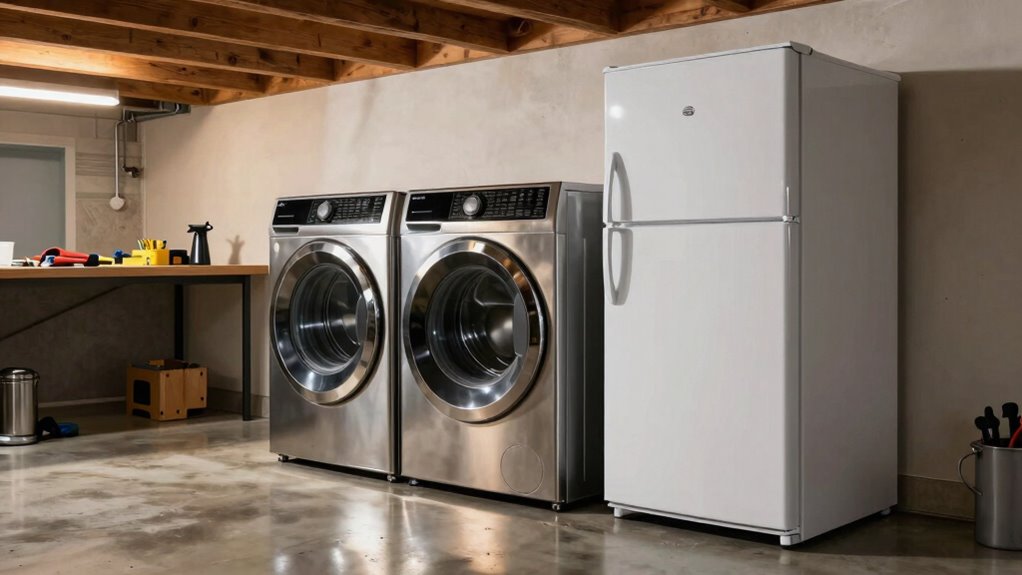

Before placing appliances in basements or garages, consider environmental factors like moisture, temperature fluctuations, and ventilation needs. Use energy-efficient models to reduce energy use, and protect appliances from rust and water damage with waterproofing and moisture control solutions. Make sure electrical wiring can support the appliances safely, and keep pathways clear to avoid hazards. Proper placement and maintenance can help prevent issues. To learn more, explore specific tips for managing noise, safety, and structural concerns.

Get everyday essentials delivered free with Prime
- Fast, free delivery on millions of items
- Prime Video, Amazon Music and more included
- Member-only deals all year
Key Takeaways
- Choose energy-efficient appliances to handle cooler, variable temperatures and reduce energy costs.
- Ensure proper moisture control with ventilation, dehumidifiers, and waterproofing to prevent rust and mold.
- Verify electrical capacity and wiring standards, and keep pathways clear for safe access and maintenance.
- Install soundproofing and vibration mitigation measures to minimize noise disturbance in living areas.
- Regularly inspect for moisture issues and consider flood prevention measures in flood-prone environments.
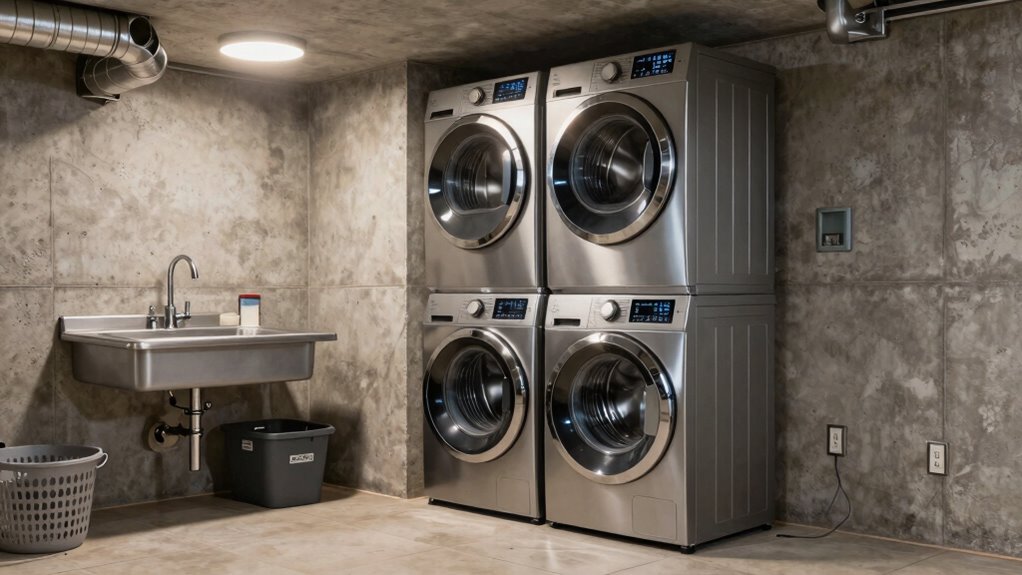
Placing appliances in basements or garages can be a practical solution, but it’s crucial to take into account a few key factors first. One of the most important considerations is energy efficiency. Appliances in these areas often face different conditions than they do inside your main living space. For example, garages and basements tend to be cooler or more variable in temperature, which can cause appliances to work harder and consume more energy. To counteract this, look for energy-efficient models that are designed to operate effectively in less controlled environments. Energy-efficient appliances not only save you money on utility bills but also reduce your overall environmental impact.
Choosing energy-efficient appliances helps save costs and reduces environmental impact in cooler, variable-temperature spaces.
Moisture control is another critical factor. Basements and garages are more prone to humidity and moisture issues, which can damage appliances and compromise their longevity. Excess moisture can lead to rust, mold, and electrical problems, so it’s imperative to ensure these spaces are properly ventilated and dry before installing appliances. You might consider installing dehumidifiers or improving ventilation systems to keep humidity levels in check. Additionally, placing appliances on elevated surfaces or using moisture-resistant pads can help prevent water damage from minor leaks or spills. Pay close attention to how well the space handles moisture—if it’s prone to flooding or dampness, installing a sump pump or waterproofing measures can be a wise investment. Proper moisture management is essential to maintaining appliance longevity and safety in these environments. It’s also beneficial to regularly inspect these areas for signs of ongoing moisture issues to prevent future problems.
Another aspect to consider is accessibility and safety. When placing appliances in these areas, ensure they are easy to access for maintenance and repairs. Keep pathways clear and avoid overcrowding, which can pose safety hazards or make troubleshooting more difficult. Also, check that your electrical wiring and outlets are suitable for the appliances you plan to install. Garages and basements often have different wiring standards or may lack sufficient outlets, so you might need to upgrade your electrical system to support your appliances safely. Proper electrical wiring and outlet capacity are vital for safe operation and efficiency. In addition, considering the potential for electrical overload can help prevent future hazards. Furthermore, consider the potential for fire hazards if appliances are not installed or maintained correctly, especially in areas with variable environmental conditions.
Finally, think about the noise and vibrations that some appliances generate. If your garage or basement is close to living spaces, soundproofing measures can make a significant difference in maintaining a comfortable environment. Before installation, evaluate whether the space can handle the noise levels and vibrations, especially for appliances like washers, dryers, or HVAC units. Proper soundproofing can help minimize disturbances and improve overall comfort in your home.
Popular right now

KitchenAid Classic Series 4.5 Quart Tilt-Head Stand Mixer K45SS, Onyx Black

Ninja Luxe Café Mini Plus Espresso and Drip Coffee Machine with AutoFroth, Stainless Steel, ES351

Dyson Ball Animal 2 Plus Corded Vacuum
As an affiliate, we earn on qualifying purchases.
Frequently Asked Questions
Are There Specific Electrical Requirements for Appliances in Basements or Garages?
Yes, there are specific electrical requirements for appliances in basements or garages. You need proper electrical wiring designed for those spaces, guaranteeing it’s rated for moisture and temperature variations. Additionally, circuit protection is essential; dedicated circuits with circuit breakers or GFCIs help prevent overloads and electrical shocks. Always follow local electrical codes and consider consulting a professional electrician to ensure safety and compliance when installing appliances in these areas.
How Do I Prevent Moisture Damage to Appliances in These Areas?
To prevent moisture damage, you should install moisture barriers like plastic sheeting or sealant on floors and walls, keeping water from seeping in. Enhance ventilation solutions such as exhaust fans or dehumidifiers to reduce humidity levels. Regularly check for leaks or condensation, and guarantee appliances are elevated on pedestals or stands to avoid direct contact with damp surfaces. These steps help protect your appliances from moisture-related issues.
What Safety Precautions Should I Take When Installing Appliances in Basements or Garages?
Think of appliance placement like charting a safe course through rough waters—you need clear guidelines. Follow safety guidelines diligently, ensuring appliances are on level surfaces and away from water sources. Keep cords away from high-traffic areas to prevent tripping. Use proper ventilation and install ground-fault circuit interrupters (GFCIs). Regularly inspect connections, and always turn off power before maintenance. Your careful planning keeps your space safe and your appliances running smoothly.
Can I Use Regular Appliances in Unheated Garage or Basement Spaces?
You can use regular appliance models in unheated garages or basements, but you should consider space considerations. Extreme cold can affect appliance performance and longevity, so look for models designed for such environments or install insulation and heating options. Make certain proper ventilation and follow safety guidelines to prevent issues. Always check the manufacturer’s recommendations to confirm the appliance’s suitability for unheated spaces, avoiding potential damage or safety hazards.
Are There Insurance Implications for Placing Appliances in These Areas?
Placing appliances in your basement or garage can impact your insurance coverage and liability concerns. You might face higher premiums or coverage exclusions if appliances aren’t suitable for unheated spaces, or if they pose safety risks. Be sure to check with your insurer first; they could require specific installations or upgrades. Failure to do so might leave you vulnerable to denied claims or increased liability if accidents occur.
Conclusion
Before you decide to place appliances in your basement or garage, remember that safety and proper maintenance are your guiding stars. These spaces may seem like perfect spots, but lurking behind the convenience are risks that can turn into costly mistakes. Think of your home as a symphony—each element must work harmoniously. By being cautious and informed, you guarantee your appliances serve you well, not become unwelcome guests that disrupt your peace.